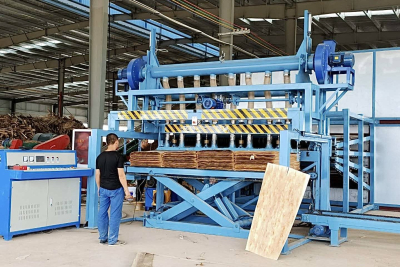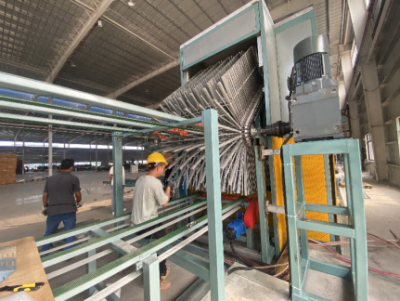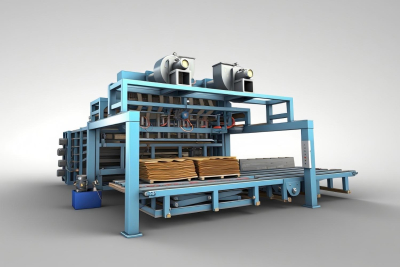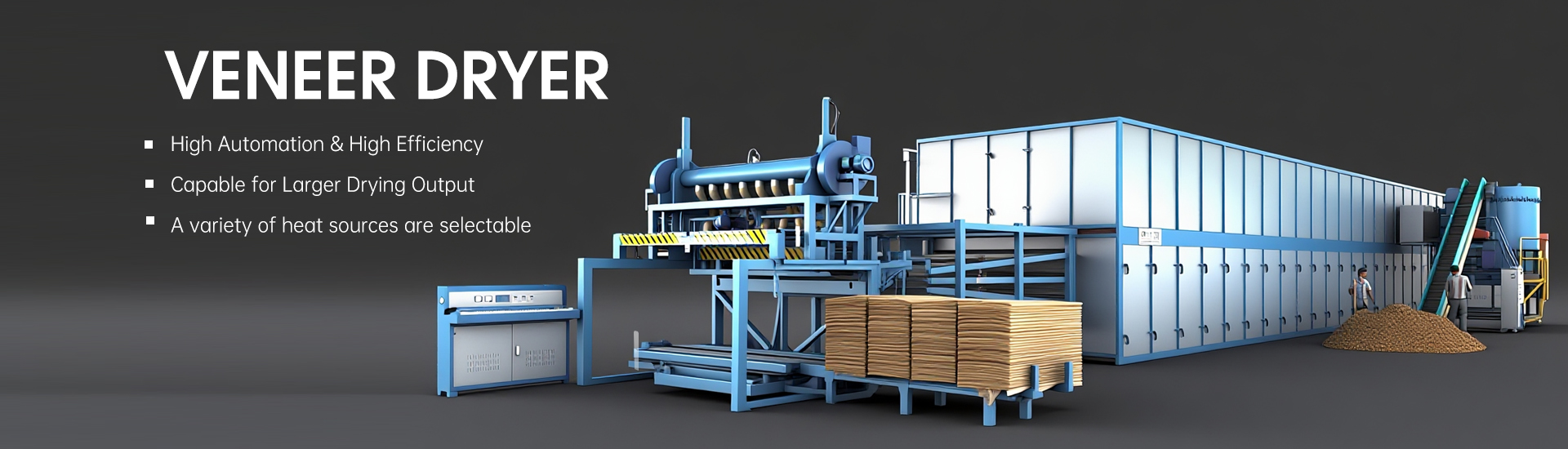
Veneer Dryer: Core of Plywood Quality
In the world of plywood making machinery, the spotlight is often on the massive hot press—the powerful machine that delivers the final, curing pressure. Yet, true industry professionals know that the foundation of quality, efficiency, and profitability is laid much earlier in the plywood production line. One machine, operating without the drama of heat and steam, plays a truly decisive, preemptive role: the veneer dryer. It is the indispensable precursor, the quiet guarantor whose performance directly dictates the success of all subsequent stages, especially the critical hot pressing operation. The value of a modern veneer dryer extends far beyond simple moisture removal; it is a sophisticated conditioning system that optimizes the entire manufacturing process.
At its core, the primary and most critical function is moisture content (MC) control. Wood is a hygroscopic material, and veneer's MC is the single most influential variable affecting adhesive performance. A high-precision veneer dryer is engineered to reduce the MC of green veneer to a narrow, ideal target range, typically between 6% and 12%. More importantly, it achieves not just a target average but uniformity—across a single sheet and consistently from sheet to sheet within a batch. This uniformity is non-negotiable. Inconsistent MC leads to a cascade of problems in the hot press. Overly wet areas generate steam under heat, causing blisters, delamination, or premature glue-line aging. Overly dry areas can over-absorb adhesive, leading to starved joints. The dryer, therefore, delivers the perfectly primed substrate, transforming raw veneer into a predictable, bond-ready material and ensuring the structural integrity of the final panel. This is the first and most vital contribution of core plywood machinery.
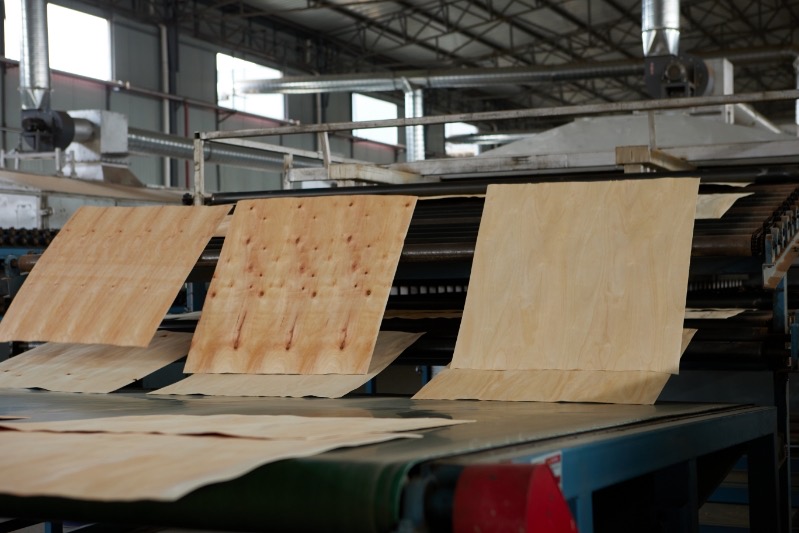
The second major contribution is profound economic and operational efficiency for the entire plywood production line. A properly dried veneer directly translates into a faster, more energy-efficient hot-pressing cycle. When veneer enters the hot press at the correct MC, the press's massive heated platens do not waste their thermal energy on evaporating free water. Instead, heat transfers rapidly to the glue line, promoting immediate and efficient resin cure. This allows for significantly reduced press closure times and shorter overall cycle times. Consequently, the hot press—often the bottleneck in a line—can process more panels per shift, maximizing its capital-intensive utility. Furthermore, by offloading the bulk of the dehumidification work to the dryer (which often uses more efficient, dedicated heat sources), the overall plant's specific energy consumption per panel drops substantially. In an era of high energy costs, the dryer's role in pre-processing is a direct driver of lower operational expenses and a faster return on investment for the plywood making machine ecosystem.
Beyond adhesion and efficiency, the veneer dryer is a key quality enhancement station. The drying process, typically involving sustained temperatures well above 120°C, serves a critical sanitizing function. It eliminates biological threats like insect larvae, eggs, and mold spores that could otherwise degrade the panel from within during its service life. Furthermore, the controlled drying process relieves internal stresses within the wood, stabilizing the veneer's dimensions. This pre-stabilization is crucial. It minimizes the potential for subsequent warping, twisting, or thickness variation in the final plywood sheet, directly enhancing the product's dimensional stability, flatness, and long-term performance for demanding applications like furniture, cabinetry, and construction.
Finally, the dryer is an enabler of optimal adhesive application. The adhesive-wood interface is delicate. Veneer with an ideal, uniform MC provides a perfect surface for glue spread. The adhesive can wet and penetrate the wood fibers consistently, forming a strong, continuous "glue nail" network upon curing. If the veneer is too dry, it can absorb the adhesive too quickly, preventing proper film formation and leading to a weak bond. If too wet, the moisture dilutes the adhesive, compromising its chemistry. The dryer creates the Goldilocks condition—"just right"—for the adhesive to perform exactly as formulated, maximizing bond strength and durability while minimizing glue consumption and waste.
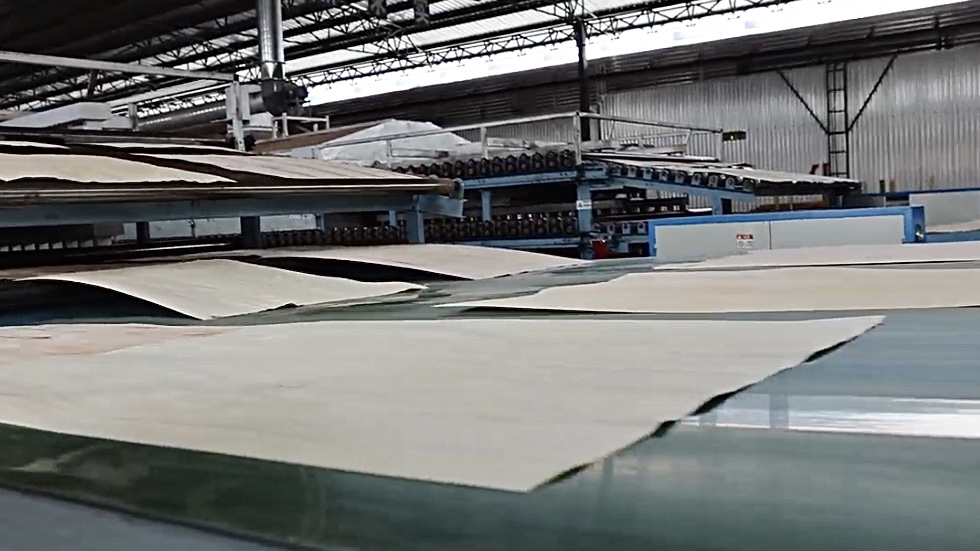
In conclusion, viewing a veneer dryer as just a drying apparatus is a significant underestimation. Within a modern, integrated plywood production line, it is a precision pre-conditioning unit that actively manages the core variable of moisture to safeguard quality, drive efficiency, and enable consistency. It works in silent, indispensable synergy with the hot press and other plywood machinery. The hot press provides the final, decisive force, but the dryer provides the perfected material upon which that force acts. One cannot perform at its peak without the other. Therefore, investing in and optimizing veneer drying technology is not an auxiliary consideration; it is a foundational strategy for any plywood manufacturer aiming for superior product performance, streamlined production, and sustainable profitability. The path to a perfect plywood panel begins not with pressure, but with precision drying.