The Crucial Cooling in Veneer Drying
Unveiling the Essential Role of the Cooling Zone in Modern Veneer Dryers
In the intricate, high-stakes world of plywood manufacturing, every process is a calibrated step towards achieving strength, stability, and value. The veneer dryer stands as a pivotal gateway, transforming delicate, moisture-laden green veneer into a stable, bond-ready material. While the application of heat to drive out moisture is the dryer's primary and most visible function, a critical phase often goes underappreciated by those outside core production engineering: the cooling zone. This final stage is not an afterthought but a scientifically and economically indispensable component of modern drying technology.
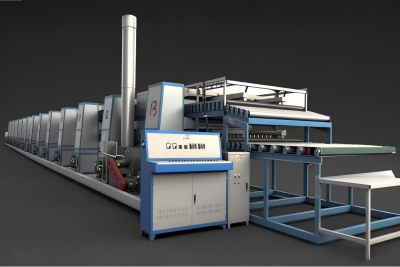
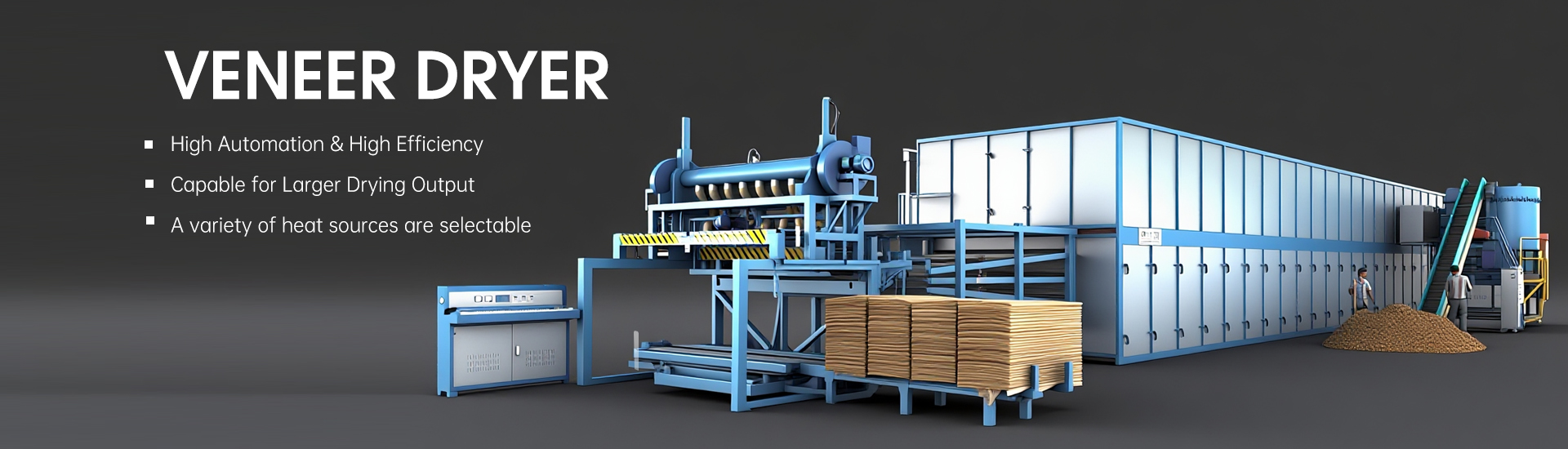
At its core, a veneer dryer is a continuous or semi-continuous system where veneer sheets travel through a series of chambers. The journey typically begins with a conditioning section, progresses through high-temperature drying zones, and culminates in the cooling section before the veneer is stacked. The removal of water is a physically aggressive process. Heat, often supplied by steam, thermal oil, or direct combustion, energizes water molecules within the wood cells, causing them to evaporate. High-velocity airflow then carries this moisture-laden air away. However, when the veneer exits the final heating zone, it is in an extreme state—it is very hot, often between120°C to 160°C, and its internal moisture content, while lower, is not yet uniformly distributed across the sheet or from face to face.
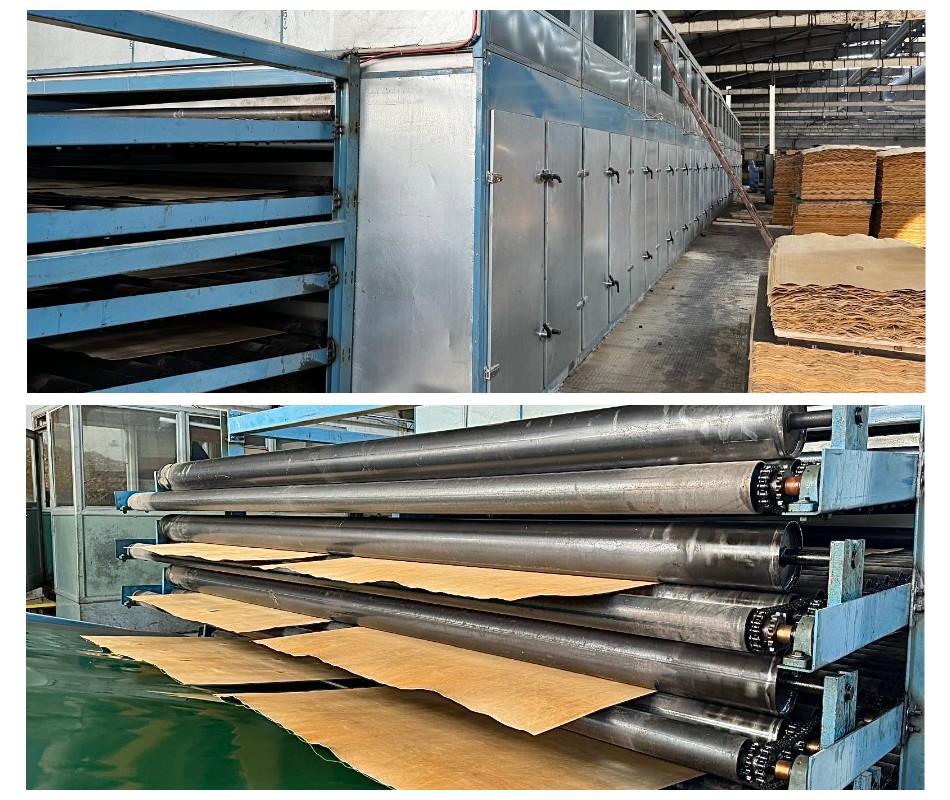
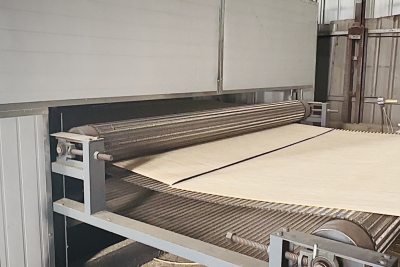
This is where the cooling zone takes center stage. Its primary function is controlled, ambient-temperature conditioning. As the hot veneer enters this unheated section, ambient or slightly tempered air is circulated across its surfaces. This process achieves several vital objectives that directly impact downstream production quality and efficiency.
Firstly, and most importantly, cooling prevents "thermal shocking" and case hardening upon exit. If scorching hot veneer were discharged directly into a much cooler factory environment, the rapid and uncontrolled contraction of surface fibers could lead to checking (micro-cracks) and immediate warp or curl. The cooling zone allows for a gradual, managed reduction in temperature, stabilizing the wood structure and minimizing these stress-related defects. This preservation of surface integrity is paramount for achieving the flawless faces required for premium-grade plywood.
Secondly, the cooling zone facilitates moisture equalization. During intense drying, the core of the veneer can retain slightly more moisture than the surfaces. The period of cooling with continued air circulation allows this internal moisture to migrate towards the drier surfaces, creating a more uniform moisture profile across the entire sheet. This uniformity, known as moisture equalization, is critical for subsequent processes. Veneer with uniform moisture content responds more predictably during glue application, ensuring consistent spread and absorption. More crucially, it prevents localized high-moisture areas that can turn to steam during the hot-pressing stage, causing blisters or delamination in the final plywood panel.
Thirdly, the process enables safe handling and stacking. Veneer exiting at near-boiling temperatures is a safety hazard for personnel and a fire risk. The cooling zone brings the material down to a safe, ambient handling temperature, typically between 30°C to 45°C. This allows for immediate manual or automated stacking without risk of injury. Cool, stable stacks are also less prone to the development of mold or stain, which can occur if residual heat promotes condensation within a tightly packed bundle.
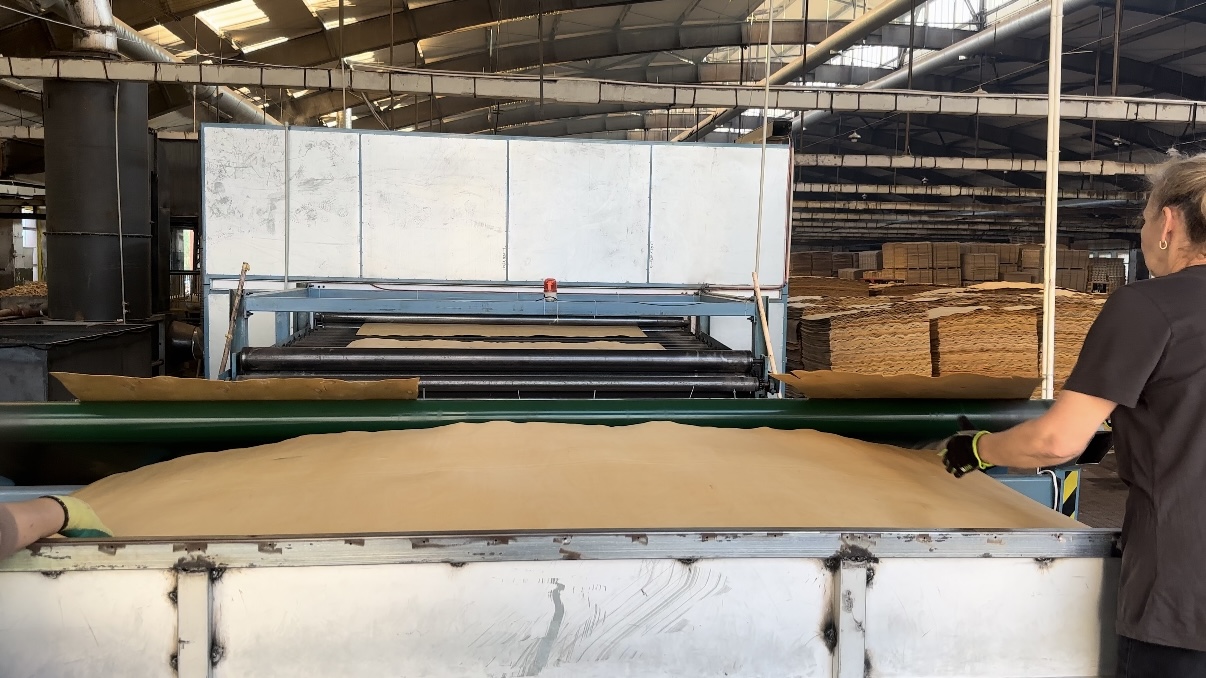
Finally, effective cooling optimizes the glue line. Most structural wood adhesives, such as phenol-formaldehyde or urea-formaldehyde, are engineered to cure within specific temperature ranges. Introducing a veneer that is too hot to the gluing line can cause the adhesive to pre-cure or "set" prematurely on the roller spreaders or on the veneer surface itself, leading to a weak bond. A properly cooled veneer ensures the adhesive remains workable until it enters the hot press, where the designed heat and pressure trigger an optimal cure, resulting in superior bond strength and water resistance.
In conclusion, the cooling zone in a veneer dryer is a masterstroke of process engineering that transforms a simple drying operation into a precision conditioning system. It is the critical transition that prepares the veneer not just to be dry, but to be process-ready. By mitigating stress defects, equalizing moisture, enabling safe operation, and setting the stage for perfect gluing, it protects the substantial value added in the previous drying stages and safeguards the quality of all downstream manufacturing. In the competitive plywood industry, where marginal gains define profitability, the cooling zone is not a luxury—it is an essential, non-negotiable component of a high-quality, efficient, and safe production line. It ensures that the vital work of the dryer is fully realized in the strength and perfection of the final plywood product.