Why Does Veneer Split During Peeling?
Veneer splitting during peeling creates serious problems for plywood manufacturers. It reduces material utilization, interrupts production, and increases manufacturing costs. Even worse, damaged veneer can affect the bonding quality and appearance of finished plywood.
So, why does veneer split during peeling? In our experience, several factors work together. They include wood moisture, log temperature, knife condition, machine settings, and natural wood characteristics. Understanding these factors helps manufacturers produce high-quality veneer sheets with fewer defects.
1. Uneven Log Moisture and Temperature
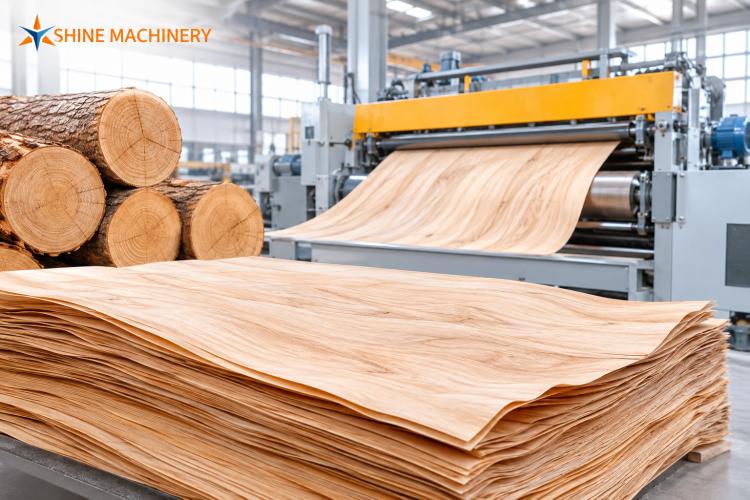
Log conditioning plays an important role in veneer production. Before peeling, manufacturers usually heat logs through steaming or hot-water treatment. This process softens the wood and makes cutting easier.
However, insufficient conditioning can create uneven cutting resistance. The knife then struggles to separate the wood fibers smoothly. As a result, the veneer may develop deep cracks, rough surfaces, or unexpected splits.
How to Improve Log Conditioning
We recommend paying attention to these factors:
Log temperature: Maintain suitable temperatures throughout the log.
Moisture content: Avoid excessive drying before peeling.
Heating time: Adjust conditioning time according to wood species and log diameter.
Temperature uniformity: Ensure the outer and inner sections receive sufficient heat.
Different wood species require different conditioning methods. Therefore, operators should test suitable conditions before starting large production batches.
2. Dull or Improperly Adjusted Peeling Knives
The peeling knife directly determines cutting quality. A dull blade requires greater cutting force and creates more friction. Instead of producing a smooth veneer ribbon, it may tear wood fibers and create uneven edges.
Incorrect knife geometry can also cause trouble. For example, an unsuitable knife angle may increase cutting resistance. Excessive clearance can produce rough surfaces and unstable cutting.
Practical Knife Maintenance Tips
Our recommended maintenance practices include:
Inspect the knife edge before every production shift.
Sharpen or replace blades when operators notice cutting deterioration.
Check knife alignment across the entire cutting width.
Maintain consistent knife clearance and cutting geometry.
Remove wood chips and other debris around the cutting area.
A sharp knife does more than improve appearance. It also reduces unnecessary machine loads and production interruptions.
3. Incorrect Pressure Bar Settings
The pressure bar controls how the wood behaves during rotary peeling. It supports the log surface and helps control wood compression near the cutting area.
When pressure becomes insufficient, the wood fibers may separate excessively. This condition creates deeper lathe checks on the loose side of peeled veneers. Excessive pressure can also cause problems, including crushing, buckling, and uneven thickness.
How to Adjust Pressure Bar Settings
Operators should consider several important points:
Keep the pressure bar parallel to the knife.
Adjust the gap according to target veneer thickness.
Maintain suitable pressure throughout the peeling process.
Inspect the pressure bar for wear and surface damage.
Monitor veneer thickness and check depth during production.
Correct pressure settings help produce smoother, more stable veneer sheets. However, the ideal settings depend on wood species, thickness, and machine design.
4. Excessive Peeling Speed
Production efficiency matters, especially in large plywood factories. However, increasing peeling speed without adjusting other parameters can reduce veneer quality.
High cutting speeds may increase cutting forces and make the peeling process less stable. Consequently, veneer ribbons may develop deeper checks or irregular surfaces.
We believe stable production matters more than simply chasing maximum speed. Manufacturers should coordinate peeling speed with knife condition, log temperature, and pressure bar settings.
5. Natural Wood Defects and Grain Structure
Sometimes, the machine works correctly, but the wood itself creates problems. Wood contains natural variations in density, grain direction, and fiber structure.
Knots, internal cracks, reaction wood, and irregular grain can interrupt continuous peeling. These characteristics may cause local splitting or weak areas in the veneer.
How to Reduce Material-Related Defects
Before peeling, manufacturers should:
Inspect logs for visible cracks and damaged sections.
Remove unsuitable wood areas when necessary.
Separate logs according to species and diameter.
Identify excessive knots and irregular grain.
Adjust peeling parameters for different wood materials.
Good raw material preparation provides a stronger foundation for consistent production.
6. Can Veneer Drying Make Existing Splits Worse?
Yes. Although splitting often begins during peeling, subsequent drying can make existing defects more noticeable.
Freshly peeled veneers contain considerable moisture. During drying, wood fibers shrink as moisture leaves the material. Existing cracks and deep lathe checks may become more visible under uneven drying conditions.
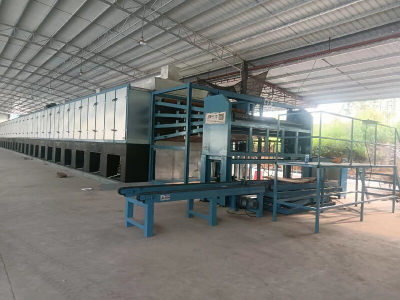
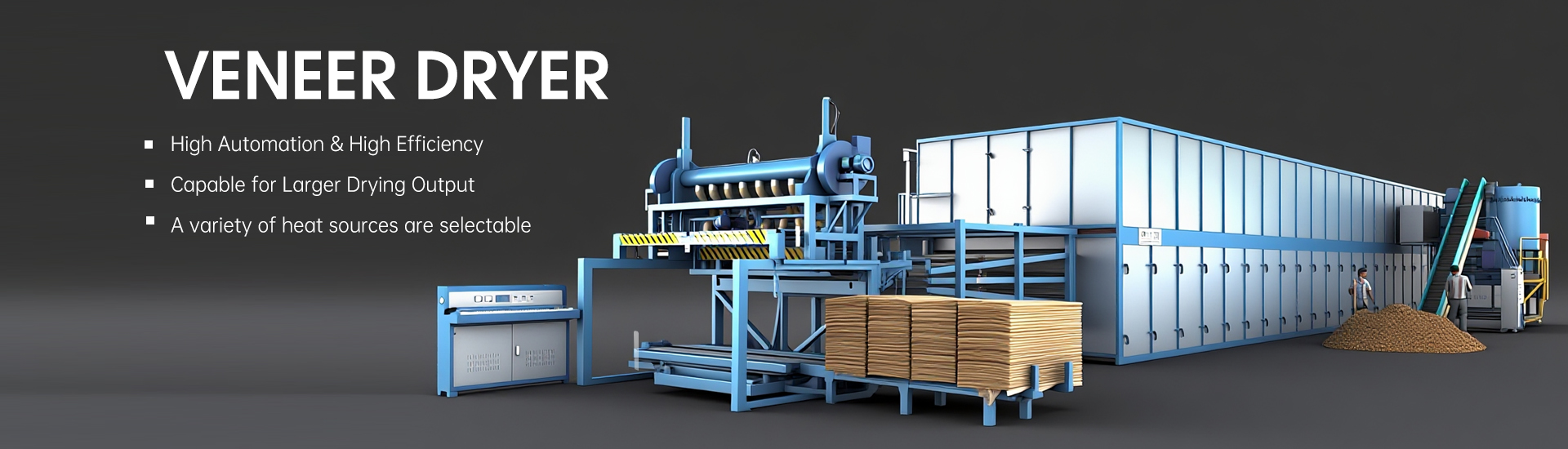
A properly configured Veneer Dryer Machine helps manufacturers control temperature, airflow, and drying speed. These factors influence moisture uniformity and the final condition of peeled veneers.
We recommend monitoring the following parameters:
Initial veneer moisture content (%).
Final moisture content (%).
Drying temperature (°C).
Conveyor speed (m/min).
Air circulation and distribution.
Veneer thickness (mm).
Manufacturers should select suitable drying conditions for each wood species and thickness. Proper drying cannot repair severe peeling damage, but it can help prevent additional quality problems.
7. How to Produce High-Quality Veneer Sheets
Reducing veneer splitting requires cooperation between raw material preparation, machine maintenance, and production control.
Based on these considerations, we suggest a simple inspection routine:
Inspection Item | Recommended Action |
Log condition | Check cracks and wood defects |
Log conditioning | Maintain suitable temperature |
Peeling knife | Keep the cutting edge sharp |
Pressure bar | Check alignment and pressure |
Peeling speed | Avoid unstable operation |
Veneer thickness | Monitor thickness consistency |
Drying process | Control temperature and moisture |
Regular inspection helps operators identify problems before they affect large production batches.
Conclusion
Veneer splitting during peeling rarely results from one single factor. Poor log conditioning, dull knives, incorrect pressure settings, excessive speed, and natural wood defects can all contribute.
At Shandong Shine Machinery, we understand that veneer quality depends on every stage of production. Proper peeling creates a better starting point, while controlled drying helps maintain consistent moisture and product quality.
Our goal is to help plywood manufacturers improve production efficiency, reduce material waste, and achieve high-quality veneer sheets.
Looking for reliable veneer drying equipment? Contact Shandong Shine Machinery to discuss your production requirements and find a suitable drying solution.