How to Reduce Veneer Shrinkage: 7 Proven Methods
Wood veneer looks simple, but drying it requires careful control. A small change in moisture can affect its size, shape, and quality. Excessive shrinkage can also cause cracks, wrinkles, and production waste. For plywood manufacturers, these problems can quickly increase operating costs.
At Shandong Shine Machinery, we understand these production challenges. We focus on practical drying solutions that help manufacturers improve sheet quality. In this guide, we explain the main veneer shrinkage causes and seven ways to reduce them. We also discuss how modern drying equipment supports stable production.
1. What Causes Veneer Shrinkage?
Before we discuss solutions, we should understand why wood veneer shrinks. Wood contains water inside its cell walls and open spaces. During drying, the wood releases moisture and gradually changes its dimensions. This natural process creates dimensional changes, especially when the moisture content falls below the fiber saturation point.
However, not every veneer sheet shrinks at the same rate. Wood species, thickness, initial moisture, and drying conditions all influence the result. Poor process control can make normal shrinkage worse. Therefore, manufacturers need to identify the main causes before adjusting their production lines.
1.1 Natural Changes in Wood Structure
Wood naturally expands and contracts as its moisture content changes. When wood loses bound water below the fiber saturation point, its cell walls contract. This process causes wood shrinkage during drying. Different wood species also show different shrinkage characteristics.
For example, dense hardwood species may behave differently from lighter softwoods. Grain direction also influences dimensional changes. Tangential shrinkage generally exceeds radial shrinkage in solid wood. Although veneer has a different structure from thick lumber, its original wood properties still matter.
1.2 Excessive Initial Moisture Variation
Freshly peeled veneer often contains a large amount of water. However, different sheets may have different starting moisture levels. Sapwood, heartwood, and different log sections can show considerable variation. These differences make the veneer drying process harder to control.
When one batch contains both wet and relatively dry sheets, problems can develop. The wetter sheets need more drying time. Meanwhile, thinner or drier sheets may lose moisture too quickly. This situation increases the risk of uneven veneer drying and inconsistent product quality.
1.3 Improper Drying Conditions
High temperatures do not automatically produce better drying results. Excessive heat can remove surface moisture too quickly. Meanwhile, internal moisture may need more time to escape. This imbalance can create drying stress and other veneer drying defects.
Insufficient airflow creates another problem. Some areas receive enough hot air, while others remain relatively cool. Consequently, different sheets may reach different final moisture levels. Good drying control must balance temperature, humidity, airflow, and feeding speed.
2. Seven Effective Ways to Reduce Veneer Shrinkage
Manufacturers cannot completely eliminate natural wood shrinkage. However, they can reduce excessive dimensional changes through better production management. Here are seven practical methods we recommend for veneer manufacturers.
2.1 Control Initial Veneer Moisture Content
Good drying starts before the veneer enters the dryer. Manufacturers should check the initial moisture content of fresh sheets. A reliable moisture meter helps operators identify significant differences between batches. This simple step provides a useful starting point for process adjustments.
We recommend sorting veneer according to several factors:
Wood species and density.
Sheet thickness and dimensions.
Initial moisture content.
Sapwood and heartwood characteristics.
Visible cracks, knots, and other defects.
Consistent batches make the drying process easier to manage. They also help operators select suitable drying parameters. Remember, a dryer cannot compensate for every problem in raw material preparation.
2.2 Set the Correct Veneer Drying Temperature
Temperature directly affects how quickly veneer releases moisture. However, the correct setting depends on several production conditions. These include wood species, thickness, initial moisture, and equipment design.
An excessively high veneer drying temperature may increase surface drying speed. It can also create moisture gradients and unnecessary drying stress. On the other hand, temperatures that remain too low can extend production time.
We recommend developing a suitable temperature schedule through production testing. Operators should also monitor the actual veneer temperature when possible. Do not rely only on the dryer display. The goal is stable moisture removal, not simply reaching the highest possible temperature.
2.3 Adjust Veneer Drying Speed
Drying speed plays an important role in dimensional stability. If veneer loses moisture too quickly, its surface may dry before its inner layers. This condition can create uneven moisture distribution and internal stress.
Feeding speed should match the actual drying requirements. Thicker sheets generally need more drying time than thinner sheets. Different species may also require different settings. Therefore, operators should adjust conveyor speed according to real production conditions.
Consider these practical checks:
Compare the thickness of incoming sheets.
Monitor moisture levels at the dryer outlet.
Check for excessive surface drying.
Adjust conveyor speed when conditions change.
Record results for each production batch.
A slightly longer drying cycle may improve product consistency. More importantly, it can reduce waste from overdried or poorly dried sheets.
2.4 Maintain Consistent Hot Air Circulation
Airflow distributes heat across veneer surfaces. Poor airflow creates temperature differences inside the drying chamber. As a result, some sheets dry faster than others.
Effective hot air circulation helps maintain more consistent drying conditions. Operators should regularly inspect fans, ducts, filters, and air outlets. Blocked passages can reduce airflow and create uneven drying.
We suggest checking the following equipment components:
Circulation fans and fan motors.
Air ducts and distribution channels.
Filters and ventilation openings.
Air outlet temperature differences.
Conveyor alignment and loading conditions.
Consistent airflow supports better veneer quality control. It also helps manufacturers achieve more predictable drying results.
2.5 Monitor Final Veneer Moisture Content
Drying should stop when veneer reaches its required moisture level. Overdrying wastes energy and may reduce sheet flexibility. Insufficient drying can also cause bonding problems during plywood production.
The correct veneer moisture content depends on the wood species, adhesive, and final application. Some production processes use targets around 6%–12%. However, this range should serve only as an initial reference. Manufacturers must confirm their actual requirements through adhesive specifications and production tests.
We recommend measuring several sheets from different dryer positions. Check both sheet surfaces and different production batches when possible. This approach provides more reliable information than testing only one convenient sample.
2.6 Use Gradual Drying Adjustments
Sudden changes in drying conditions can make production unstable. For example, increasing temperature and conveyor speed simultaneously makes troubleshooting difficult. Operators may struggle to identify which adjustment caused the result.
A more controlled approach produces clearer results. Change one major parameter at a time whenever possible. Then compare moisture readings, sheet dimensions, and visible defects.
This method also helps manufacturers build a reliable drying schedule. Keep records of successful settings for different species and thicknesses. Over time, these records become valuable production knowledge.
2.7 Improve Veneer Handling and Storage
The drying process does not end when sheets leave the machine. Improper handling can introduce new moisture variations. Dry veneer can absorb moisture from humid surrounding air. This may cause dimensional changes before the next production stage.
Manufacturers should follow several basic practices:
Store dry veneer in a clean, dry area.
Keep stacks away from direct water exposure.
Avoid unnecessary exposure to changing humidity.
Use flat and stable stacking surfaces.
Protect sheets during transportation.
Process dried veneer within a suitable production schedule.
Proper storage helps maintain the moisture balance achieved during drying. Otherwise, even a well-controlled dryer may deliver disappointing results.
3. How Does a Veneer Dryer Machine Help Reduce Shrinkage?
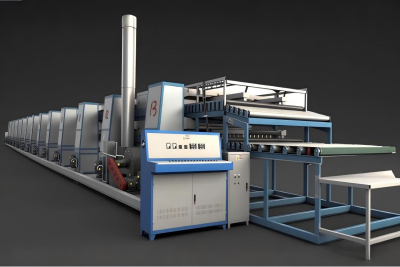
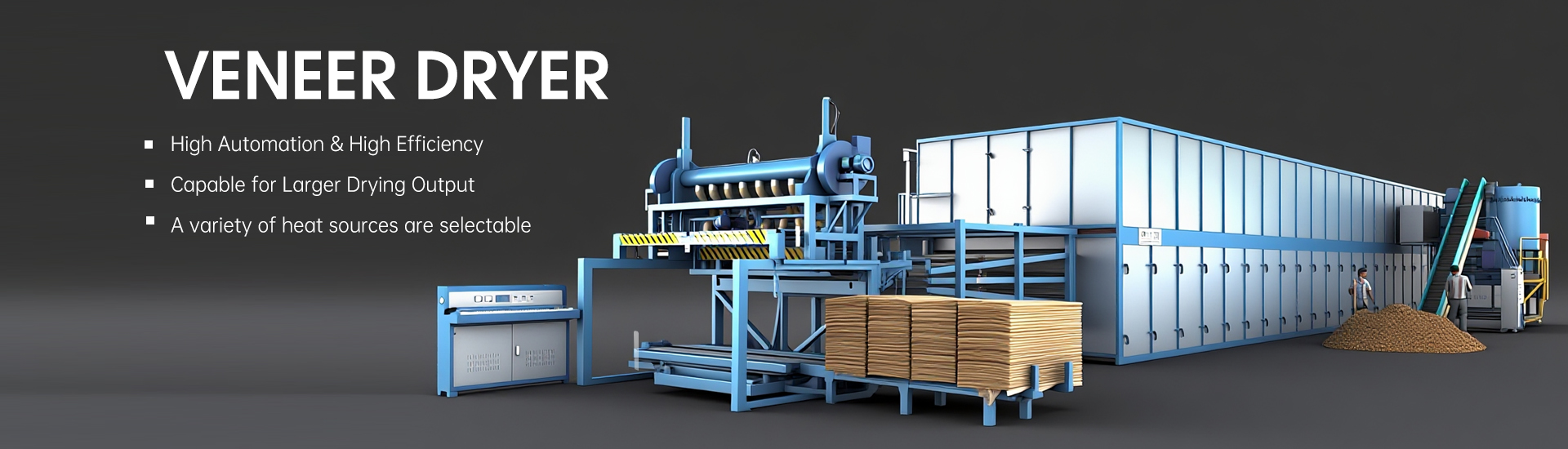
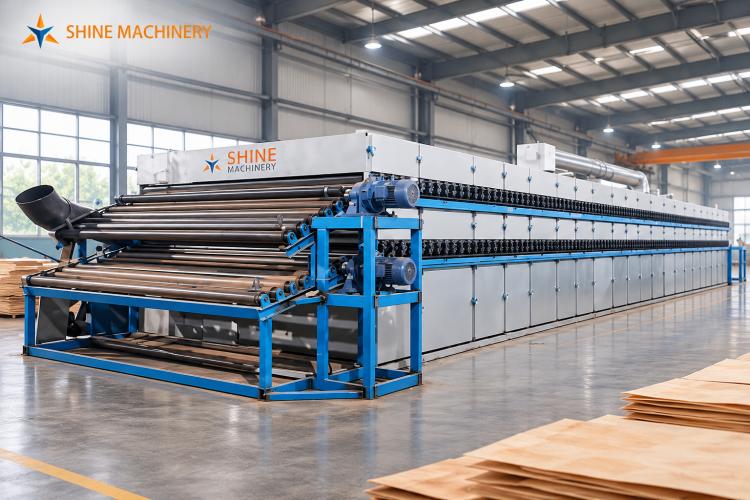
Equipment performance has a major influence on drying consistency. A modern industrial veneer dryer provides controlled heating and continuous airflow. It also helps operators manage production speed and drying conditions.
At Shandong Shine Machinery, we focus on practical equipment solutions. Our goal is to help plywood manufacturers achieve stable drying performance. We believe reliable equipment should support both product quality and production efficiency.
3.1 More Consistent Temperature Distribution
A well-designed drying system distributes heat across the working area. This helps reduce temperature differences between veneer sheets. Consistent heating also makes drying parameters easier to manage.
However, temperature uniformity depends on equipment design and maintenance. Operators must inspect fans, ducts, and heating components regularly. Good equipment needs good operating habits.
3.2 Better Airflow and Moisture Removal
Effective airflow helps remove evaporated moisture from veneer surfaces. It also supports more consistent heat transfer. Together, these factors improve the stability of the drying process.
Manufacturers should pay attention to air velocity and humidity. Both influence moisture removal and drying performance. A suitable airflow system can reduce the risk of uneven veneer drying.
3.3 Flexible Drying Speed Adjustment
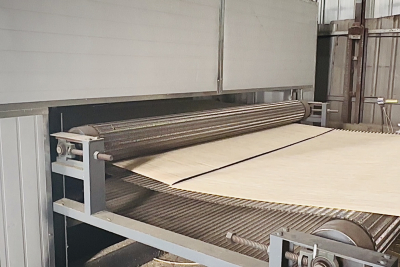
A continuous veneer dryer allows operators to adjust conveyor speed. This flexibility helps accommodate different sheet thicknesses and moisture conditions. It also supports consistent production across changing raw materials.
For example, thicker veneer may require a longer residence time. Thinner sheets usually need less time under similar conditions. Operators can adjust feeding speed according to actual test results.
3.4 Improved Production Efficiency
Modern veneer drying technology combines heating, airflow, and conveyor systems. These components work together to maintain continuous production. Stable operation helps reduce unnecessary downtime and material waste.
A suitable drying system also supports the plywood manufacturing process. It prepares veneer for gluing, pressing, and subsequent processing. Ultimately, better moisture control helps manufacturers improve their overall production quality.
4. Common Veneer Drying Defects to Avoid
Shrinkage rarely appears alone. Poor drying conditions can create several related problems. Recognizing these defects helps operators correct production issues earlier.
Common defect
Possible cause
Recommended action
Excessive shrinkage | Uncontrolled moisture loss | Adjust drying conditions |
Surface cracks | Excessive drying stress | Optimize temperature |
Veneer warping | Uneven moisture distribution | Improve airflow |
Uneven drying | Inconsistent heat circulation | Inspect fans and ducts |
Brittle veneer | Overdrying | Control final moisture |
Poor bonding | Incorrect moisture content | Check adhesive requirements |
These problems often share similar causes. Therefore, manufacturers should evaluate the entire drying process rather than focusing on individual defects.
4.1 Avoid Overdrying and Underdrying
Both conditions affect downstream production. Overdried veneer may become brittle and difficult to handle. Underdried veneer may interfere with adhesive performance and pressing quality.
We recommend setting clear moisture targets for each product type. Regular testing also helps operators identify problems before large batches become defective.
4.2 Establish a Reliable Quality Control System
Good veneer quality control requires consistent measurement and documentation. Operators should record important production parameters for every batch.
Useful parameters include:
Initial moisture content (%).
Final moisture content (%).
Veneer thickness (mm).
Drying temperature (°C).
Conveyor speed (m/min).
Drying time (s or min).
Ambient humidity (%).
Defect rate (%).
These records help manufacturers identify trends and improve production settings. They also make troubleshooting much easier.
5. How to Optimize Your Veneer Drying Process
Reducing shrinkage requires more than purchasing new equipment. Manufacturers need a complete approach that combines raw material preparation, process control, and equipment maintenance.
We recommend following this practical workflow:
Inspect incoming logs and freshly peeled veneer.
Measure initial moisture content.
Sort sheets by species and thickness.
Select suitable drying parameters.
Monitor temperature and airflow.
Check conveyor speed and final moisture.
Inspect dried sheets for shrinkage and other defects.
Store finished veneer under stable conditions.
This workflow creates a repeatable production process. It also helps operators make decisions based on actual measurements rather than guesswork.
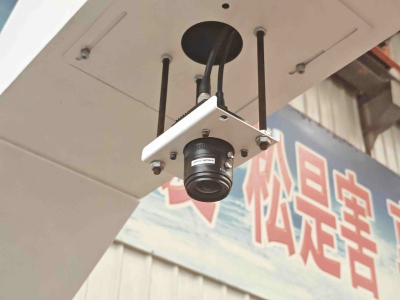
For manufacturers with large production volumes, automated monitoring can provide additional benefits. It helps operators track changing conditions and maintain consistent output. Nevertheless, regular manual inspections remain important.
6. Conclusion: Better Drying, Less Shrinkage
Veneer shrinkage is a natural result of moisture loss. However, excessive shrinkage does not have to become a regular production problem. Manufacturers can reduce dimensional changes through better moisture management, suitable temperatures, and consistent airflow.
At Shandong Shine Machinery, we believe reliable drying equipment plays an important role in modern plywood production. A properly configured drying system helps manufacturers improve product consistency and reduce material waste.
Are you looking for a suitable industrial veneer dryer for your production line? Contact our team to discuss your wood species, veneer thickness, production capacity, and drying requirements. We are ready to help you find a practical solution.