The Reasons Affect on Plywood Quality
Plywood Quality: The Three Pillars
In the highly competitive global plywood market, achieving consistent, high-quality output is no longer a matter of chance but of precise scientific control. Industry experts and recent production data converge on a critical truth: the final product's integrity—its strength, dimensional stability, and durability—hinges on three non-negotiable pillars: raw veneer quality, precision in veneer drying, and the mastery of the plywood hot press cycle. For any modern plywood production line, overlooking any one of these factors is a direct path to delamination, warping, and costly customer rejections.
The Foundation: Veneer Integrity and Drying Precision
The journey to a superior panel begins long before the glue is applied. The quality of the raw veneer, determined by the (rotary peeling) process, sets the ceiling for potential quality. Uniform thickness, sharp cutting tools, and the management of natural defects like knots and splits are paramount. However, the most critical and often under-optimized stage in this phase is veneer drying.
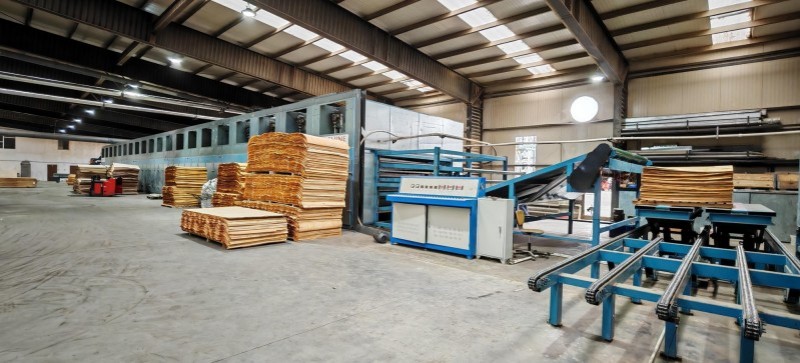
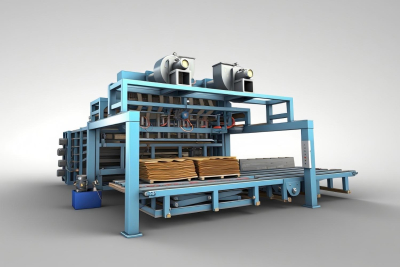
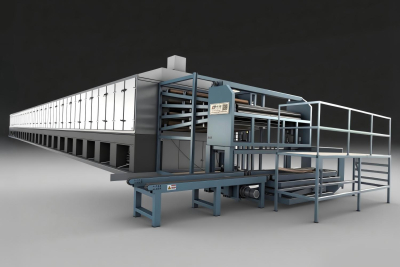
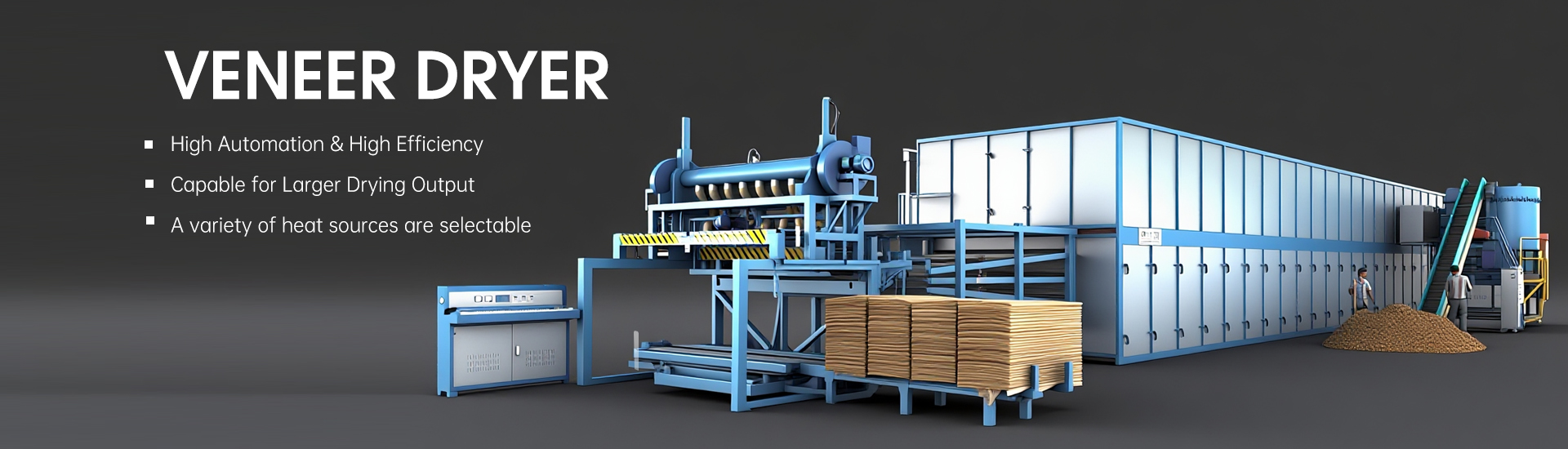
"Veneer that enters the hot press with improper moisture content is the primary cause of steam blows and internal voids," explains a production manager from a leading Vietnamese mill. The industry-standard sweet spot for moisture content post-drying is rigorously defined: core veneer should be between 8% and 12%, with face veneer slightly drier at 6-10%. Straying outside this window has dire consequences. Over-dried veneer becomes brittle, absorbs excessive glue, and can lead to weak bond lines. Under-dried veneer, conversely, generates steam pressure during pressing that can literally blow the layers apart from the inside. In a continuous plywood production line, the dryer is not just a moisture-removal machine; it is the first line of defense against catastrophic failure.
The Heart of the Matter: Mastering the Hot Press
If drying sets the stage, the plywood hot press is the main act where the final product is forged. This is an irreversible chemical and physical transformation where temperature, pressure, and time must operate in perfect synchrony.
Temperature: This is dictated by the glue chemistry. For common Melamine (MR) glue, platen temperatures of 110-120°C are standard, while the more durable Phenolic (WBP) glue requires a hotter 130-145°C to achieve full cross-linking. An under-cured glue line will fail a boil test, while excessive heat can scorch the wood and increase formaldehyde emissions.
Pressure: The role of pressure is twofold—to ensure intimate contact between veneer layers and to achieve uniform panel thickness. Insufficient pressure results in delamination and weak spots, while excessive pressure can crush the wood cells, especially in low-density species, compromising the panel's core strength.
Time: The press cycle is typically calculated per millimeter of panel thickness. Rushing this process to increase throughput is a common but costly mistake, as it prevents heat from penetrating to the core, leaving the central glue line uncured and the panel structurally unsound.
The Binding Agent: Glue Management
Flanking these mechanical processes is the chemical backbone of the panel: the adhesive. The quality of the glue, its viscosity, pH, and the accuracy of its application (spread rate) are decisive. In modern automated lines, glue spreaders must apply a consistent film—too little glue starves the bond, while too much increases costs and can cause unsightly "glue bleed" through the face veneer. Furthermore, with tightening global regulations like CARB Phase 2, the formulation of the adhesive directly impacts the panel's formaldehyde emissions, making it a critical factor for market access beyond mere structural performance.
Conclusion: A Systems Approach
There is no single "magic parameter" for perfect plywood. It is the synergistic control across the entire plywood production line that separates premium producers from the rest. Investing in high-precision veneer drying technology and computer-controlled plywood hot press systems with real-time monitoring is no longer a luxury but a necessity for survival and growth in an industry where quality tolerances are only getting tighter. For manufacturers, the message is clear: master the trifecta of raw material, drying, and pressing, or risk being left behind with a pile of defective panels.