What Is Film Faced Plywood?
Film faced plywood is a popular engineered wood product in construction and industrial applications. It features a smooth, durable film on both sides of a plywood panel. This coating helps protect the surface against moisture, abrasion, and repeated use. Builders often choose it for concrete formwork, flooring, transport platforms, and other demanding applications.
However, its performance depends on more than the surface film. The quality of the plywood veneer, adhesive, pressing conditions, and moisture control all matter. In this guide, we explain film faced plywood, its properties, uses, and manufacturing process. We also explore why veneer drying plays an important role in producing reliable plywood panels.
What Is Film Faced Plywood?
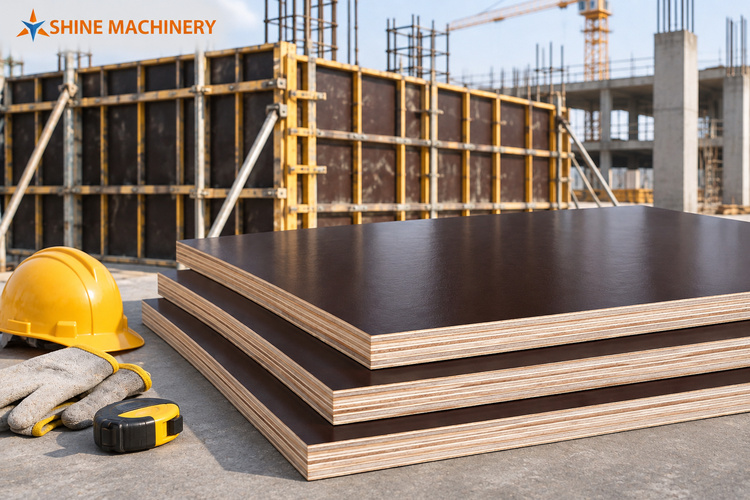
Film faced plywood is a type of plywood that uses a resin-coated film on its surface. Manufacturers typically apply phenolic film to both sides of the panel. This film creates a smooth, dense layer that protects the wood core. As a result, the panel offers better surface durability and moisture resistance than many untreated plywood products.
The core consists of multiple layers of plywood veneer. Manufacturers arrange these layers with alternating grain directions to improve strength and stability. They bond the layers with adhesive under heat and pressure. The finished panel combines the strength of plywood with a protective surface that supports demanding applications.
What Are the Main Film Faced Plywood Properties?
Film faced plywood offers several practical advantages. However, buyers should evaluate its core quality, adhesive, film type, thickness, and edge treatment before choosing a product. These factors determine its actual performance in different working conditions.
1. Moisture Resistance
The resin film helps prevent water from entering the panel surface. It protects the wood from direct contact with moisture during normal use. Therefore, film faced plywood works well in construction environments and other areas with frequent moisture exposure.
Nevertheless, the film cannot make the entire panel waterproof. Water may still enter through exposed edges, damaged surfaces, or poorly sealed joints. Proper edge sealing and storage remain important.
2. Wear and Abrasion Resistance
The coated surface withstands regular friction and contact better than many untreated plywood surfaces. This property makes it suitable for concrete formwork and transport flooring. Workers can also clean the surface more easily after use.
Depending on film quality and handling, the panel may support multiple reuse cycles. However, sharp tools, heavy impacts, and poor storage can shorten its service life.
3. High Strength and Stability
Cross-laminated veneer layers help distribute loads across different directions. This structure reduces some movement caused by changes in moisture and temperature. It also improves panel stability during practical use.
The strength of the finished panel depends on several factors, including veneer quality, layer count, adhesive performance, and pressing conditions.
4. Smooth Surface and Easy Cleaning
The resin coating creates a relatively smooth and uniform surface. It can also help concrete separate from the formwork after curing. This feature supports a cleaner concrete finish and reduces cleaning work.
Common film faced plywood properties include:
· Moisture resistance: Helps protect the wood surface from water exposure.
· Abrasion resistance: Supports repeated contact and friction.
· Surface smoothness: Helps achieve a clean concrete finish.
· Structural stability: Cross-laminated veneers improve dimensional stability.
· Reusable performance: Supports repeated applications when users maintain it properly.
What Are Film Faced Plywood Uses?
The combination of a strong core and durable surface makes film faced plywood useful in many industries. Its applications depend on panel thickness, core material, bonding quality, and surface specifications.
Common film faced plywood uses include:
1. Concrete Formwork
Concrete formwork remains one of the most common applications. Workers use the panels to create temporary molds for concrete walls, floors, columns, beams, and foundations. The coated surface helps concrete release more easily after curing.
Moreover, contractors can reuse suitable panels across several construction projects. This can reduce material waste and formwork costs. However, reuse depends on concrete release agents, panel quality, handling, and maintenance.
2. Truck and Trailer Flooring
Film faced plywood often serves as flooring in trucks, trailers, and transport platforms. Its surface can resist abrasion from cargo movement and regular loading. The panel also provides a practical balance between weight and strength.
Some manufacturers offer textured surfaces to improve grip. These options can help workers and cargo move more safely under suitable conditions.
3. Temporary Construction Platforms
Construction teams use film faced plywood for temporary walkways, platforms, and site structures. Its surface durability and structural properties make it suitable for demanding working environments. However, users must select panels that meet the required load and safety standards.
4. Industrial and Commercial Applications
Film faced plywood also appears in industrial floors, workbenches, storage systems, and protective panels. Its smooth surface supports cleaning and routine maintenance. Meanwhile, its wood core allows practical cutting and installation.
What Is the Film Faced Plywood Manufacturing Process?
The film faced plywood manufacturing process combines veneer preparation, drying, adhesive application, pressing, and surface finishing. Each stage influences the quality of the final panel.
Step 1: Log Preparation and Veneer Peeling
Manufacturers select suitable logs based on wood species, diameter, and quality. They remove the bark and condition the logs with heat or moisture. This preparation helps soften the wood and improves peeling conditions.
A rotary peeling machine then cuts the logs into thin plywood veneer. Manufacturers adjust veneer thickness according to product requirements. They also clip the sheets to suitable dimensions and remove major defects.
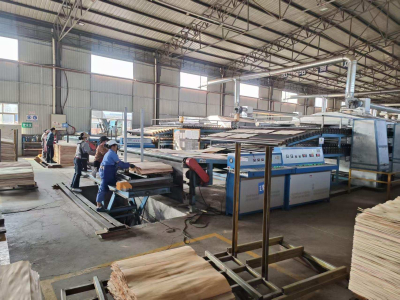
Step 2: Plywood Veneer Drying
Fresh plywood veneer contains a considerable amount of moisture. Manufacturers must reduce this moisture before applying adhesive and assembling the panel. Excess moisture can interfere with bonding and affect the final product.
The veneer drying process helps achieve a suitable and more uniform moisture level. It also supports better handling, bonding, and panel stability.
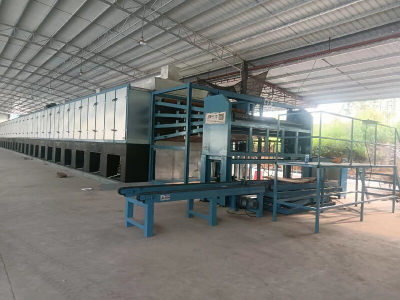
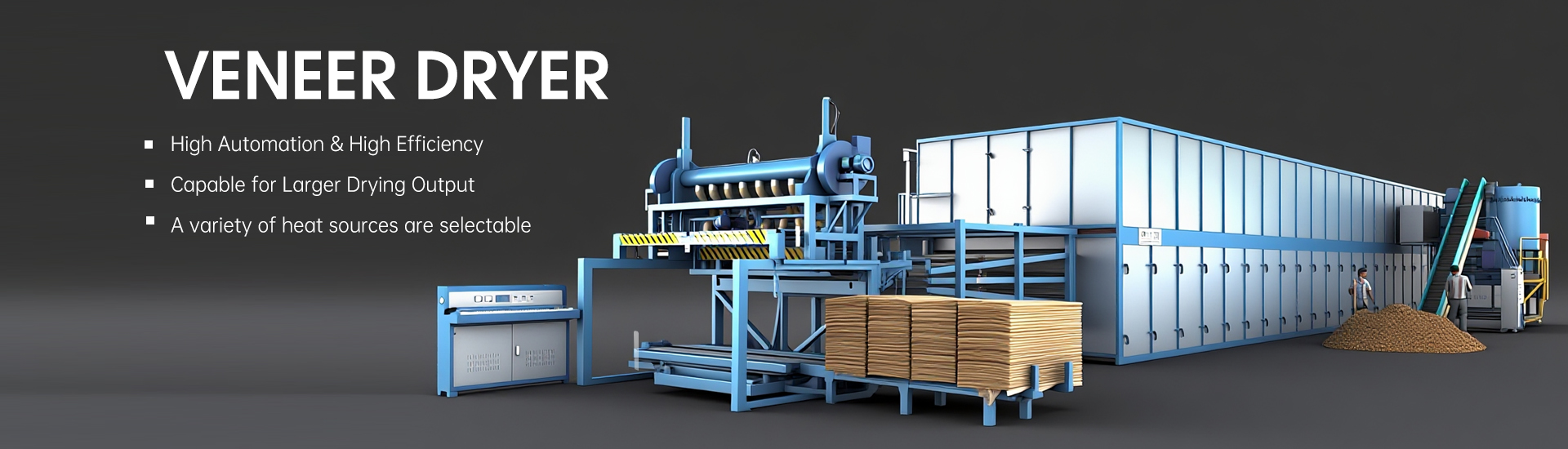
In a modern plywood factory, a veneer dryer machine helps manufacturers control drying temperature, airflow, and conveying speed. These parameters influence drying efficiency and veneer quality.
At Shandong Shine Machinery, we understand that veneer drying involves more than simply removing water. Manufacturers must balance drying efficiency, moisture uniformity, energy consumption, and veneer quality. Proper drying control helps reduce defects and improve production consistency.
Step 3: Veneer Grading and Preparation
After drying, workers or automated systems inspect the veneer sheets. They sort the material according to thickness, appearance, defects, and intended use. Manufacturers may repair small defects or trim damaged areas.
Proper grading helps improve the consistency of the plywood core. It also supports better panel appearance and structural performance.
Step 4: Glue Application and Layer Assembly
Manufacturers apply adhesive to the veneer surfaces. They then arrange multiple layers with alternating grain directions. This cross-laminated structure helps improve panel strength and stability.
The number of layers depends on the required thickness and product specification. Manufacturers also select adhesives according to moisture resistance and application requirements.
Step 5: Cold Pressing and Hot Pressing
Manufacturers may use a cold press to consolidate the assembled layers. Next, they feed the panel into a hot press. Heat and pressure help the adhesive cure and bond the veneer layers together.
Pressing parameters depend on adhesive type, panel thickness, veneer moisture, and production requirements. Proper control helps reduce bonding defects and improves panel consistency.
Step 6: Sanding, Trimming, and Film Application
After pressing, manufacturers trim the panel to the required dimensions. They may also sand the surface to improve flatness and preparation quality. Then, they place resin-impregnated film on the plywood faces.
A second pressing operation bonds the film to the panel surface. This process creates the protective coating that distinguishes film faced plywood from ordinary plywood.
Step 7: Edge Sealing and Quality Inspection
Manufacturers seal exposed edges to reduce moisture penetration. They then inspect the finished panels for dimensions, thickness, surface defects, bonding quality, and appearance.
Finally, they stack, label, and package the panels for transportation. Proper packaging helps protect the products during storage and shipping.
Why Is Plywood Veneer Drying Important?
Plywood veneer drying directly affects the quality and efficiency of plywood production. Manufacturers cannot expect consistent panels when they feed unevenly dried veneers into the assembly process.
1. Improve Adhesive Bonding
Veneer moisture affects how adhesive interacts with wood surfaces. Excess moisture can interfere with bonding conditions and influence adhesive curing. Therefore, manufacturers need suitable moisture levels before glue application.
2. Reduce Drying Defects
Uneven drying may cause veneer cracking, curling, shrinkage, or excessive brittleness. These defects can reduce usable veneer yield. They may also create problems during assembly and pressing.
3. Improve Production Efficiency
Consistent veneer moisture helps manufacturers manage adhesive application and pressing conditions. It also supports more stable production quality. In addition, efficient drying can help reduce energy waste and unnecessary material losses.
4. Support Better Panel Quality
Uniformly dried veneers help manufacturers create more consistent plywood panels. This consistency can improve bonding, dimensional stability, and product reliability. Consequently, drying quality influences several downstream production stages.
How to Choose a Suitable Wood Veneer Dryer?
Choosing a suitable wood veneer dryer requires careful consideration of production requirements. Manufacturers should evaluate more than machine capacity or initial investment.
Key factors include:
· Production capacity: Match drying output with peeling and pressing capacity.
· Veneer thickness: Consider the thickness and species of the veneer.
· Moisture control: Evaluate drying uniformity and target moisture requirements.
· Energy consumption: Review heat utilization and potential energy-saving features.
· Drying quality: Reduce overdrying, cracking, and moisture variation.
· Automation: Consider conveying systems, temperature control, and operating convenience.
· Maintenance: Evaluate cleaning, spare parts, and long-term service support.
A suitable drying system should match the factory's actual production needs. Higher capacity alone does not guarantee better performance. Manufacturers should also consider veneer quality, operating costs, and production stability.
Conclusion
Film faced plywood combines a cross-laminated wood core with a protective resin film. Its moisture resistance, surface durability, and practical strength make it useful in construction, transportation, and industrial applications. However, manufacturers must control every production stage to achieve consistent quality.
The plywood production process starts with log preparation and veneer peeling. It then continues through drying, grading, gluing, pressing, film application, and finishing. Among these stages, plywood veneer drying plays a particularly important role in bonding quality and production efficiency.
At Shandong Shine Machinery, we believe reliable veneer drying technology helps plywood manufacturers build a stronger foundation for product quality. A well-designed drying system can support more consistent production, reduce veneer waste, and improve resource utilization.