How Is Plywood Made? A Complete Guide
From Logs to Strong Panels
Have you ever looked at a plywood board and wondered how manufacturers make it so strong? It looks like an ordinary piece of wood, but its structure tells a different story. Plywood combines several thin wood layers into one engineered panel. Each layer plays an important role in strength, stability, and durability.
At Shandong Shine Machinery, we appreciate every step behind quality wood products. The plywood manufacturing process requires careful material selection, accurate processing, and reliable production equipment. From the first log to the finished board, manufacturers must control every detail. Let's explore how plywood is made and why veneer preparation matters so much.
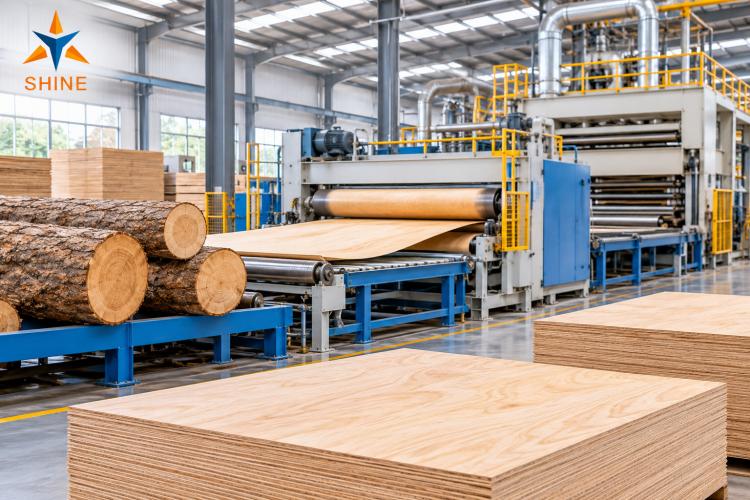
1. Selecting and Preparing the Logs
Every plywood panel starts with suitable timber. Manufacturers select logs according to wood species, diameter, length, straightness, and quality. Common choices include poplar, birch, pine, eucalyptus, and other hardwood or softwood species. Each species offers different properties, so manufacturers match the raw material to the final application.
Log Sorting and Inspection
First, workers or automated systems inspect incoming logs. They remove unsuitable materials and separate logs by size and species. This step helps maintain consistent production quality.
Important inspection factors include:
Diameter: Determines how much usable veneer a log can produce.
Length: Must match the peeling equipment and target panel dimensions.
Wood species: Influences strength, weight, color, and appearance.
Surface condition: Excessive cracks, decay, and other defects reduce usable material.
Moisture condition: Affects log conditioning and subsequent peeling.
Debarking and Cutting
Next, a debarking machine removes bark from each log. Bark contains dirt, stones, and other materials that can damage cutting tools. After debarking, workers cut the logs into suitable lengths. Manufacturers call these prepared sections peeler blocks.
Log Conditioning
Before peeling, manufacturers often heat the blocks with hot water or steam. This treatment softens the wood and improves cutting conditions. It also helps the peeling machine produce smoother, more consistent veneer.
The required conditioning time depends on wood species, block diameter, initial temperature, and heating method. Proper conditioning reduces cutting resistance and helps limit surface defects. However, excessive heating can affect veneer quality, so manufacturers need suitable process settings.
2. Peeling Logs into Thin Veneer Sheets
After conditioning, the peeler blocks move to a rotary veneer lathe. This machine transforms a solid log into a continuous sheet of thin wood. The process resembles unrolling a giant roll of paper, except the material comes from a real tree.
How Does Rotary Veneer Peeling Work?
The machine rotates the log against a sharp cutting knife. Meanwhile, the knife gradually removes a continuous layer from the log surface. A pressure bar supports the wood during cutting and helps control veneer thickness.
The peeling process generally follows these steps:
Operators load and center the prepared block.
The machine secures the block and starts rotation.
A sharp knife cuts the rotating wood surface.
The continuous veneer ribbon moves along a conveyor.
A clipping machine cuts the ribbon into usable dimensions.
Depending on the product, manufacturers can adjust veneer thickness. Many plywood applications use veneers around 1–3 mm thick. Decorative veneer production may require thinner material.
Why Does Veneer Thickness Matter?
Thickness affects panel strength, weight, appearance, and production efficiency. Uneven thickness can create problems during drying and pressing. Therefore, manufacturers must maintain accurate knife positioning and stable feeding.
A high-quality sheet of veneer should have relatively uniform thickness and a clean surface. It should also contain as few splits, holes, and serious defects as possible.
3. Clipping and Sorting Green Veneer
Freshly peeled veneer contains considerable moisture. Manufacturers call this material green veneer. Before drying, they must cut it into suitable sizes and remove unsuitable sections.
Veneer Clipping
High-speed clipping machines cut continuous veneer ribbons into required lengths and widths. Operators can adjust cutting dimensions according to the plywood specifications. The machine also removes certain damaged sections and obvious defects.
Accurate clipping improves material utilization. It also prepares veneer for smooth transportation through the drying system.
Green Veneer Grading
After clipping, manufacturers sort veneer according to quality and intended use. Better-quality pieces often become face or back veneers. Lower grades may serve as core materials.
Typical grading considerations include:
Knots and holes
Splits and cracks
Thickness consistency
Surface smoothness
Wood discoloration
Overall sheet dimensions
Good sorting helps manufacturers use raw materials efficiently. It also reduces unnecessary waste during later production stages.
4. Drying the Veneer: A Critical Production Stage
Here comes one of the most important stages: veneer drying. Fresh veneer contains too much water for reliable adhesive bonding. Manufacturers must reduce its moisture content before applying glue.
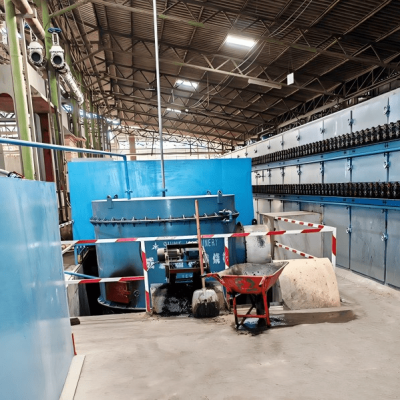
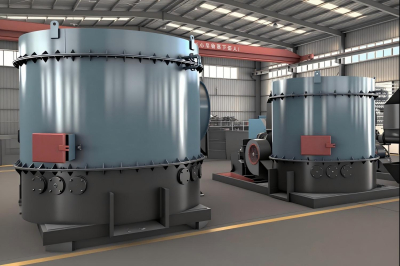
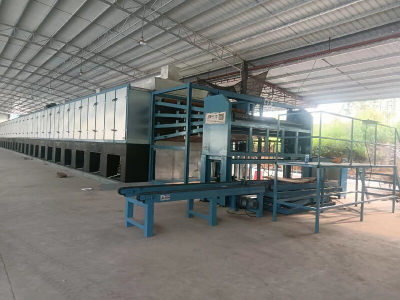
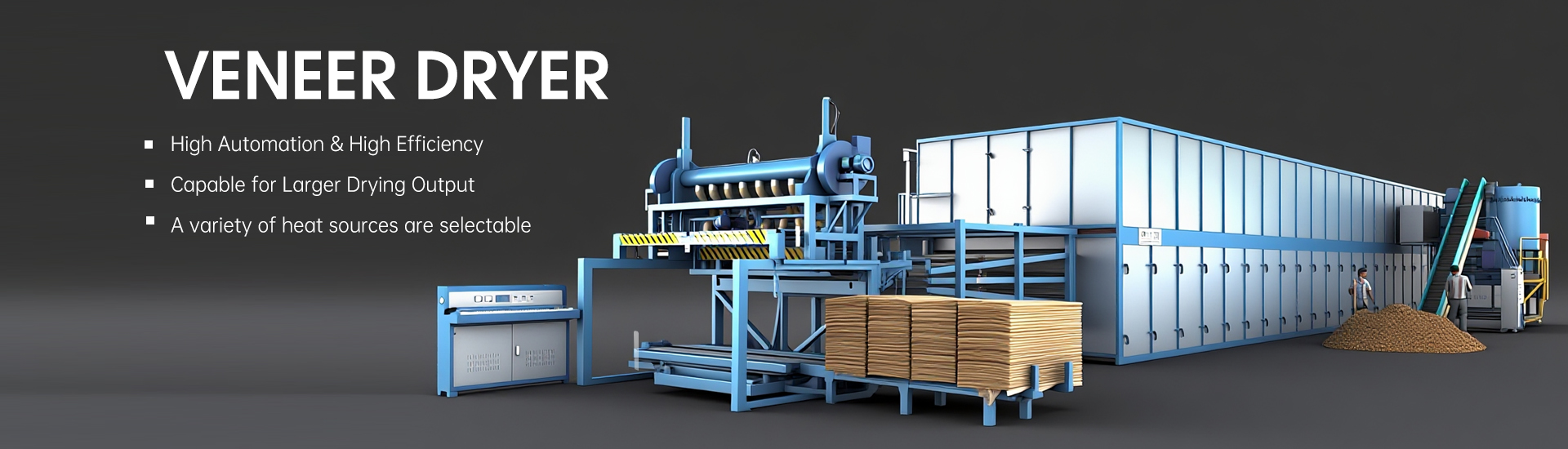
This is where a reliable Veneer Dryer Machine becomes essential. It removes excess moisture while maintaining the veneer’s usable shape and quality. Good drying also supports stable production and consistent plywood performance.
Why Must Manufacturers Dry Veneer?
Excessive moisture creates several production problems. It can interfere with adhesive bonding and increase the risk of steam-related defects during pressing. Uneven moisture can also cause dimensional instability.
Proper drying helps manufacturers achieve:
More consistent adhesive bonding
Better dimensional stability
Lower risk of blistering and delamination
More predictable hot-pressing results
Improved finished panel quality
How Does a Veneer Dryer Work?
Industrial veneer dryers usually use heated air and mechanical conveying systems. Rollers or other conveying devices move veneer sheets through different drying zones. Fans circulate hot air across the veneer surfaces.
The drying process involves several important parameters:
Parameter | Typical consideration |
Inlet moisture | Depends on wood species and peeling conditions |
Target moisture | Often around 2–10%, depending on the process |
Drying temperature | Commonly around 90–160°C in conventional processes |
Air circulation | Must provide even heat distribution |
Feeding speed | Determines the residence time |
Veneer thickness | Influences drying time and heat transfer |
These figures provide general guidance, not universal settings. Actual values depend on species, thickness, adhesive requirements, and dryer design.
What Makes Drying Quality So Important?
Imagine two veneer sheets entering the glue application stage. One has uniform moisture, while the other contains wet and overdried areas. They may behave very differently during bonding and pressing.
Uneven drying can cause cracks, curling, brittleness, and inconsistent bonding. Excessive moisture may also create steam pressure inside the panel. Therefore, manufacturers should monitor moisture content and adjust operating conditions regularly.
At Shandong Shine Machinery, we believe drying deserves particular attention. A well-designed drying line helps manufacturers improve material consistency and production efficiency. It also provides a stronger foundation for subsequent plywood processing.
5. Veneer Inspection and Repair
After drying, manufacturers inspect the veneer again. Drying can reveal defects that were difficult to identify in wet material. Workers or automated inspection systems check moisture, dimensions, and surface condition.
Repairing and Composing Veneer
Small defects do not always mean manufacturers must discard an entire sheet. Depending on the product, they can patch holes and remove damaged sections. They can also join smaller pieces through veneer splicing.
Manufacturers may perform several operations:
Remove damaged edges.
Patch small holes and openings.
Join narrow pieces into larger sheets.
Check thickness and dimensions.
Sort veneer according to its final application.
This stage improves usable material yield. It also helps create more uniform layers for panel assembly.
6. Applying Adhesive to the Veneer
Now the veneer sheets are ready for adhesive application. Glue connects individual layers and allows them to form a strong panel. Manufacturers select adhesives according to the plywood's intended use.
Common adhesive systems include:
Urea-formaldehyde (UF): Commonly used for many interior applications.
Phenol-formaldehyde (PF): Commonly used for structural and exterior-grade plywood.
Melamine-modified adhesives: Used in certain products requiring improved moisture resistance.
Other specialized resins: Selected for particular performance requirements.
How Do Manufacturers Apply Glue?
Roller spreaders provide a common method for applying adhesive. The machine distributes glue across the veneer surface at a controlled rate. Some production lines also use spraying or other specialized application systems.
Glue quantity matters greatly. Too little adhesive can weaken bonding. Too much glue can increase costs and create pressing problems.
Manufacturers must also consider adhesive viscosity, temperature, open assembly time, and spreading uniformity. These factors influence the final bonding performance.
7. Arranging Veneers and Forming the Panel
After glue application, workers or automated systems arrange the veneers into a panel. Manufacturers call this process lay-up or plywood assembly. The arrangement determines much of the finished panel's structural behavior.
Why Do Veneer Layers Cross Each Other?
The key feature of plywood is cross-lamination. Manufacturers usually arrange adjacent veneer layers with their wood grains running perpendicular to each other.
For example, consider a five-ply panel:
First layer: Grain runs horizontally.
Second layer: Grain runs vertically.
Third layer: Grain runs horizontally.
Fourth layer: Grain runs vertically.
Fifth layer: Grain runs horizontally.
This arrangement helps balance strength in different directions. It also reduces dimensional movement compared with a single solid wood layer.
Many conventional plywood panels use an odd number of plies. However, manufacturers can design different constructions to meet specific requirements.
Building Different Plywood Structures
The number, thickness, and quality of veneer layers determine panel construction. Common configurations include:
Construction | Typical application |
3-ply | Lightweight panels and furniture |
5-ply | General furniture and interior applications |
7-ply | Stronger furniture and structural applications |
9-ply or more | Specialized industrial and heavy-duty applications |
These are common examples rather than fixed industry rules. Manufacturers adjust the construction according to thickness, strength, and customer specifications.
8. Cold Pre-Pressing and Hot Pressing
Once manufacturers complete the lay-up, they transfer the loose assembly to the pressing section. The press turns the stacked veneer layers into a bonded panel. This stage determines whether the individual sheets become one stable product.
Cold Pre-Pressing
Some production lines use a cold pre-press before hot pressing. It applies pressure without the main heating process. This step compacts the veneer assembly and improves handling stability.
Pre-pressing also helps maintain the panel arrangement during transfer. Not every factory uses the same process, as equipment configurations differ.
Hot Pressing
The hot press applies heat and pressure simultaneously. Heat activates the adhesive, while pressure brings the veneer layers into close contact.
Typical operating conditions vary considerably:
Temperature: Often approximately 100–180°C, depending on the process.
Pressure: Depends on panel construction, density, and adhesive.
Pressing time: Changes with thickness, resin, and equipment.
Panel thickness: Influences the required heating and curing time.
Manufacturers must carefully balance these parameters. Insufficient pressing can cause weak bonding or delamination. Excessive heat or pressure can damage the wood or create other defects.
We consider hot pressing one of the most demanding stages in plywood production. Good results require consistent veneer preparation, accurate glue application, and reliable press control.
9. Trimming, Sanding, and Surface Finishing
After hot pressing, the panels need finishing. Their edges may contain excess veneer or irregular sections. Manufacturers use trimming saws to achieve accurate dimensions.
Panel Sanding
Sanding machines smooth the panel surfaces and improve thickness consistency. Manufacturers can choose different sanding levels according to product requirements. Some products receive additional surface treatments or decorative overlays.
Finishing operations may include:
Edge trimming
Surface sanding
Thickness calibration
Surface inspection
Decorative veneer application
Protective coating or overlay
The exact process depends on the final product. Construction plywood, furniture plywood, and decorative panels do not always require identical finishes.
10. Quality Inspection and Packaging
Before shipment, manufacturers inspect the finished plywood panels. They check dimensions, thickness, surface quality, bonding, and other relevant properties. Some manufacturers also conduct mechanical and moisture-resistance tests.
Important Plywood Quality Parameters
Inspection item | What manufacturers check |
Length and width | Dimensional accuracy |
Thickness | Consistency across the panel |
Moisture content | Compliance with product requirements |
Bonding strength | Adhesive performance |
Surface quality | Cracks, holes, and visible defects |
Flatness | Warping and panel deformation |
Formaldehyde emissions | Compliance with applicable standards |
Testing requirements vary according to product grade and destination market. Manufacturers may follow standards such as EN 314, EN 636, or relevant national specifications.
After inspection, workers sort and stack qualified panels. They protect the surfaces and edges before packaging. Finally, the factory prepares the products for storage and transportation.
11. What Types of Plywood Can Manufacturers Produce?
Different production requirements create different plywood products. Manufacturers adjust wood species, veneer thickness, adhesive types, and panel structures to meet customer needs.
Common plywood categories include:
Softwood Plywood
Softwood plywood uses species such as pine and fir. Manufacturers commonly produce it for construction, roofing, wall sheathing, and flooring.
Hardwood Plywood
Hardwood plywood uses species such as birch, poplar, oak, and maple. It often serves furniture manufacturing, cabinets, doors, and interior decoration.
Marine Plywood
Marine plywood uses suitable veneers and moisture-resistant bonding systems. Manufacturers design it for demanding moisture-related applications. However, buyers should check the applicable marine plywood standards and certifications.
Film-Faced Plywood
Film-faced plywood features a protective surface film. Construction companies commonly use it for concrete formwork. The film helps protect the panel surface and supports repeated use when properly maintained.
Decorative Plywood
Decorative plywood uses attractive face veneers or surface treatments. It offers both structural functions and visual appeal. Furniture factories and interior designers often choose this product.
12. How Does Veneer Drying Affect Plywood Quality?
We have discussed the complete manufacturing process. However, one question deserves more attention: why does veneer drying have such a significant influence on finished plywood?
The answer involves several connected production factors.
First, moisture consistency affects bonding. Adhesives need suitable veneer conditions to develop reliable bonds. Large moisture variations can create inconsistent results.
Second, drying affects dimensional stability. Wood naturally changes dimensions as its moisture content changes. Proper drying helps manufacturers control this behavior before assembly.
Third, drying influences production efficiency. Poorly dried veneer can increase defects and interrupt subsequent processing. Consistent drying helps maintain a smoother production workflow.
Finally, drying affects material utilization. Excessive drying can make veneer brittle and increase cracking. Insufficient drying can create bonding and pressing problems.
For these reasons, manufacturers should consider drying equipment an important part of their overall production strategy. A suitable Veneer Dryer Machine helps improve process control and supports consistent veneer quality.
Conclusion: Quality Starts with Every Layer
So, how is plywood made? The process starts with carefully selected logs and ends with finished panels ready for different applications. Between these stages, manufacturers must manage peeling, clipping, drying, gluing, lay-up, pressing, and finishing.
Every operation contributes to the final result. However, we believe veneer preparation deserves particular attention. Consistent thickness, suitable moisture content, and reliable drying conditions create a strong foundation for quality plywood.
At Shandong Shine Machinery, we understand the importance of efficient veneer drying in modern plywood production. Our focus is helping manufacturers improve drying consistency, production efficiency, and product quality. After all, even the strongest plywood panel starts with well-prepared veneer.
If you are planning a new plywood production line or upgrading existing equipment, choosing suitable drying technology is a worthwhile investment.