Why Uncontrolled Moisture Content Cause Plywood Delamination?
In plywood manufacturing, many surface bubbles, internal cracks, and delamination lines can be traced back to one hidden factor: unstable veneer moisture after drying. When veneer sheet drying does not hold moisture content within a narrow, uniform range, even premium glue and careful pressing cannot save the panel. Keeping moisture strictly under control inside the plywood dryer is the absolute foundation for a stable, high‑yield plywood production line.
Moisture Variation — The Invisible Weak Point in a Plywood Production Line
Our enterprise data show that plywood manufacturers place drying uniformity and moisture content (MC) control at the top of their daily concerns. Veneers are inherently thin (typically about 0.3–3 mm), meaning any minor difference in moisture quickly turns into costly defects:
•Bonding defects and delamination – Over‑dry spots absorb too much adhesive, leaving a starved glue line. Conversely, wet areas create trapped steam in the hot press, generating blisters or open glue lines.
•Warping and internal stress – Unequal shrinkage during cooling bends panels and introduces internal stress, which shows up later as twist or wavy surfaces.
•Thickness and density variation – Wetter areas compress more during pressing, causing the finished plywood to lack uniformity in both thickness and density.
Most successful plywood plants work within a typical target range of about 6–12% veneer moisture content, with remarkably tight tolerances of roughly ±0.5–1%. When the plywood dryer fails to keep veneers within that narrow band, board strength drops and customer complaints inevitably rise.
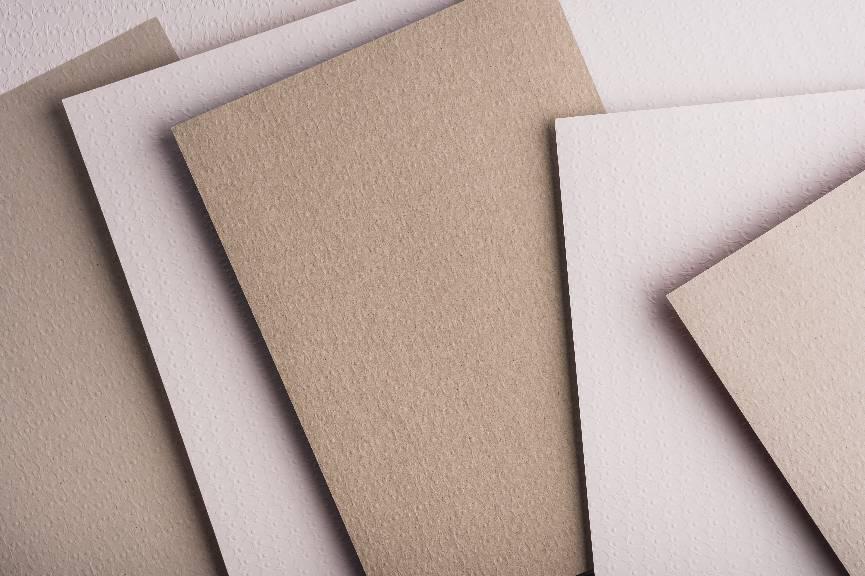
Why Glue Cannot Rescue Poor Veneer Moisture Control
In modern plywood production lines, thermosetting adhesives like UF and PF resins rely heavily on stable veneer moisture to cure correctly:
•Over‑dry veneers act like a sponge, drawing glue deep into the wood pores and leaving too little in the actual bond line.
•Over‑wet veneers release boiling steam during pressing, forming bubbles and clear delamination traces.
•Mixed‑MC layups cure unevenly, leaving some layers perfectly bonded while others remain dangerously weak.
Wide MC variation is undoubtedly one of the main causes of strength loss and delamination. Reliable bonding starts much earlier in the process, utilizing veneer sheet drying that delivers a predictable, uniform MC straight out of the plywood dryer.
Roller Veneer Dryer Technology Focused on Veneer Moisture Control
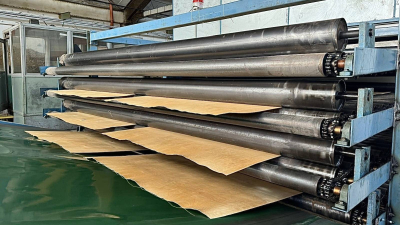
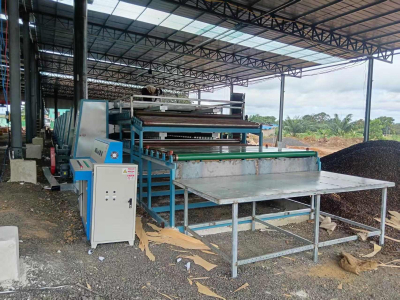
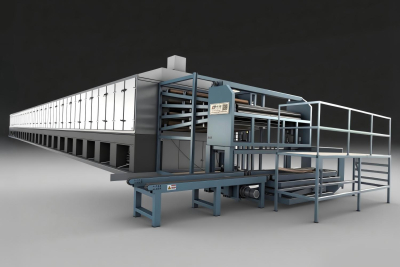
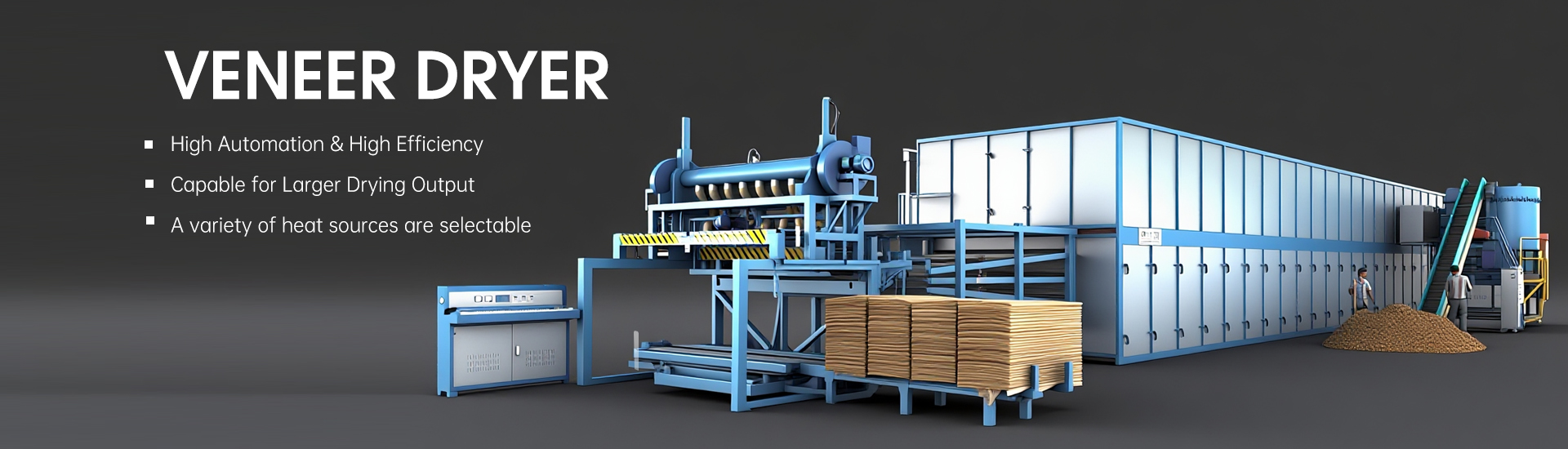
At Shine Machinery, we design roller veneer dryer solutions specifically for plywood production lines requiring stable veneer moisture control at an industrial scale. In our dryers, veneers move continuously through multi‑deck roller sections that combine pressure contact and hot‑air circulation to remove moisture evenly and efficiently.
Based on our extensive field data and direct customer feedback, our Shine roller veneer dryers provide:
•Uniform moisture content after veneer drying, ensuring sheets are fully ready for glue spreading without the need for re‑drying or extra correction steps.
•Flat veneers with no buckle or end waviness, which vastly simplifies your stacking and layup processes.
•Smooth surfaces without cracks, wrinkles, or end ripples, supporting both a premium appearance and superior bond quality.
Our roller veneer dryer configurations include 2‑deck, 4‑deck, 6‑deck, and vertical veneer dryer options. This variety makes it easier for our clients to match different factory layouts and daily capacities while keeping veneer moisture control as the absolute core objective.
Energy‑Saving Plywood Dryer with Patented Biomass Burner
Drying is undeniably one of the most energy‑intensive steps in any plywood production line. To combat rising energy expenses, we have engineered a biomass veneer dryer system that slashes plywood dryer operating costs while maintaining excellent veneer sheet drying quality.
Key advantages of our innovative system include:
•Patented biomass burner – This independently developed burner directly utilizes crushed wood waste as fuel. It provides a robust heat source for the plywood dryer while promoting massive energy savings and environmental sustainability.
•High‑efficiency heat‑exchange system – Our nationally patented heat‑exchange design maximizes thermal utilization and cuts unnecessary energy losses.
•Higher burner temperature, shorter drying time – achieving operating temperatures of about 140–180 °C. This significant boost helps drastically shorten drying time and increase overall output.
•Competitive composite drying cost – Generally, standard veneer dryer composite costs hover around USD 6–12/m³. By utilizing our biomass veneer dryer, the composite drying cost drops to about USD 10/m³, fully inclusive of labor, fuel, and electricity.
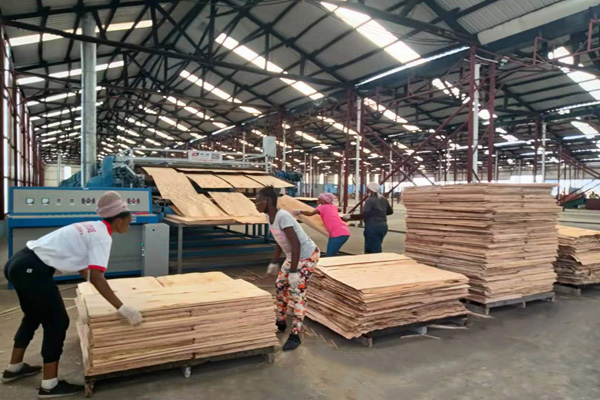
Stable veneer moisture control also depends heavily on how veneers move through the entire line, not just the standalone performance of the plywood dryer. We provide advanced veneer peeling lines that work in perfect sync with our roller veneer dryers to drastically reduce handling damage and moisture fluctuations.
Practical Moisture Control Priorities for Operators
To turn veneer moisture control into a dependable, repeatable routine, we highly recommend several operator practices based on our extensive field experience:
•Set realistic MC targets – Most successful plywood producers aim to keep veneers within about 6–12% moisture content. Adjust the exact target based on wood species and end-use, but always prioritize uniformity across all sheets.
•Use automatic temperature and speed regulation – Shine roller veneer dryers come equipped with an advanced control cabinet featuring automatic temperature control and speed regulation. This helps operators easily hit the desired final MC while keeping daily operations simple and failure rates remarkably low.
•Benefit from energy‑saving design – In our veneer dryer machine series, the total power consumption for the whole machine is proudly reduced by about 30%. This directly contributes to a lower composite drying cost without ever sacrificing your veneer moisture control.
•Dry continuously to avoid climate impact – The integrated design of our veneer dryers allows enterprises to carry out veneer sheet drying continuously. This prevents wet‑veneer deterioration due to climate exposure and significantly improves drying consistency.
By aligning dryer settings, line speeds, and material handling practices with these strategies, your mill can effectively eliminate re‑drying, minimize hot press adjustments, and reduce rejects caused by moisture variation.