Slow & Low: Dry Veneer Right
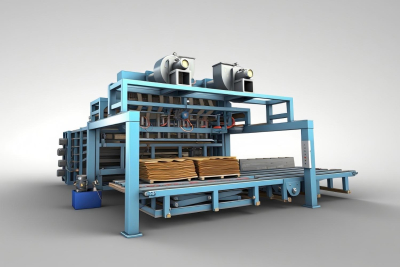
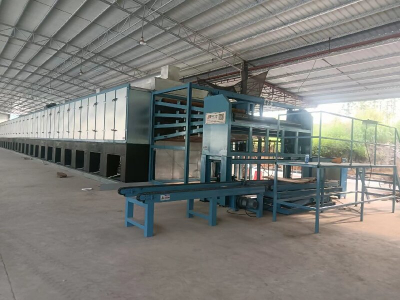
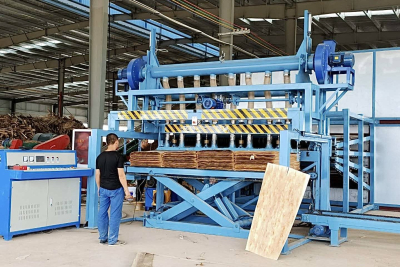
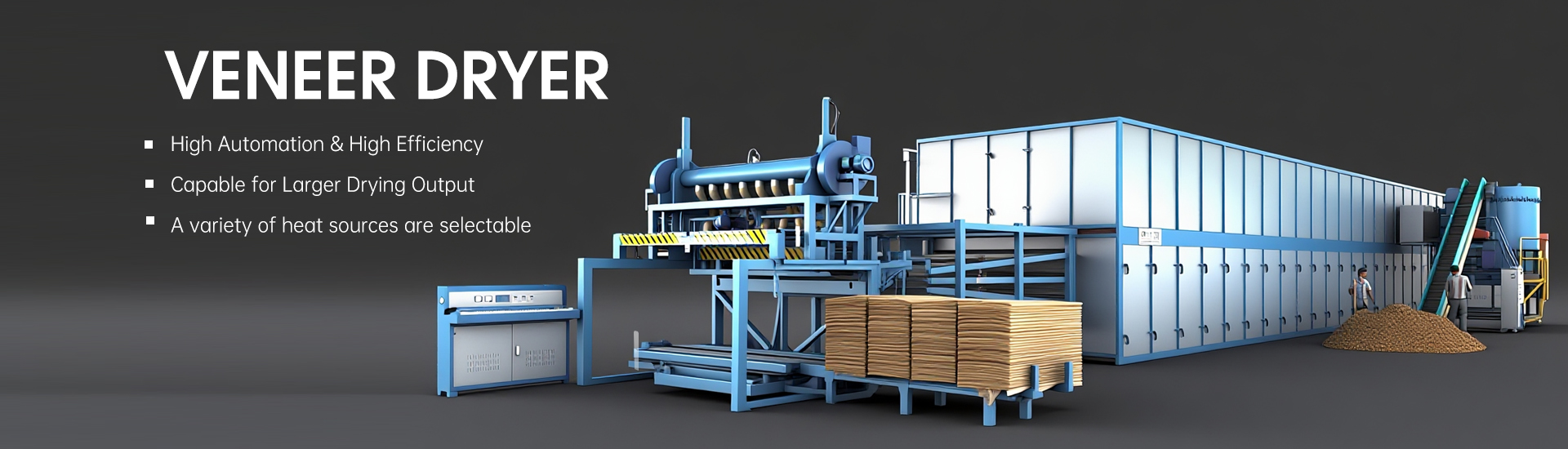
In the world of wood veneer production, achieving the perfect finish is not just about the quality of the timber or the precision of the peeling process — it hinges critically on the drying stage. When wood veneers travel through a mesh belt veneer dryer, operators often notice one striking fact: the running speed is deliberately kept low, and the temperature is set much lower than one might expect from an industrial drying machine. This is no oversight; it is a carefully engineered strategy rooted in wood science, heat transfer principles, and the pursuit of premium product quality.
Let’s explore why drying wood veneers slowly and at lower temperatures is essential, and how this approach protects your investment while delivering consistent, high‑grade results.
1. Preventing Cracks & Warping — Respecting the Wood’s Structure
Even though veneers are thin, their cellular structure and moisture pathways remain intact. During drying, moisture moves from the inner layers to the surface, where it evaporates. If the surface loses moisture too quickly — due to high temperature and airflow — it hardens prematurely. The inner layers, still saturated, continue to shrink later, creating tensile stresses between layers. For thin wood veneers, which have limited capacity to absorb such internal strain, these stresses can exceed the wood’s strength, causing surface checking (small fissures) or warping (curving out of shape).
By keeping the mesh belt veneer dryer at a lower temperature and slower speed, moisture migration gets enough time to keep pace with surface evaporation. This harmonises shrinkage throughout the veneer’s cross‑section, avoiding abrupt stress buildup and preserving structural integrity. Think of it as “gentle drying” rather than forcing moisture out in a rush.
2. Ensuring Uniform Moisture Removal — No Hot Spots or False Dryness
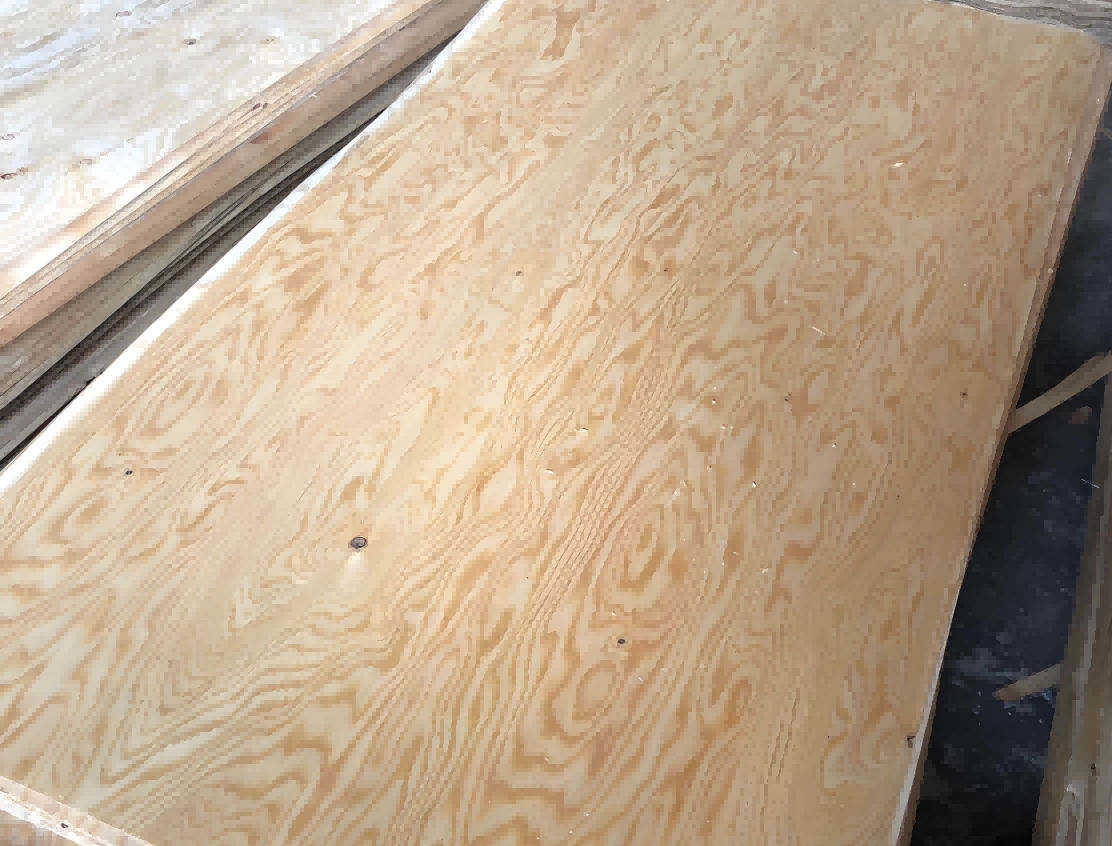
Uniformity is vital when dealing with high‑value veneers destined for furniture, cabinetry, or decorative panels. High temperatures can cause the leading edge of the veneer batch to overheat, especially near the dryer inlet, risking colour change (darkening or greying) and even local scorching. Meanwhile, downstream sections may receive insufficient heat, leaving cores incompletely dried.
Fast airflow worsens this by potentially forming a hardened surface “shell” that traps moisture inside — a phenomenon called case hardening. The surface feels dry to the touch, but internal moisture remains, setting the stage for post‑process issues like mould growth or dimensional instability.
Operating the dryer at a lower temperature ensures heat penetrates gently and evenly, while a slower belt speed gives every section of the dryer adequate residence time to treat each veneer consistently. The result is a batch of wood veneers with balanced moisture content and identical visual quality.
3. Preserving Colour & Aesthetic Value — Meeting Premium Market Demands
Many wood veneers, particularly rare hardwoods and stained varieties, owe their commercial value to natural colour and grain pattern. High temperatures accelerate oxidative reactions involving lignin and extractives, which darken or dull the veneer’s appearance. For dyed veneers, excessive heat can degrade pigments, altering hues unpredictably.
Low‑temperature drying minimises these unwanted chemical changes, helping retain the original tonal richness and brightness. In markets where visual perfection drives price, this protection is not a luxury — it is a necessity.
4. Matching the Physical Nature of Thin Veneers — Delicate Yet Demanding
Being thin makes veneers quick to respond to heat, but also highly vulnerable to distortion. Their large surface‑area‑to‑volume ratio means moisture evaporates rapidly, which sounds efficient but is actually risky without control. Rapid moisture loss can destabilise the veneer faster than its structure can cope.
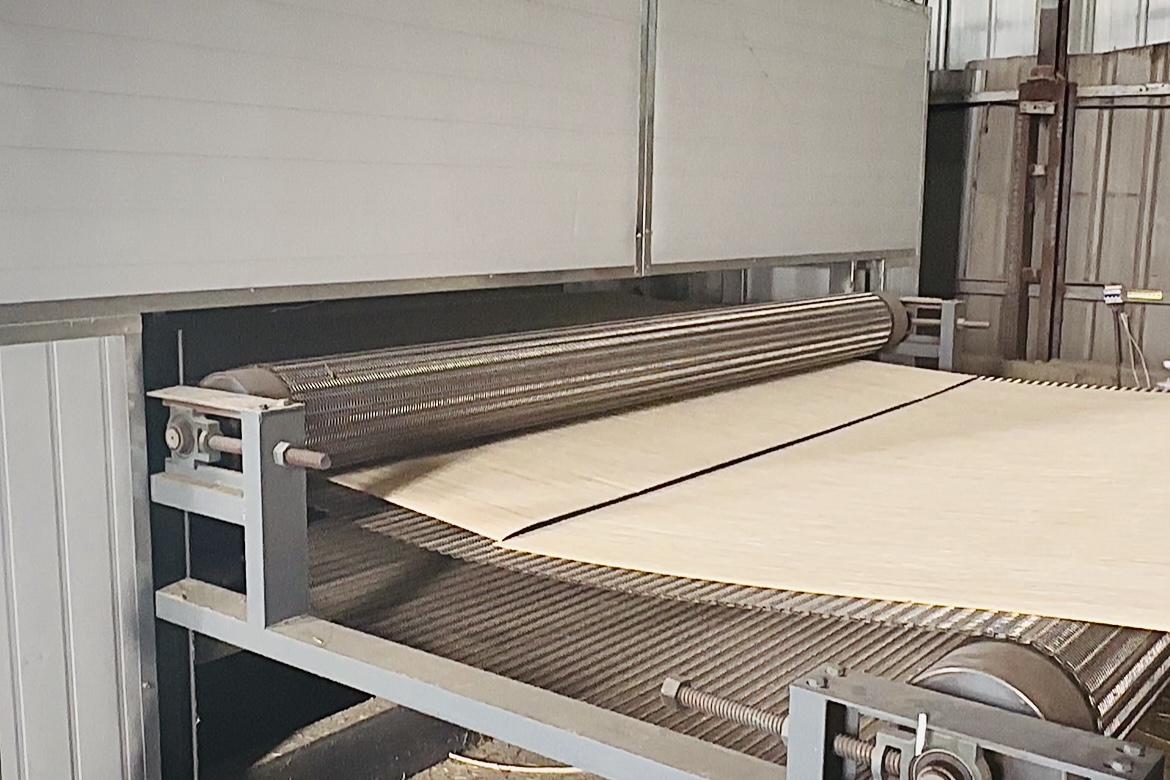
Consequently, the drying strategy must counterbalance this vulnerability. Instead of applying the “high heat, high airflow” methods suitable for thick lumber, the process treats veneers like a delicate fabric — slowly and patiently. The mesh belt veneer dryer thus becomes less a brute‑force machine and more a precision instrument, tuned to the veneer’s fragility.
The Analogy: Stewing vs. Steaming
Consider drying thick timber boards akin to stewing beef — high heat works well. Drying thin wood veneers resembles steaming a delicate custard: too fierce a fire causes cracks and uneven texture. The goal is controlled, gentle heat penetration, achieved through low temperature and slow belt movement.
This approach may seem to sacrifice speed, but it prevents costly defects — cracks, warps, colour shifts, and moisture pockets — that would otherwise lead to rejects, re‑processing, or customer complaints. In the long run, protecting quality saves money and safeguards reputation.
Conclusion
Running a mesh belt veneer dryer at low temperature and low speed is not inefficiency — it is the intelligent choice for quality‑first production. It respects the intrinsic behaviour of wood, avoids destructive internal stresses, delivers uniform dryness, and preserves the aesthetic traits that make wood veneers commercially valuable. For producers aiming to excel in premium veneer markets, mastering this “slow and low” drying philosophy is as important as selecting the right timber or maintaining sharp peeling blades. It ensures that every sheet exiting the dryer is ready to enhance fine furniture, architectural finishes, and luxury interiors — flawless, stable, and beautiful.
If you’re facing challenges with veneer cracking, colour inconsistency, or uneven moisture, revisiting your drying temperature and speed settings could be the key. Sometimes, the secret to top‑grade veneer is simply letting it dry the right way — slowly and gently.