Steam Conditioning for Premium Veneer
How Steam Conditioning Enables Quality Veneer
In the wood veneer manufacturing industry, one process, though traditional, is absolutely crucial, directly determining the quality, yield, and economic viability of the final product – the steam conditioning of wood logs. To the uninitiated, it might seem that slicing a log directly should produce thin veneer sheets. However, seasoned industry experts understand that for high-density hardwoods like birch and eucalyptus, skipping the steam conditioning stage almost guarantees producing little more than fragmented waste. This article delves into why steam conditioning is the key process unlocking the potential for high-quality veneer production.
Cracking Wood's "Hardness Code": The Transformation from Brittle to Pliable
Why does hard wood need a "hot water bath"? The answer lies in the wood's inherent chemical and physical structure.
Firstly, the core function of steam conditioning is to reduce wood hardness and increase its plasticity. Many high-density woods are naturally hard and brittle in their raw state. Imagine trying to shave a hard plastic rod with a peeling knife: the result would not be continuous sheets but fractures and fragments. The same principle applies to wood peeling. Untreated hardwood, subjected to the blade of a veneer lathe, cannot form intact veneer sheets, resulting instead in extensive fragmentation and unacceptably low yield.
The secret to this remarkable transformation lies in lignin – a substance often called wood's "natural glue," which keeps the wood fibers rigid at room temperature. During steam conditioning, high-temperature, pressurized steam penetrates deep into the wood, effectively softening the lignin. This causes the wood cell walls to soften, transforming the entire material from hard and brittle to soft and pliable. The process is analogous to treating bamboo: fresh bamboo becomes highly flexible and can be easily bent and woven after steaming. A log that has been properly conditioned allows veneer to be smoothly and continuously "peeled" away in an unbroken ribbon.
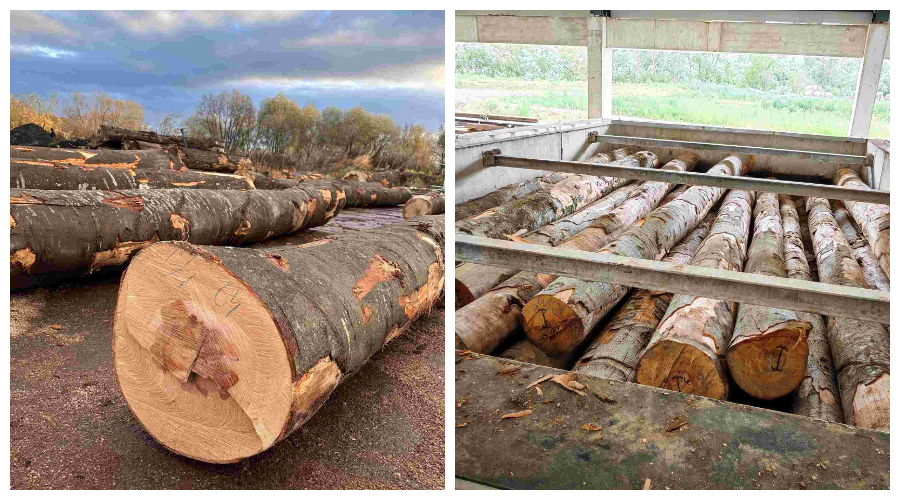
Secondly, steam conditioning significantly improves veneer quality by preventing defects. Even if the wood doesn't shatter completely, peeling hard, brittle wood easily leads to micro-cracks on the veneer surface or a "fuzzy" grain on the backside (the side closest to the log's core), an industry phenomenon known as "loosened grain." These defects severely impact the veneer's strength, appearance, and glue-bonding performance. Properly softened wood allows the veneer to separate smoothly and continuously from the log, resulting in intact sheets with consistent thickness and a smooth surface – the foundation for high-end applications.
Furthermore, steam conditioning homogenizes the wood's constituents and paves the way for veneer drying. Wood contains extractives like starches and sugars, and its moisture distribution is uneven. The conditioning process partially breaks down these substances and creates a more uniform distribution of heat and moisture within the log. This establishes favorable conditions for the subsequent critical drying stage, significantly reducing problems like warping and cracking caused by uneven drying, thereby enhancing the stability of the entire production process and the final product yield.
Proof in Practice: Typical Wood Species Requiring Conditioning
Theory must align with practice. In commercial production, accurately determining which species require conditioning is directly linked to cost-effectiveness.
Typical Case 1: Birch – A Mainstay of the Plywood Industry
As one of the most commonly used species for plywood manufacturing, birch has a uniform, fine texture but relatively high hardness. It is a perfect example where steam conditioning proves its value. The Dilemma Without Conditioning: Attempting to peel birch directly results in brittle, fragile veneer with deep checks on the backside, leading to very low usable yield, unsuitable for commercial production.
Typical Case 2: Eucalyptus – The High-Value Challenge of Fast-Growth Timber
Eucalyptus, an important fast-growth plantation species, is seeing increasing application. However, its high wood density and rich extractive content present processing challenges.
Processing Challenges: The hardness of eucalyptus makes it difficult to peel directly. Simultaneously, its abundant extractives can quickly dull peeling knives during processing, increasing production costs and impacting efficiency. The Reverse is Also True: Species Typically Not Requiring Conditioning.
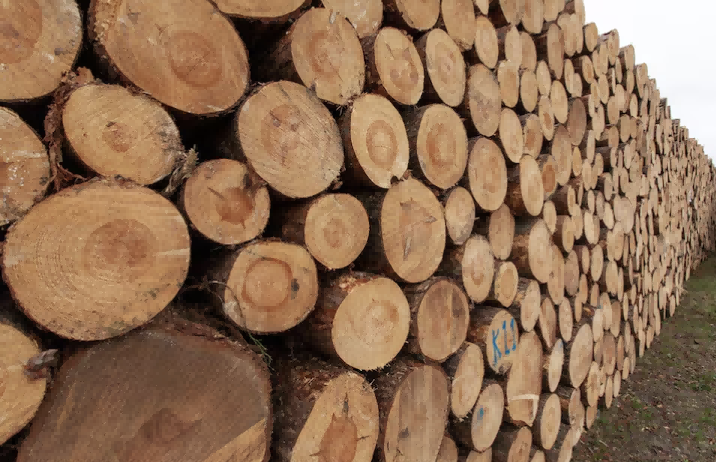
Conversely, woods with inherently soft texture and good plasticity generally do not require intensive steam conditioning. For instance, poplar is so soft and easy to peel in its natural state that conditioning might make it overly soft, complicating handling and wasting energy. Similarly, soft softwoods like radiata pine often require only simple moisture adjustment or can be peeled directly.
Conclusion: An Intelligent Choice Towards Lean Manufacturing
In summary, wood steam conditioning is far more than a simple "heating" step. It is a precise technology based on materials science, acting as the critical bridge connecting raw logs to high-quality veneer. By precisely controlling the temperature, pressure, and duration of conditioning, producers can transform a hard, brittle log into a soft, pliable raw material, enabling the consistent production of continuous, flat, and high-quality veneer sheets. In today's increasingly competitive market, a deep understanding and precise application of core processes are keys to success. Wisely implementing steam conditioning technology is not merely a key to solving hardwood processing challenges; it is a strategic choice for companies aiming to enhance product value, reduce overall costs, and achieve lean manufacturing and sustainable development.