What Causes Uneven Veneer Drying?
Uneven veneer drying can turn a promising production run into a frustrating pile of inconsistent sheets. Some pieces leave the dryer too wet, while others become brittle or develop cracks. At Shandong Shine Machinery, we believe consistent drying starts with understanding the problems behind moisture variation. By controlling raw materials, airflow, temperature, and feeding speed, manufacturers can improve veneer quality and reduce waste.
Uneven Initial Moisture Content
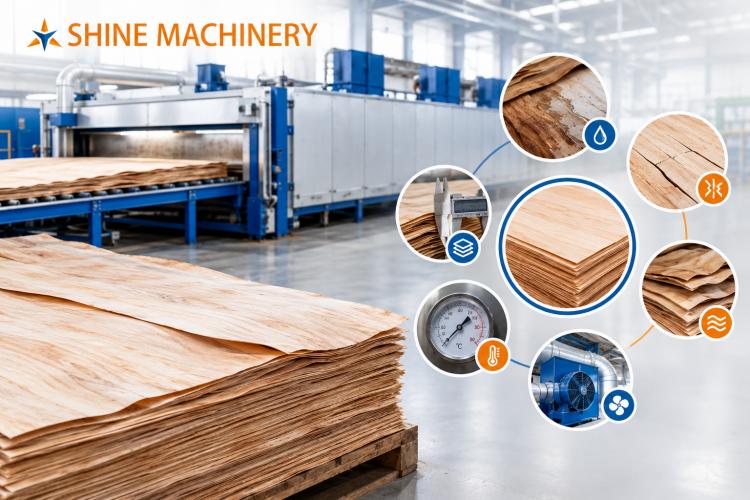
The drying process starts long before wet veneer enters the dryer. Different logs, wood species, and peeling conditions create different initial moisture levels. Even sheets from the same log may release water at different rates. Therefore, operators should check incoming veneer moisture content and adjust drying conditions accordingly.
How to Control Initial Moisture
Sort veneer sheets by species, thickness, and initial moisture.
Remove damaged sheets that may dry unpredictably.
Monitor moisture differences between batches.
Adjust drying parameters when raw material conditions change.
Poor Airflow Inside the Wood Veneer Dryer
Hot air carries moisture away from veneer surfaces. However, uneven airflow creates uneven drying, even when the temperature looks correct. Blocked air passages, dirty filters, and poorly balanced fans can leave certain areas damp. Meanwhile, stronger airflow may overdry other areas and waste energy.
Improve Air Circulation
We recommend checking fans, air ducts, and circulation systems regularly. Operators should inspect different dryer zones rather than relying on one temperature reading. Proper air distribution helps each sheet receive more consistent heat. As a result, manufacturers can improve drying efficiency without simply increasing energy consumption.
Incorrect Temperature and Drying Speed
Higher temperatures do not always mean better results. Excessive heat can dry veneer surfaces too quickly, causing cracks, curling, or brittle edges. Temperatures that remain too low may leave the core damp and extend production time. The right settings depend on wood species, sheet thickness, initial moisture, and equipment design.
Find the Right Drying Conditions
Temperature: Follow suitable operating ranges for the wood species.
Feed speed: Allow enough time for moisture to escape.
Air humidity: Monitor hot and humid air conditions inside the dryer.
Final moisture: Set a target that matches the next production stage.
Our experience shows that balanced settings usually outperform aggressive heating. Small adjustments can protect veneer quality while maintaining stable output.
Inconsistent Veneer Thickness and Feeding
Thickness variations create another common drying challenge. Thin sheets usually lose moisture faster than thick sheets under similar conditions. Uneven feeding can also create gaps or crowding that disturb airflow. Consequently, some veneer sheets reach the target moisture level before others.
To improve consistency, operators should check peeling accuracy and thickness regularly. They should also maintain a steady feed rate and avoid unnecessary interruptions. Consistent material flow helps the drying process remain predictable.
Poor Stacking and Moisture Monitoring
Improper handling can create problems before and after drying. Tightly packed veneer stacks may restrict air movement, while careless storage can expose dry sheets to humid air. In addition, checking only a few sheets may hide moisture differences across the batch. Reliable monitoring requires representative samples from different positions.
Build a Better Quality Control Routine
Measure veneer moisture at several points across each batch.
Compare readings from the dryer entrance and exit.
Record temperature, feed speed, and operating conditions.
Store dried sheets in a clean, dry, well-ventilated area.
These simple checks help identify recurring problems before they affect large quantities of material.
How Can Manufacturers Achieve Uniform Veneer Drying?
Uniform veneer drying requires more than a powerful machine. It depends on suitable raw materials, balanced airflow, stable temperatures, consistent feeding, and accurate moisture monitoring. A well-maintained Veneer Dryer Machine can support efficient veneer production when operators match its settings to actual material conditions.
At Shandong Shine Machinery, we believe reliable results come from combining suitable equipment with practical process control. When manufacturers identify the cause of uneven drying early, they can reduce defects, control energy consumption, and deliver more consistent veneer sheets. After all, the best drying result is not the driest sheet. It is the sheet that reaches the right moisture level without sacrificing quality.