How Veneer Thickness Affects Drying
Veneer thickness looks like a small detail. In reality, it can change the entire drying process. When we dry veneer sheets, thickness affects heat transfer, moisture movement, drying time, and energy consumption. Therefore, we must consider thickness before setting drying conditions.
For manufacturers, this matters every day. A thin sheet may dry quickly, while thick veneers need more time and careful control. If we ignore this difference, wet veneer can leave the dryer with uneven veneer moisture. That can create trouble later during gluing and hot pressing.
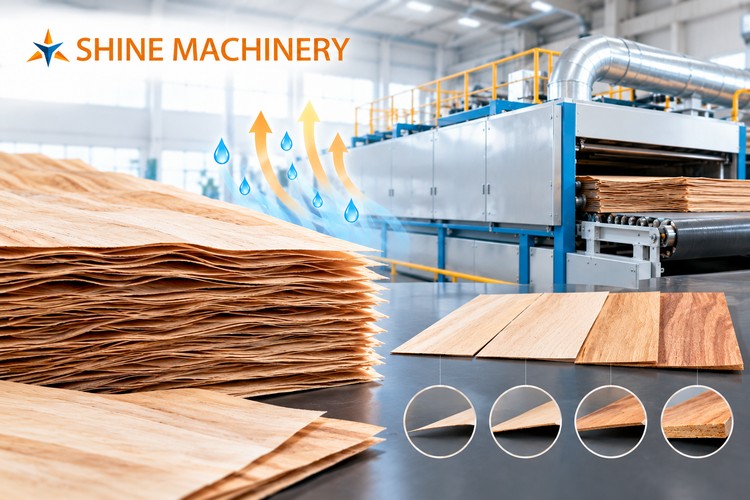
Why Does Veneer Thickness Matter?
Thickness changes how moisture moves through wood. Water inside a thin veneer has a shorter path to the surface. However, thicker material gives moisture a longer journey before it can escape.
This difference affects the entire veneer drying process. We need to adjust temperature, airflow, feeding speed, and drying time. A good wood veneer dryer should provide stable conditions across different veneer thicknesses.
Thin Veneer Dries Faster
Thin veneer sheets usually lose moisture quickly. Their small thickness allows drying air to reach more material efficiently. However, fast drying does not always mean better drying.
If we apply too much heat, thin veneer can dry too quickly. It may become brittle, curl, or develop surface defects. Therefore, we still need to control drying carefully.
Thick Veneers Need More Time
Thick veneers usually require longer drying time. Moisture must travel farther from the core toward the surface. As a result, the dryer needs enough heat and airflow to remove internal moisture.
A simple solution sounds tempting: just increase the temperature. Unfortunately, wood rarely follows simple rules. Excessive heat can damage veneer quality and increase energy consumption.
How Thickness Changes Drying Conditions
Thickness affects several key parameters inside a veneer dryer. We normally consider these factors together:
Initial moisture
Veneer thickness
Wood species
Drying temperature
Drying air velocity
Relative humidity
Drying time
Feeding speed
Final moisture content
For example, thicker veneer may need slower feeding through the production line. It may also require stronger airflow or additional drying zones. We adjust these settings according to the actual veneer condition.
Moisture Content Matters
Moisture content tells us how much water remains inside the wood. However, the final number alone does not tell the whole story.
We also need to check moisture distribution. Veneer can look dry outside while retaining moisture inside. This problem becomes more likely with thick material.
Consistent veneer moisture helps us produce stable, high quality veneer. It also supports better bonding during plywood production.
Thickness and Energy Consumption
Drying uses a significant amount of energy. Therefore, thickness can directly influence energy consumption.
Thicker veneer generally needs more heat and longer residence time. However, poor dryer settings can waste even more energy. For example, excessive exhaust heat may carry valuable thermal energy away.
We focus on balance rather than simply adding heat. Good insulation, suitable airflow, heat recovery, and proper feeding can improve efficiency. A well-designed dryer should remove moisture without wasting useful energy.
How We Control Different Veneer Thicknesses
In our experience, consistent results start with good preparation. We first check the veneer thickness and initial moisture. Then, we select suitable drying conditions for the specific wood species.
We also monitor moisture after drying. This helps us identify uneven drying before it affects the next process. When necessary, we adjust the dryer temperature, air velocity, and feeding speed.
Watch the Veneer Stacks
Veneer stacks can also affect drying results. Poor stacking may block airflow and create uneven moisture. The dryer cannot perform well if the material enters in poor condition.
For this reason, proper feeding and spacing matter. We want drying air to contact the veneer surface evenly. Small improvements here can make a surprising difference.
What Does This Mean for Veneer Production?
Thickness should never be an afterthought. It affects drying time, equipment settings, production capacity, and final veneer quality.
For a modern production line, we recommend considering:
Veneer thickness and tolerance
Initial moisture level
Target final moisture content
Wood species and density
Required production capacity
Available heat source
Dryer length and number of decks
Expected veneer quality
When these factors work together, we can achieve more stable drying results. The goal is simple: produce quality veneer without unnecessary time or energy waste.
Final Thoughts
So, how does veneer thickness affect drying? Thicker veneer normally needs more drying time and stronger process control. Thin veneer dries faster, but it also needs careful temperature management.
We believe good drying comes from balance. The right combination of thickness, moisture content, drying air, temperature, and feeding speed creates reliable results. With the right veneer dryer, manufacturers can improve productivity while protecting veneer quality.