How to Reduce Veneer Drying Time?
Reducing veneer drying time sounds simple. Just add more heat, right? Not quite. Too much heat can damage veneer surfaces, increase defects, and create new production headaches. We focus on the full drying process instead. Good results come from balancing heat, airflow, moisture, feeding speed, and dryer design.
For plywood and LVL production, fast drying can improve production capacity. However, we still need high quality veneer at the dryer outlet. The goal is clear: dry veneer quickly, evenly, and safely. So, how to reduce veneer drying time without sacrificing veneer quality?
1. Control Initial Moisture Content
Fresh wet veneer can contain a large amount of water. Therefore, the starting moisture content strongly affects the required drying time. Veneers with higher initial moisture need more heat and longer exposure.
Sort Veneer Before Drying
We recommend sorting cut veneer by thickness, species, and moisture level. Similar sheets behave more consistently inside the dryer. This simple step can reduce uneven drying and unnecessary re-drying.
Research also shows that initial moisture variation affects the final moisture distribution and veneer waviness.
2. Set the Right Drying Temperature
Temperature plays a major role in veneer drying. Higher temperatures generally increase the rate of water removal. However, excessive heat can cause checks, splits, discoloration, or other defects.
Balance Heat and Drying Time
A wood veneer dryer should provide enough heat without overheating the material. We normally consider veneer species, thickness, moisture, and production speed together. For example, research from the USDA Forest Products Laboratory shows a direct relationship between drying temperature and drying time.
Therefore, operators should not simply turn the temperature to maximum. Instead, they should find the highest practical setting that maintains stable veneer quality.
3. Improve Air Circulation
Heat alone cannot remove moisture efficiently. The drying air must contact the veneer surfaces and carry moisture away. Poor air circulation can create wet spots and extend the drying cycle.
Keep Airflow Consistent
Modern dryers use controlled airflow to improve heat transfer. Direct air movement across veneer surfaces can greatly increase drying speed. USDA research found that high air velocity can significantly accelerate veneer drying.
We therefore pay close attention to fans, ducts, air passages, and nozzle design. Consistent airflow helps every sheet receive similar drying conditions.
4. Adjust Feeding Speed
Feeding speed directly affects drying time. If the veneer moves too quickly, it may leave the dryer with excessive moisture. If it moves too slowly, the veneer may over-dry and waste energy.
Match Speed With Moisture
We recommend adjusting feed speed according to veneer thickness and initial moisture. Operators should also check the final moisture content regularly. This approach creates more stable production than using one fixed speed all year.
In practice, small adjustments can make a big difference. A dryer should work with the material, not fight it.
5. Maintain the Core Components
A well-designed veneer dryer still needs regular maintenance. Dirty heat-transfer surfaces, blocked air passages, worn fans, and poor insulation can reduce drying efficiency.
Check These Components
We suggest checking:
Heat exchangers and heating systems
Fans and motors
Air ducts and circulation channels
Conveyor rollers or mesh belts
Insulation materials
Temperature sensors
Moisture measurement systems
When these core components work correctly, the dryer can transfer heat more efficiently. It can also maintain more stable operating conditions.
6. Use Heat Recovery
Drying requires substantial energy because the process must evaporate large amounts of water. In plywood production, studies identify veneer drying as one of the largest energy-consuming operations.
Reuse Waste Heat
A heat recovery system can capture useful energy from hot exhaust air. The recovered heat can then preheat incoming air or support other processes.
This approach can reduce energy consumption while maintaining drying performance. In our view, saving energy should not mean slowing production. Good system design can help achieve both goals.
7. Avoid Over-Drying
Here comes the unexpected part: drying faster does not mean making veneer as dry as possible.
Very dry veneer can become brittle and harder to handle. It can also affect adhesive behavior during plywood production. Research confirms that veneer moisture content strongly influences bonding and final panel performance.
Target the Required Moisture
The correct target depends on the adhesive, product, species, and production conditions. We recommend setting a practical moisture range rather than chasing the lowest possible number.
This matters before hot pressing. Stable moisture helps the veneer enter gluing and pressing with more predictable performance.
8. Improve Overall Dryer Design
Sometimes the problem is not the operator. The dryer itself may limit production.
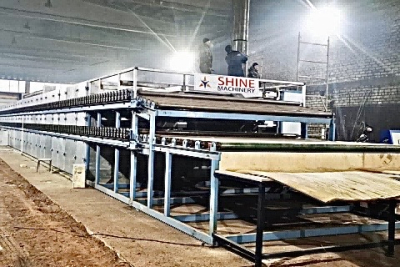
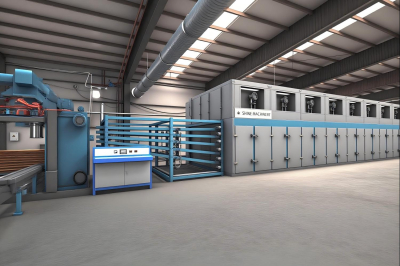
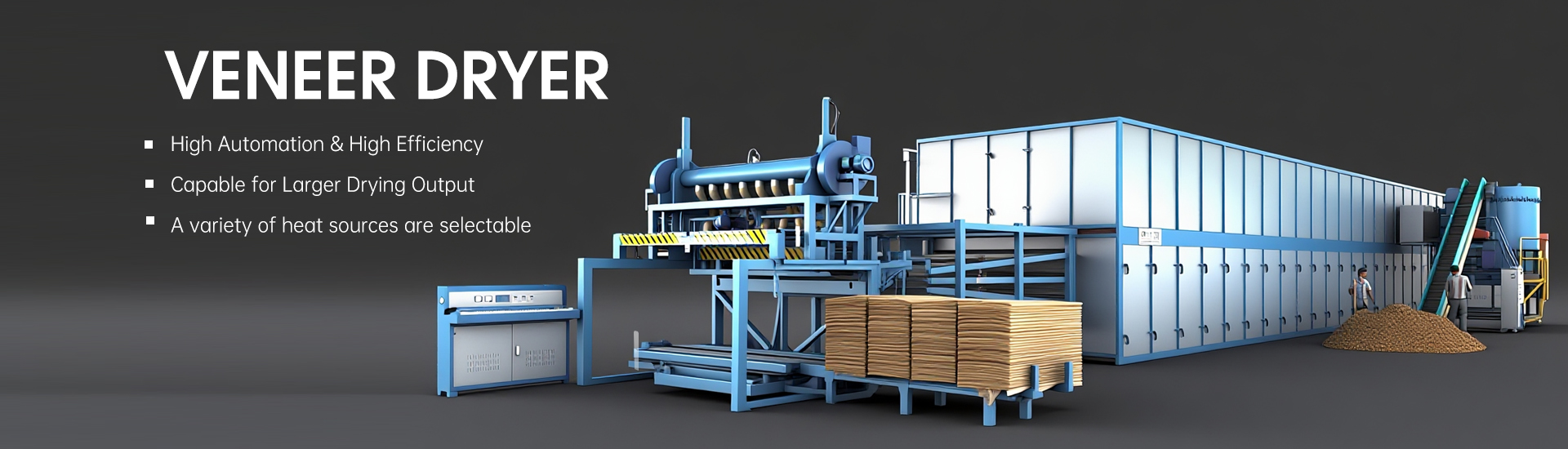
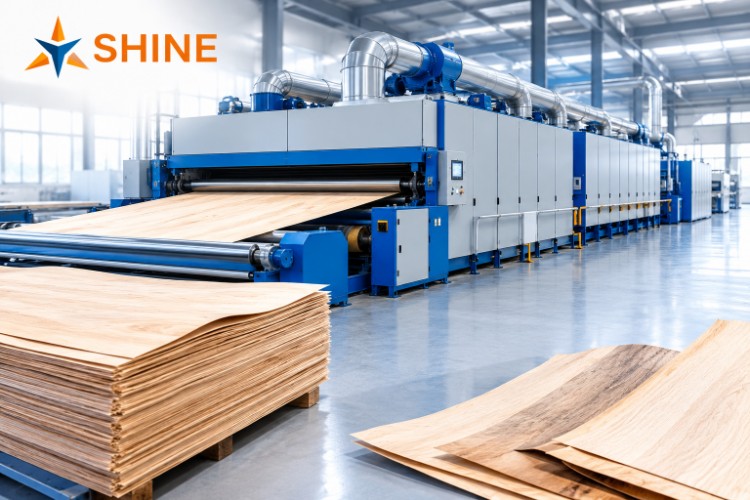
A modern Veneer Dryer Machine should provide stable heating, effective air circulation, reliable feeding, and accurate temperature control. Roller systems and mesh systems can also suit different veneer types and production needs.
For delicate face veneer, drying conditions require extra care. Thin material can dry quickly, but it can also suffer damage when operators push temperature or airflow too far.
A Simple Way to Reduce Drying Time
We suggest checking these factors in order:
Initial moisture content → Is the wet veneer properly sorted?
Veneer thickness → Are different thicknesses mixed together?
Drying temperature → Can heat transfer improve safely?
Drying air → Does airflow reach all veneer surfaces?
Feed speed → Does residence time match the material?
Air circulation → Are fans and ducts working correctly?
Heat recovery → Can exhaust heat be reused?
Final moisture → Does the veneer meet the required target?
This checklist helps identify bottlenecks without blindly increasing temperature.
Final Thoughts
So, how to reduce veneer drying time? We believe the answer comes from balance. Control moisture, improve heat transfer, optimize airflow, adjust feed speed, and maintain the equipment. At the same time, protect veneer quality throughout the process.
A faster dryer is useful only when it produces stable veneer. For modern veneer production, the real target is not simply shorter drying. It is faster, more consistent drying with lower energy consumption and fewer defects.
When the process works smoothly, the dryer stops being a bottleneck. It becomes one of the strongest links in the production line.