What Fuel Is Best for Veneer Drying?
Choosing the right fuel can make a real difference in veneer production. It affects operating costs, drying efficiency, maintenance needs, and environmental performance. At Shandong Shine Machinery, we believe every manufacturer should consider fuel options carefully. After all, saving money on fuel means little if poor temperature control damages valuable veneer sheets.
So, what fuel can you use for veneer drying? The answer depends on local fuel prices, available resources, production capacity, and environmental regulations. Let's explore the main options and explain how each one supports efficient drying.
Biomass: A Practical Choice for Wood Mills
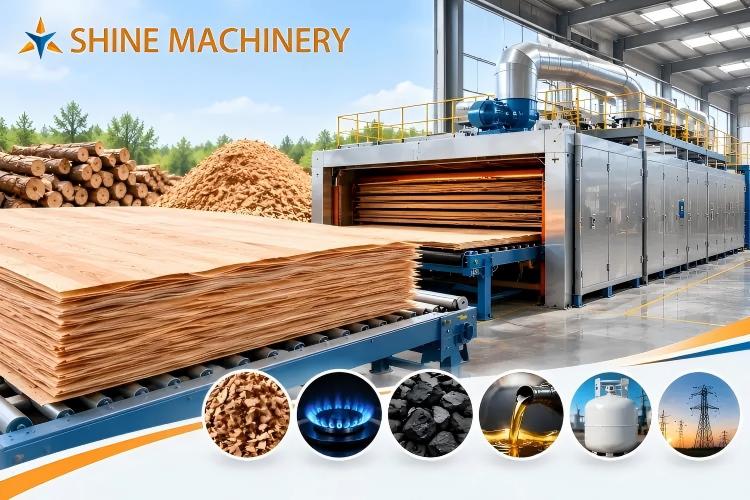
Biomass ranks among the most practical fuel options for many veneer manufacturers. It includes wood chips, bark, sawdust, and suitable production residues. If your factory already processes logs, you may have a valuable energy resource nearby. Instead of treating every wood scrap as waste, you can turn suitable residues into useful heat.
Why Choose Biomass?
Lower fuel purchasing costs: On-site wood waste can reduce dependence on purchased fuels.
Resource efficiency: Suitable residues gain a second purpose in production.
Local availability: Nearby biomass suppliers can simplify fuel logistics.
However, biomass requires careful handling. Wet fuel produces less useful heat per kilogram and may increase consumption. Particle size, moisture levels, and combustion stability also matter. We recommend evaluating fuel preparation and ash removal before choosing a biomass heating system.
Natural Gas: Clean and Convenient
Natural gas offers stable combustion and convenient temperature control. It suits factories with reliable gas supplies and suitable burner systems. Operators can adjust heat output quickly, helping maintain consistent drying conditions. This control supports veneer quality when production demands change.
What Should You Consider?
Gas systems generally produce less ash than solid-fuel systems. They also reduce the labor required for fuel handling. However, prices can fluctuate, and some factories lack access to gas pipelines. Before investing, compare connection costs, local tariffs, burner requirements, and expected daily consumption.
Coal: High Heat Output
Coal remains an option in some regions where supplies are affordable and established boiler infrastructure already exists. It can provide substantial heat for industrial drying operations. Nevertheless, coal requires fuel storage, ash handling, and appropriate emission controls.
Local environmental rules may also restrict its use. Therefore, we suggest comparing its full operating costs rather than focusing on the purchase price alone. A low fuel price can lose its appeal when cleaning, labor, and pollution controls enter the calculation.
Fuel Oil and LPG
Fuel oil and liquefied petroleum gas (LPG) can supply heat where other fuels prove impractical. Both require compatible burners and suitable storage arrangements. Their usefulness depends on local prices, delivery reliability, and plant design.
Fuel oil may suit existing industrial heating systems, while LPG can serve facilities without natural gas connections. However, transportation and storage costs can increase total expenses. Always check safety requirements and confirm equipment compatibility before selecting either option.
Electricity and Alternative Heat Sources
Electric heating provides precise control and avoids on-site fuel combustion. However, industrial veneer drying needs substantial thermal energy, so electricity prices can strongly affect operating costs. Electric systems may work well where power is affordable or renewable electricity is readily available.
Some factories also use steam or thermal oil to transfer heat. These are heating mediums, not fuels themselves. A boiler can produce steam using biomass, natural gas, coal, or other suitable energy sources. Heat recovery can further reduce fuel demand by capturing usable energy from exhaust air.
How to Choose the Right Fuel
We recommend comparing these five factors before investing in a veneer dryer:
Fuel cost: Calculate the cost per useful unit of heat, not simply the price per kilogram.
Availability: Confirm consistent supply throughout the year.
Heating performance: Check whether the system meets your required temperature and production rate.
Environmental compliance: Review emissions limits and applicable permits.
Product consistency: Ensure the heating system supports stable temperatures and suitable final moisture content.
Remember, fuel alone does not determine drying performance. Airflow, veneer thickness, initial moisture, and operating settings also affect energy use and final results. A well-matched system helps maintain veneer quality while reducing unnecessary energy consumption.
Conclusion
So, what fuel can be used for veneer drying? Biomass, natural gas, coal, fuel oil, LPG, and electricity all offer potential solutions. The best choice depends on your factory's location, production scale, energy prices, and environmental requirements.
At Shandong Shine Machinery, we believe an effective veneer dryer should balance production efficiency, operating costs, and reliable moisture control. Our advice is simple: evaluate the complete heating system before choosing its fuel. Contact our team to discuss your production requirements and explore a suitable veneer drying solution.