How Does a Veneer Dryer Work?
What Is Veneer Drying?
From Wet Veneer to Usable Sheets
How Does a Veneer Dryer Work? The basic idea is simple. We use controlled heat and airflow to remove water from wet veneer. The goal is not simply to make wood dry. We want stable moisture content, good strength, and consistent veneer quality.
Fresh peeled veneers contain a large amount of water. They also vary in thickness, species, and initial moisture. That makes natural air drying slow and hard to control. A modern wood veneer dryer gives us much better control over the drying process. (FAOHome)
Why Moisture Control Matters
We cannot rush this step without consequences. Over-drying can damage veneer and waste heat. Under-drying can create problems during gluing and hot pressing. Therefore, we aim for a controlled final moisture level instead of simply chasing the shortest drying time.
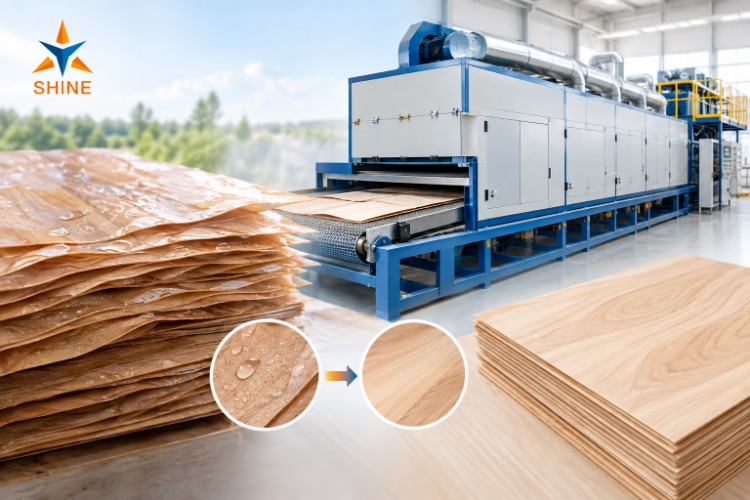
How Does a Veneer Dryer Work?
Step 1: Feeding Wet Veneer
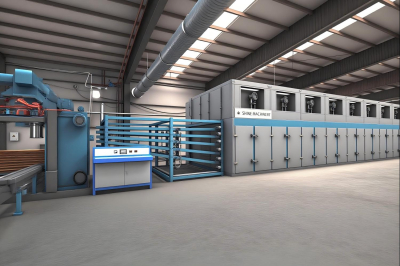
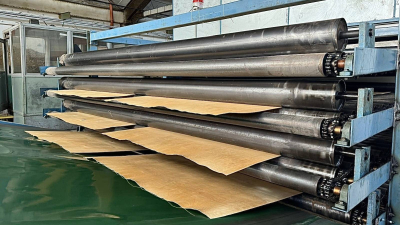
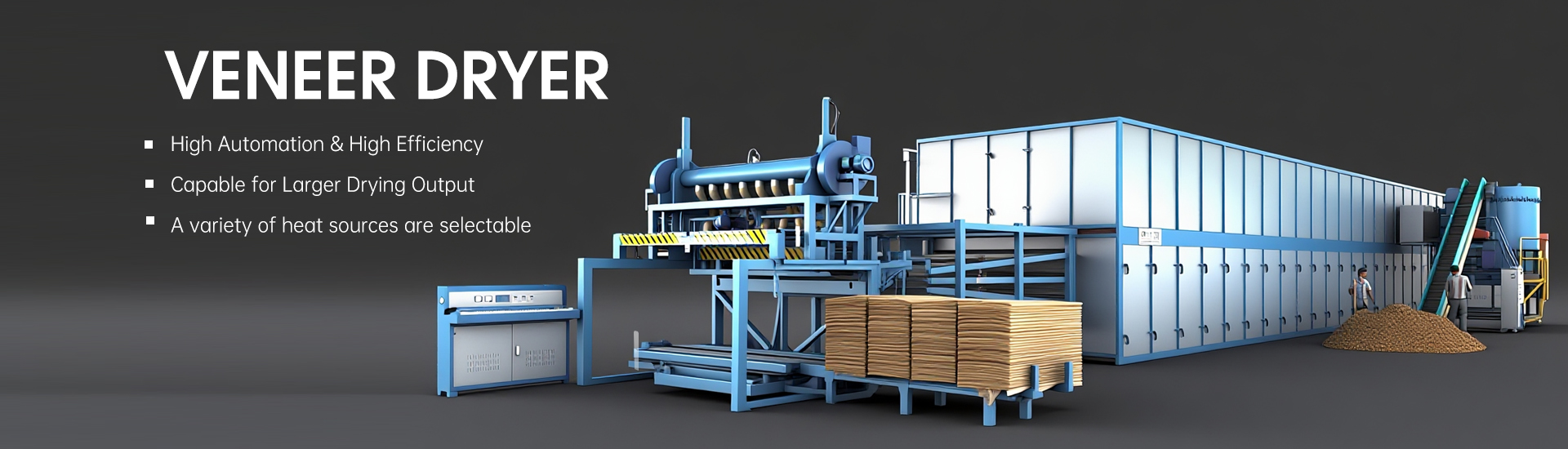
The process starts when we feed freshly peeled veneer sheets into the dryer. Rollers or a mesh conveyor move the sheets through the drying chambers. The system keeps the sheets moving at a controlled speed.
The operator can adjust the conveyor speed according to veneer thickness and species. Thicker sheets usually need more time. Higher initial moisture content also increases the required drying time. (Forest Products Laboratory)
Step 2: Heating With Hot Air
Next, heated air enters the drying chamber. Fans move the hot air across the veneer surface at high velocity. This airflow transfers heat to the wood and carries evaporated water away.
The air temperature, air speed, and circulation pattern all affect drying. Some systems use direct heating. Others use steam, hot water, or thermal oil as the heat source. (FAOHome)
What Happens Inside the Drying Chamber?
Heat Moves Into the Veneer
When hot air contacts the veneer, heat moves into the wood. Water inside the veneer then begins to evaporate. The moving air removes this moisture from the sheet surface.
This sounds simple, but wood has its own personality. Different species release moisture at different rates. Thickness, density, grain direction, and initial moisture all change the drying behavior.
Airflow Controls Drying Speed
Good airflow does more than make the machine noisy. It creates fast and even heat transfer. Modern systems can adjust air velocity and temperature across different drying zones.
Some industrial dryers use impingement airflow. This method directs high-speed air toward the veneer surface. Research also shows that conveyor speed, radiator temperature, and initial moisture strongly influence drying performance. (ScienceDirect)
How Does a Dryer Control Moisture?
Temperature and Drying Time
We control the drying temperature according to the veneer species and thickness. We also control the conveyor speed to set the drying time. Together, these settings determine how much water the veneer loses.
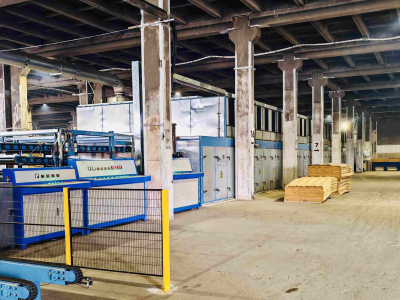
A typical industrial system can contain several heating zones. Each zone can support a different stage of the drying process. This approach helps us avoid sudden overheating and improves consistent drying.
Exhaust Removes Moisture
Hot air picks up water from the veneer. The system must then remove humid air from the chamber. Fresh dry air enters and replaces part of that exhaust air.
This air exchange matters for both quality and energy consumption. If the air becomes too humid, moisture removal slows down. Smart control can therefore improve drying efficiency and reduce unnecessary heat loss. (FAOHome)
What Affects Veneer Drying?
Five Key Factors
When we design or operate a dryer, we normally consider:
Veneer thickness
Wood species and density
Initial moisture content
Drying temperature
Air velocity
Conveyor speed
Target final moisture content
These factors work together. Increasing temperature does not always solve every problem. A good system balances heat, airflow, residence time, and moisture removal.
Why Consistent Drying Matters
Uneven drying can create a difficult situation. Some sheets may remain too wet while others become too dry. That difference can affect gluing, pressing, strength, and final panel performance.
For high quality plywood, stable moisture matters. Research confirms that moisture content strongly affects veneer properties and bonding performance. (FAO AGRIS)
How Does Drying Affect Energy Consumption?
Where Does the Energy Go?
Veneer drying requires significant thermal energy. FAO notes that veneer drying can account for a major share of energy use in plywood production. That makes dryer efficiency an important production issue. (FAOHome)
We therefore focus on heat transfer instead of simply adding more heat. Efficient fans, proper insulation, controlled exhaust, and suitable heating systems can all help. A well-designed dryer should remove moisture without turning energy into expensive hot air floating outside.
Energy-Efficient Drying
An energy efficient dryer keeps useful heat inside the process as much as possible. Heat recovery and intelligent airflow control can further reduce waste. Continuous dryers can also optimize conveyor speed and operating conditions.
For plywood and LVL production, this matters every day. Lower energy use can improve operating costs while maintaining stable veneer quality. Recent research also highlights automatic control as a useful way to improve industrial drying efficiency. (ScienceDirect)
Why Veneer Drying Matters for Plywood
Better Gluing and Hot Pressing
Drying prepares veneer for the next production stage. Manufacturers need suitable moisture levels before applying adhesive. Excess water can interfere with bonding and affect hot pressing.
The correct moisture level also supports more stable plywood and LVL production. We see drying as a bridge between veneer peeling and panel pressing. If that bridge is weak, the whole production line feels it.
Better Final Veneer Quality
Good drying helps manufacturers produce stable veneer sheets with more uniform moisture. It can also reduce problems caused by excessive drying or insufficient drying.
For us, the goal is not simply “dry veneer.” Our goal is high quality veneer that performs reliably during later processing. That is why temperature, airflow, speed, and moisture control all matter.
Choosing the Right Veneer Dryer
Match the Dryer to Your Production
Every mill has different requirements. We consider veneer species, thickness, capacity, heating source, and target moisture content before selecting a system.
For example, a high-capacity plywood factory may need a multi-deck continuous dryer. A smaller producer may need a simpler configuration. We also consider whether the customer prefers steam, thermal oil, biomass, or another heating solution.
The Simple Rule
A good dryer should deliver three things:
Stable final moisture
Consistent drying across sheets
Reasonable energy consumption
That sounds straightforward, but getting all three right takes experience. At Shandong Shine Machinery, we focus on practical drying performance rather than impressive numbers alone. Our aim is to help customers produce better veneer with a stable and reliable drying process.
Final Thoughts
So, How Does a Veneer Dryer Work? It combines heat, airflow, conveyor movement, and moisture control. The machine takes wet veneer and gradually removes water until the sheets reach a suitable moisture level.
The best results come from balance. Too little heat slows production. Too much heat can damage veneer. Poor airflow creates uneven drying, while excessive drying wastes energy.
We believe good veneer drying should feel almost boring. The sheets enter wet, the system does its job, and stable veneer comes out ready for the next step. When that happens consistently, the whole plywood or LVL production line becomes easier to manage.