How Long Does It Take to Dry Veneer?
Freshly peeled wood can hold a surprising amount of water. Some green veneers may start with moisture content around 60%–90%, depending on the wood and processing conditions.
So, how long does it take to dry veneer? There is no single answer. In commercial veneer production, drying time depends on veneer thickness, wood species, initial moisture content, drying temperature, airflow, and the target moisture level.
In our experience, this is why veneer drying deserves more attention than it usually gets. A sheet can look dry on the surface while still holding too much moisture inside. That little surprise can cause trouble during gluing.
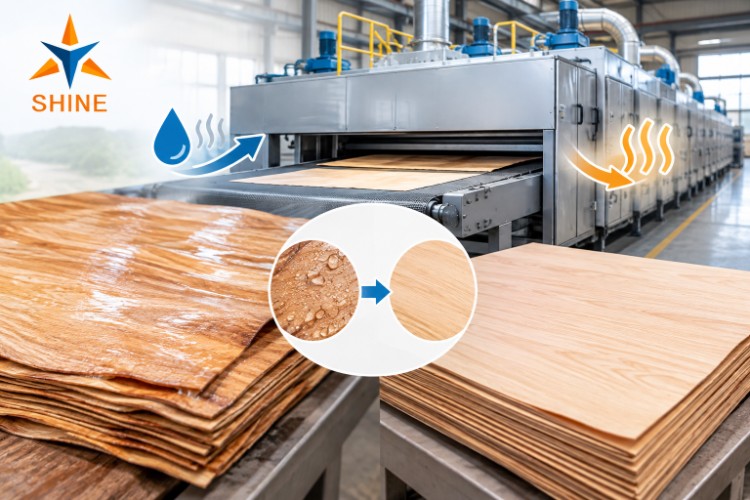
How Long Does Veneer Dry?
Typical Industrial Drying Time
A commercial wood veneer dryer can dry thin veneer much faster than natural air drying. For continuous industrial systems, the actual residence time often falls within several minutes, although the exact figure depends on the machine and operating conditions.
For example, thin peeled veneers may move continuously through heated zones. The dryer removes moisture while the sheets travel through the machine. Thicker sheets, dense hardwoods, and high moisture levels usually require more drying time.
We recommend treating drying time as a process parameter, not a fixed number. The right setting should produce the required final moisture content without damaging the veneer.
Why There Is No Universal Drying Time
Two batches can enter the same veneer dryer and need different settings. One batch may contain thin poplar veneers at moderate moisture. Another may contain thicker hardwood veneers with much higher initial moisture.
The following factors can change drying time:
Veneer thickness
Wood species and density
Initial moisture content
Drying temperature
Hot-air velocity
Relative humidity
Veneer stacking or feeding conditions
Target final moisture content
Dryer design and heated-zone length
Research also shows that different species and veneer thicknesses require different drying times.
What Affects Veneer Drying Time?
Veneer Thickness Matters
Thickness is one of the first things we check. A 1.5 mm sheet does not behave like a 3 mm sheet during drying.
Thin veneer sheets release moisture quickly because water has a shorter path to travel. Thicker sheets need more time and careful temperature control.
However, faster does not always mean better. If we push the drying process too hard, veneers may develop defects, lose flexibility, or become difficult to handle.
Wood Species Also Changes the Result
Wood species can make a major difference. Density, structure, permeability, and moisture distribution all affect how quickly water moves through the veneer.
Hardwoods may respond differently from softer species. Sapwood and heartwood can also behave differently during drying. USDA Forest Service guidance recommends adjusting dryer schedules according to veneer type and condition.
That is why we do not recommend copying one drying schedule for every species.
How Much Moisture Should Veneer Have?
Start With Initial Moisture Content
Fresh wet veneer can contain a large amount of water. Depending on the log, species, and production conditions, green veneer may contain 60%–90% moisture content.
The dryer must remove enough water for the next production step. Yet removing every last bit of moisture would be a mistake. Over-dried veneer can become brittle and harder to handle.
For plywood and LVL production, the required final moisture content often falls around 2%–8%, depending on the adhesive and application. Research on veneer drying commonly reports target levels around 2%–6% for effective gluing.
Measure Instead of Guessing
A sheet may feel dry but still contain too much internal moisture. Conversely, a very dry surface does not always mean the whole batch has reached the target.
We recommend checking moisture content regularly. Modern production lines can use moisture sensors to monitor sheets as they leave the dryer.
USDA guidance also recommends continuous electronic moisture checks when possible. Operators can separate wet pieces and dry them again when necessary.
What Temperature Is Used for Veneer Drying?
Heat Speeds Up Moisture Removal
Temperature strongly affects the drying process. Higher temperatures generally accelerate water removal, but excessive heat can damage veneer quality.
Industrial veneer dryers often operate at high temperatures. One industry source reports typical drying temperatures around 150°C–200°C, depending on the dryer and application.
USDA research guidance gives another useful reference. It describes temperatures around 182°C–204°C for mechanical veneer drying under specific conditions.
These figures are not universal settings. We always consider species, thickness, moisture level, and final application first.
Airflow Is Equally Important
Heat alone cannot do the whole job. The dryer must also move moist air away from the veneer surface.
Good airflow helps maintain effective heat transfer. It also prevents moisture from building up around the sheets.
In simple terms, we need three things working together:
Heat to release moisture.
Airflow to carry moisture away.
Time to reach the target moisture content.
Get the balance right, and the process becomes much more stable.
How Does a Wood Veneer Dryer Reduce Drying Time?
Continuous Drying Improves Production
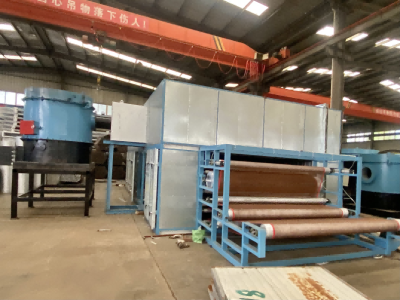
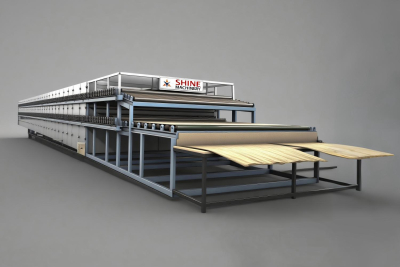
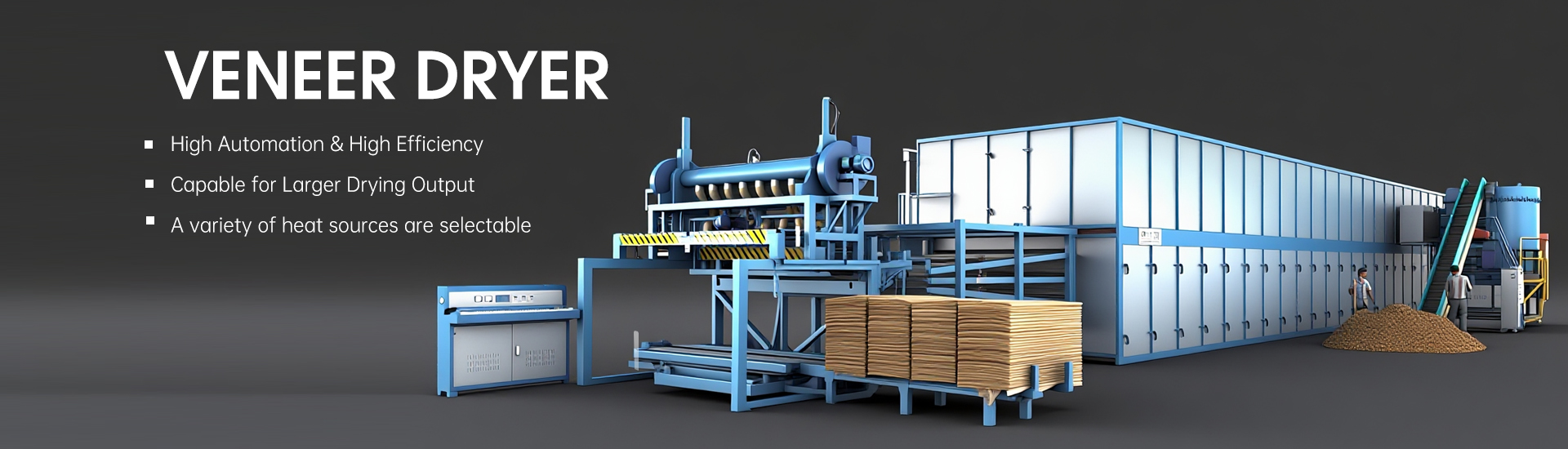
In large-scale veneer production, manufacturers usually need continuous drying rather than slow batch drying. Veneers enter the dryer, travel through heated sections, and leave at a controlled moisture level.
This approach supports high production capacity and consistent quality. It also makes drying easier to connect with peeling, clipping, grading, and stacking equipment.
A properly designed veneer dryer can therefore save more than time. It can reduce handling, improve production flow, and help control moisture variation.
Energy Consumption Needs Attention
Drying is one of the most energy-intensive stages in plywood and LVL manufacturing. Research has described veneer drying as a major energy consumer and a critical production bottleneck.
That makes energy consumption an important part of dryer selection. Running at maximum heat all day may sound powerful, but it can waste fuel and damage veneer.
We prefer a balanced approach. The goal is not simply to dry faster. The goal is to reach the target moisture content with stable quality and reasonable energy use.
How Can You Shorten Veneer Drying Time?
Improve the Drying Process
If your drying time seems too long, start with the basics. Do not immediately increase temperature and hope for the best.
Check these points first:
Confirm actual veneer thickness.
Measure incoming moisture content.
Check hot-air temperature.
Check airflow and circulation.
Inspect dryer feeding speed.
Separate different wood species.
Avoid mixing very wet and relatively dry veneers.
Measure final moisture content.
Review energy consumption per production volume.
USDA guidance recommends establishing a suitable drying schedule for each veneer type and then repeating that schedule for similar material.
This approach is much more reliable than constantly changing the dryer speed based on a few wet sheets.
What Happens If Veneer Dries Too Fast?
Faster Is Not Always Better
Here is the unexpected twist: shorter drying time can sometimes create more problems.
If we remove moisture too aggressively, veneer can become brittle or develop drying defects. Research also warns that over-drying can affect subsequent bonding performance.
On the other hand, under-dried veneer can contain too much moisture for effective gluing. Excess moisture can also increase the need for re-drying.
The sweet spot is simple: dry enough, but not too dry.
How Do We Know When Veneer Is Dry?
Final Moisture Content Is the Answer
The best answer to “How long does it take to dry veneer?” is not simply 10 minutes, 15 minutes, or 20 minutes.
Instead, we should ask:
Has the veneer reached the required final moisture content?
For many plywood applications, manufacturers target roughly 6%–8%, while some processes use lower values. The exact target depends on the adhesive, panel structure, wood species, and end use.
At Shine Machinery, we believe good veneer drying starts with controlled variables. Our approach focuses on veneer thickness, species, moisture content, temperature, feeding speed, airflow, and production capacity. When these parameters work together, peeled veneers can leave the dryer ready for grading, gluing, and further processing.
Final Takeaway
So, how long does it take to dry veneer? Industrial drying usually takes minutes rather than hours, but the exact time depends heavily on the material and dryer settings.
For reliable veneer drying, we recommend focusing on measurable results:
Initial moisture content: often 60%–90% for green veneer
Typical final moisture: commonly around 2%–8%, depending on application
Drying temperature: often about 150°C–200°C in industrial systems
Main variables: thickness, species, airflow, temperature, and feed speed
Quality check: measure moisture content instead of judging by touch
In short, the clock matters, but moisture content matters more. A well-controlled drying process gives us stable veneer, better gluing performance, and more predictable veneer production.