Veneer vs. Laminate: Which Wins?
When choosing a surface for furniture, cabinets, doors, or wall panels, one question often appears: Which is better, veneer or laminate? We hear this question often from furniture makers and buyers. The answer depends on your budget, design goals, working environment, and expected service life. Neither material wins every round, and that makes the comparison more interesting.
Wood veneer gives us something laminate cannot fully copy: real wood. Laminate, however, brings excellent durability, consistent designs, and easy maintenance. High pressure laminate can also handle heavy use, scratches, and demanding commercial environments. So, instead of declaring one universal winner, we should look at where each material performs best.
What Is Wood Veneer and Laminate?
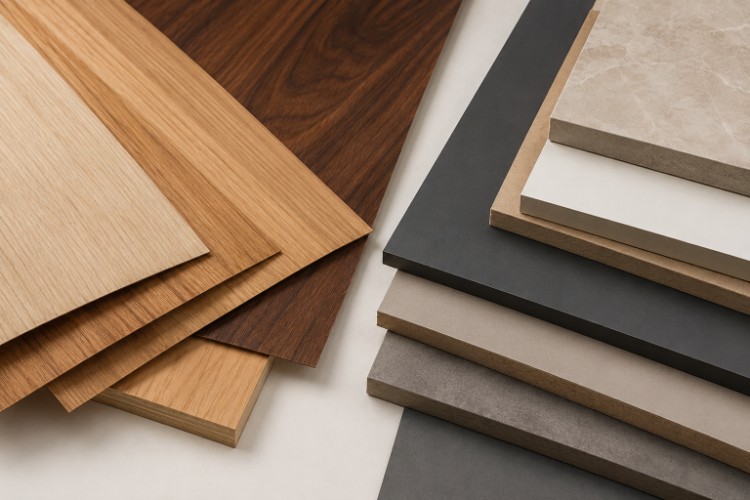
Wood veneer consists of thin sheets cut or peeled from natural timber. Manufacturers bond these veneer sheets to a stable substrate such as plywood, MDF, or particleboard. Because the surface comes from genuine timber, every piece can show different wood grain and natural character. The Virginia Department of Forestry also defines veneer as thin wood sheets produced from sliced or peeled logs.
Laminate follows a different path. Manufacturers build decorative laminates from paper layers, resins, and other materials. High pressure laminate uses heat and high pressure to create a hard, durable surface. The Composite Panel Association notes that HPL can provide strong wear, chemical, and fire resistance.
Veneer Offers Genuine Natural Character
We like veneer because nature does not use a copy-and-paste button. Each sheet can display different grain patterns, knots, colors, and small variations. These differences give furniture a warmer and more natural appearance.
Wood veneer can also make premium timber more practical. A thin layer can cover a large panel without using a thick block of solid wood. Therefore, manufacturers can create attractive veneer products while using valuable timber more efficiently.
Laminate Offers Consistency
Laminate takes almost the opposite approach. Its printed decorative layer can reproduce wood grain, stone, colors, or modern patterns. Manufacturers can create highly consistent designs across many panels.
That consistency helps large furniture projects. If a hotel needs 500 cabinet doors, matching surfaces can save plenty of headaches. Nature has charm, but it does not always understand production schedules.
Veneer vs. Laminate: Key Differences
The biggest difference appears in appearance, durability, repair, cost, and maintenance. Veneer feels closer to natural furniture because it contains genuine wood. Laminate behaves more like an engineered surface designed for performance.
We can summarize the main differences like this:
Feature | Wood Veneer | Laminate |
Material | Natural wood | Resin, paper, and decorative layers |
Appearance | Natural and unique | Consistent and controlled |
Wood grain | Genuine | Printed or decorative |
Touch | Warm, natural feel | Hard, smooth surface |
Durability | Good with proper finish | Excellent for heavy use |
Scratch resistance | Depends on finish | Usually very good |
Repair | Can often refinish | Usually harder to repair invisibly |
Design consistency | Natural variation | Highly consistent |
Maintenance | Moderate | Usually easy |
Premium appearance | Excellent | Good to excellent |
Best use | Premium furniture | High-use furniture and interiors |
Where Veneer Has the Advantage
For premium furniture, veneer often has the stronger visual appeal. It provides the character of real wood without requiring solid wood construction throughout the product. Designers can select different cuts to achieve specific grain patterns and visual effects.
Veneer also works well when buyers want a natural appearance at a more manageable cost. It can deliver a high-end look while reducing the amount of expensive solid wood required.
Where Laminate Pulls Ahead
Laminate becomes attractive when durability and consistency matter most. HPL surfaces can resist wear, impact, chemicals, and other common sources of damage. The Composite Panel Association describes HPL as one of the more durable decorative surface materials.
For busy kitchens, offices, schools, hotels, and retail spaces, this matters. Constant cleaning and daily contact can quickly expose weak surfaces. In these environments, laminate often provides a practical advantage.
How Veneer Drying Affects Quality
Many people compare finished surfaces without considering how veneer starts its journey. However, veneer drying plays an important role in downstream wood manufacturing. Fresh veneer can contain high moisture, and manufacturers need to control that moisture before later processing.
The drying process affects flatness, bonding performance, quality, and production efficiency. USDA Forest Products Laboratory research identifies rapid drying, low cost, flatness, and uniform moisture as major veneer-drying goals.
Why Moisture Content Matters
Incorrect moisture content can create problems during gluing and pressing. Excess moisture may affect adhesive performance and increase production problems. Over-drying can also damage veneer and waste energy.
Yokogawa reports that manufacturers control dryer temperature, humidity, and veneer moisture to improve quality and energy efficiency. Its example process targets moisture content according to the wood material and application.
For manufacturers, that means drying should never become an afterthought. A stable veneer sheet begins with controlled processing.
How a Veneer Dryer Supports Production
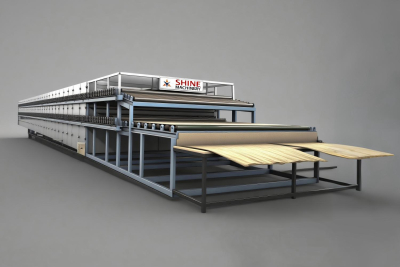
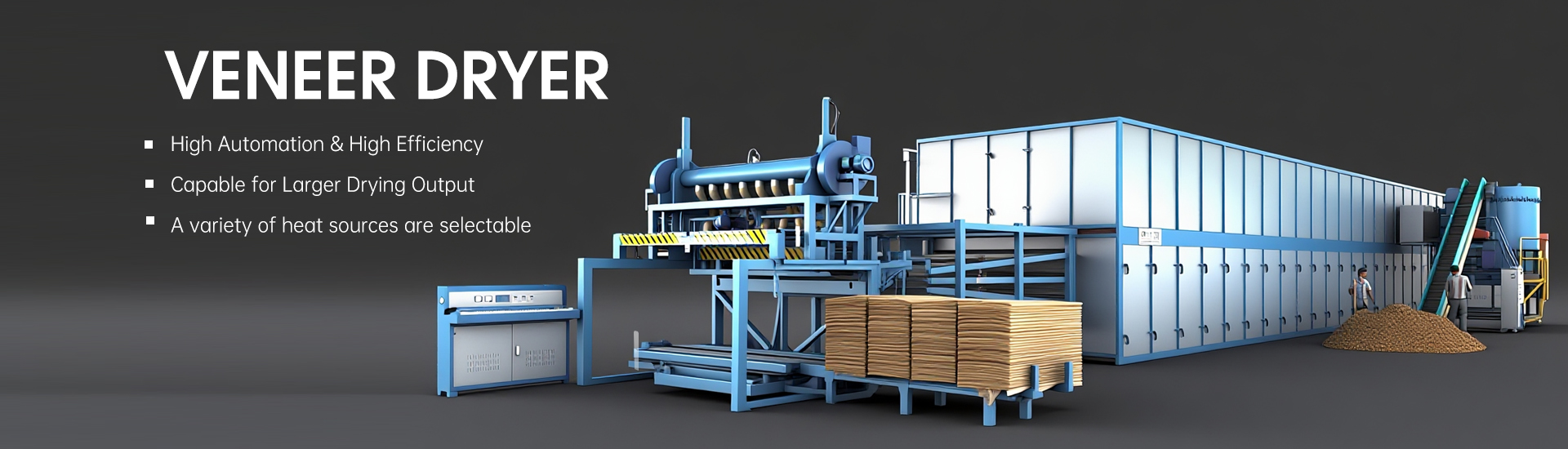
A modern veneer dryer helps manufacturers remove moisture in a controlled way. Proper airflow, temperature, humidity, and residence time can improve drying consistency. These factors also influence energy consumption and production costs.
At Shandong Shine Machinery, we focus on veneer drying equipment because the drying stage affects the next manufacturing step. Our goal is simple: help manufacturers produce stable, usable veneer with controlled moisture. Good drying does not magically fix poor raw material, but poor drying can certainly ruin good material.
Which Material Handles Wear and Tear Better?
If your priority is wear and tear, laminate usually takes the lead. HPL uses a dense layered construction and cures under heat and pressure. This structure gives it strong resistance to daily abuse.
Veneer can still provide good durability. Its performance depends heavily on wood species, thickness, surface coating, substrate, and maintenance. A well-finished veneer surface can last for many years, especially in moderate-use environments.
Laminate for High-Traffic Areas
Laminate makes sense when furniture faces constant contact. Think about restaurant tables, office desks, school furniture, retail counters, and kitchen worktops.
HPL can handle repeated cleaning and physical contact better than many natural wood finishes. It also offers predictable surface performance across large production batches. That predictability can reduce maintenance concerns.
Veneer for Premium Interior Design
Veneer shines when appearance matters as much as performance. Designers can choose oak, walnut, maple, ash, teak, and many other wood species. Different cutting methods can create dramatically different grain patterns.
We especially like veneer for executive offices, hotel furniture, luxury cabinets, doors, and decorative wall panels. It brings subtle differences that make a finished product feel less industrial.
Cost, Maintenance, and Environmental Considerations
Price comparisons need care because neither material has one fixed price. The substrate, wood species, thickness, surface treatment, design, and production volume all influence the final cost.
Laminate can offer an economical solution for large projects. Veneer may cost more than basic laminate, but it can provide a more premium appearance. Meanwhile, solid wood usually requires more natural timber and can cost considerably more.
Veneer Needs More Care
Veneer behaves like wood because it is wood. Temperature, humidity, direct sunlight, impact, and poor maintenance can affect its appearance over time.
Still, proper finishing can provide strong protection. A damaged veneer surface may also allow refinishing or localized repair, depending on its construction and thickness.
Laminate Simplifies Daily Maintenance
Laminate generally requires less special care. A smooth surface makes routine cleaning simple. This benefit becomes important in commercial environments where staff cannot spend ten minutes politely negotiating with every coffee stain.
However, laminate is not indestructible. Severe impact, deep scratches, excessive heat, or damaged edges can still affect the surface. Even durable materials have their limits.
Which Is Better for Your Project?
So, Which is better, veneer or laminate? We would answer with another question: what does your project need most?
Choose wood veneer when you want:
Natural wood grain
Unique grain patterns
A premium furniture appearance
Genuine timber character
Refinishing possibilities
High-end interior design
A closer connection to natural materials
Choose laminate when you want:
Strong resistance to wear and tear
Easy cleaning
Consistent appearance
Many colors and patterns
Lower maintenance
Reliable performance in busy areas
Practical large-scale production
For buyers who want high quality and natural beauty, veneer remains a strong choice. For projects that prioritize hard use and easy maintenance, laminate can make more sense. In many cases, the best answer is not about choosing the “better” material. It is about choosing the material that fits the job.
Final Verdict: Veneer or Laminate?
Our view is straightforward. Veneer wins on natural beauty, authenticity, and premium character. Laminate wins on durability, consistency, and easy maintenance. Neither material deserves the “best for everything” trophy.
For manufacturers producing furniture and panels, the decision starts much earlier than the final surface. Proper raw material selection, controlled drying veneer, stable moisture levels, and careful finishing all influence the final product. A good surface cannot compensate for poor manufacturing fundamentals.
That is why we pay close attention to veneer drying at Shandong Shine Machinery. A reliable Veneer Dryer Machine can help manufacturers control moisture and support stable veneer production. When the drying stage performs well, manufacturers gain better control over quality, production efficiency, and energy use.
Ultimately, veneer and laminate serve different purposes. If you want the warmth of natural timber, choose veneer. If you need tough, consistent surfaces for demanding environments, laminate deserves serious consideration. And if you want both beauty and performance, smart material selection can often give you the best of both worlds.