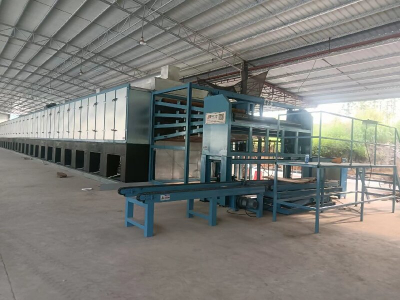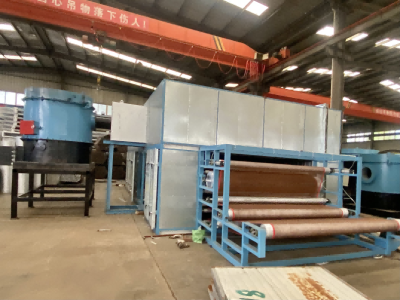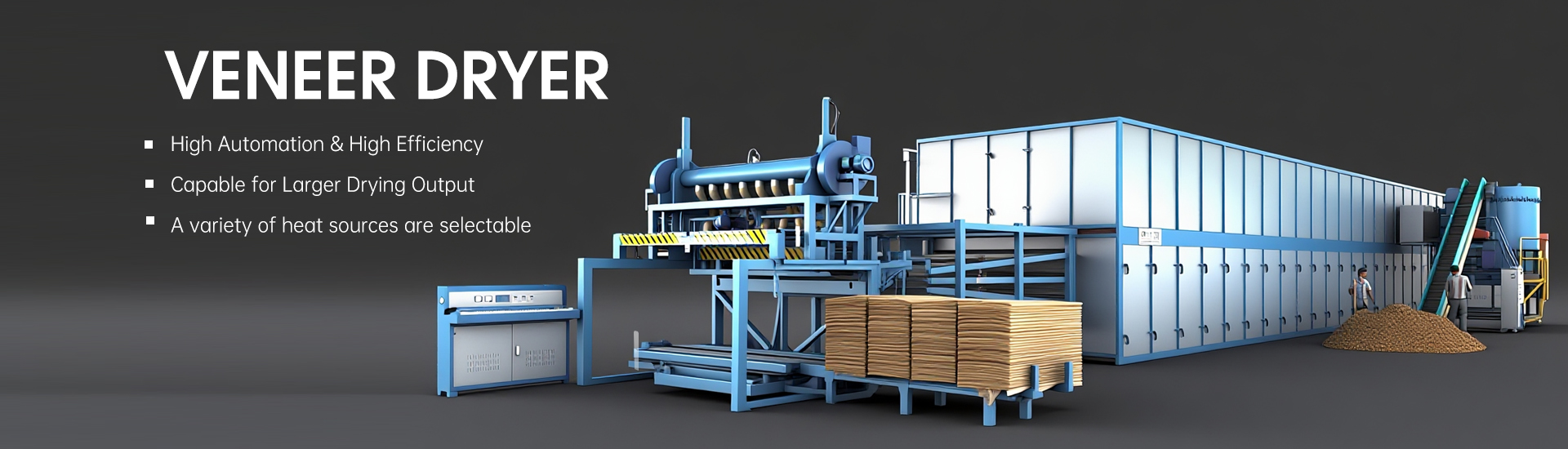
What is the Key Role of Veneer Dryer?
In the entire plywood production process, the veneer dryer plays a critical, connecting role, directly influencing product quality, production efficiency, and manufacturing cost. Its importance can be explained in detail from several perspectives:
1. Reducing Moisture Content to Ensure Glue Bonding Quality
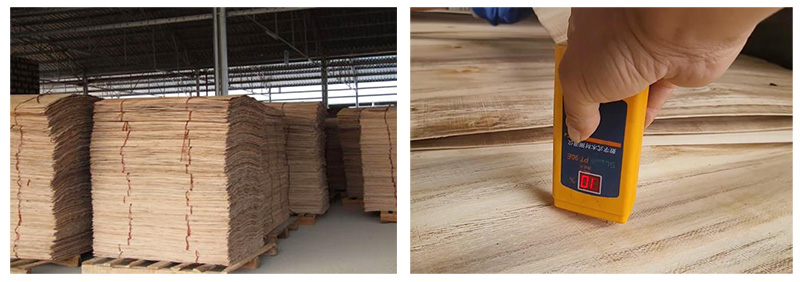
Natural drying is slow and uncontrollable: Freshly rotary-cut or sliced veneer sheets typically contain very high moisture—often 60% to 100% or more. If used directly for gluing and pressing, excess moisture hinders proper resin penetration and curing, resulting in insufficient bonding strength.
Dryer achieves fast, uniform drying: Using hot air, steam, or infrared heating, the veneer dryer lowers moisture content to the required range (generally 8%–12%, depending on adhesive type and process), creating ideal conditions for gluing.
Reduces bonding defects: Excessive moisture can cause bubbling, delamination, or open joints during hot pressing; overly dry veneer becomes brittle and prone to cracking. The dryer stabilizes moisture content, minimizing reject rates.
2. Improving Flatness for Subsequent Processing
Releasing thermal and hygroscopic stress: During drying, moisture evaporation causes fiber contraction. Uneven drying leads to warping or waving. Modern veneer dryers use zoned temperature control and variable conveying speeds to ensure balanced heating, promoting uniform shrinkage and reducing deformation.
Flat veneer aids grading and stacking: Visual grading systems require a smooth surface, free from distortions caused by uneven moisture distribution, to accurately detect defects. The dryer provides the necessary flatness for reliable automatic grading and neat stacking.
Enhances press contact area: Flat veneer ensures full contact with adjacent layers during hot pressing, producing continuous glue lines and reducing weak or unbonded areas in the finished plywood.
3. Shortening Production Cycle and Increasing Capacity
Replaces weather-dependent air drying: Natural drying relies on climate, takes a long time, and requires large space. A veneer dryer completes drying in minutes to tens of minutes, greatly accelerating production.
Enables continuous production: Integrated with rotary cutting, shearing, drying, grading, gluing, lay-up, and pressing, the dryer supports uninterrupted line operation, reducing intermediate stock and waiting times.
Meets high-volume order demands: For export-oriented plywood factories or large structural panel producers, stable drying capacity is essential for achieving high output and on-time delivery.
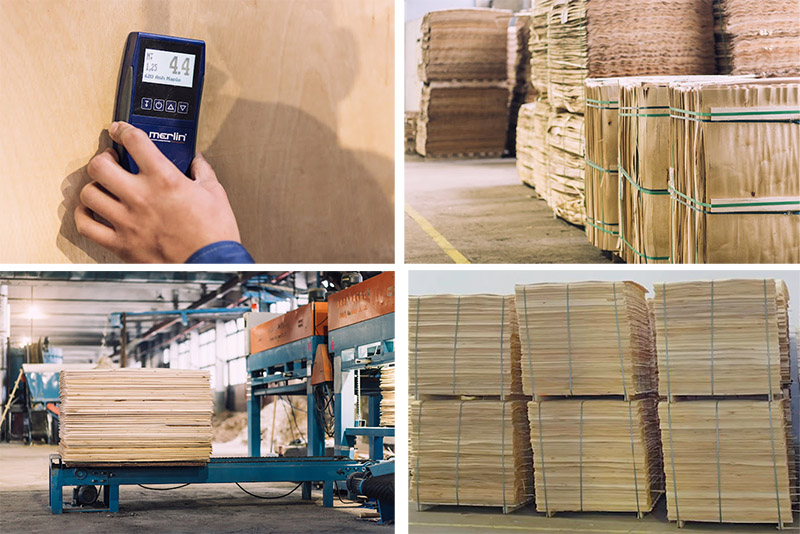
4. Enhancing Product Stability to Prevent Post-Production Deformation and Cracking
Balancing internal wood stress: Wood carries growth and machining stresses. Controlled drying partially releases these stresses, making veneer—and thus plywood—more dimensionally stable during and after pressing.
Reducing moisture-related instability: Large moisture variation between veneer layers causes uneven shrinkage after cooling, leading to cupping or end splitting. The dryer unifies moisture content, lowering this risk.
Adapting to species and thickness: Different woods (pine, birch, poplar, etc.) have distinct hygroscopic and shrinkage behaviors. The dryer adjusts temperature, airflow, and humidity curves to optimize drying for each material.
5. Energy Efficiency and Environmental Considerations
Heat recovery and reuse: Modern veneer dryers often incorporate heat exchangers or recuperators, recycling exhaust heat to preheat intake air, thereby reducing energy consumption.
Minimizing waste from drying defects: Effective drying decreases rejects caused by deformation, cracking, or discoloration, conserving raw material from the source.
Aligning with green manufacturing: Precise drying control can reduce reliance on chemical treatments (e.g., blue stain preventives) and avoid over-drying, supporting sustainable production practices.
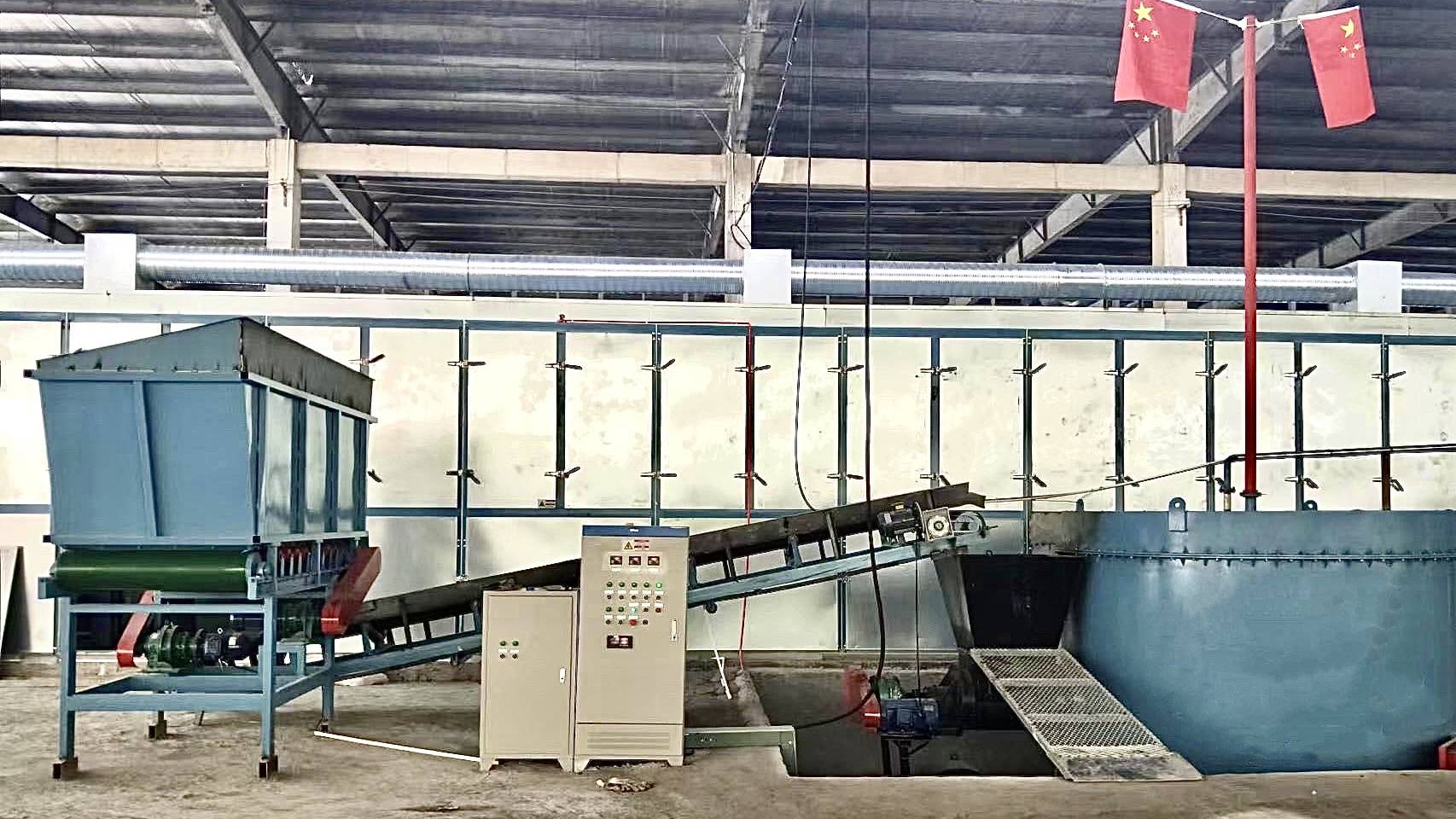
6. Interfacing with Upstream and Downstream Processes
Upstream link: Receives wet veneer sheets from rotary cutters or slicers; shearing or width trimming prior to drying ensures uniform drying results.
Downstream link: Dried veneer proceeds to cooling or directly to a visual grading system for quality inspection and stacking, then to gluing and hot pressing. The quality of drying directly affects grading accuracy, glue penetration, and final product yield.
Conclusion
The veneer dryer is far more than a dehydration unit—it acts as a quality control hub in plywood manufacturing. It determines the physical condition of veneer (moisture content, flatness, stress level) and influences subsequent gluing, pressing, final product stability, and overall mill productivity and cost. Without a stable and reliable drying stage, even the most advanced rotary cutting, gluing, pressing, and visual grading systems cannot consistently produce high-quality plywood.