Plywood Manufacturing: Process Insights
Plywood, a composite material made by gluing multiple layers of veneer, is renowned for its strength, stability, and versatility. Its production involves a meticulous, science-driven process designed to optimize structural integrity and performance. Below is a detailed breakdown of the key steps in plywood manufacturing, highlighting technical nuances and industry-leading solutions.
1. Log Preparation
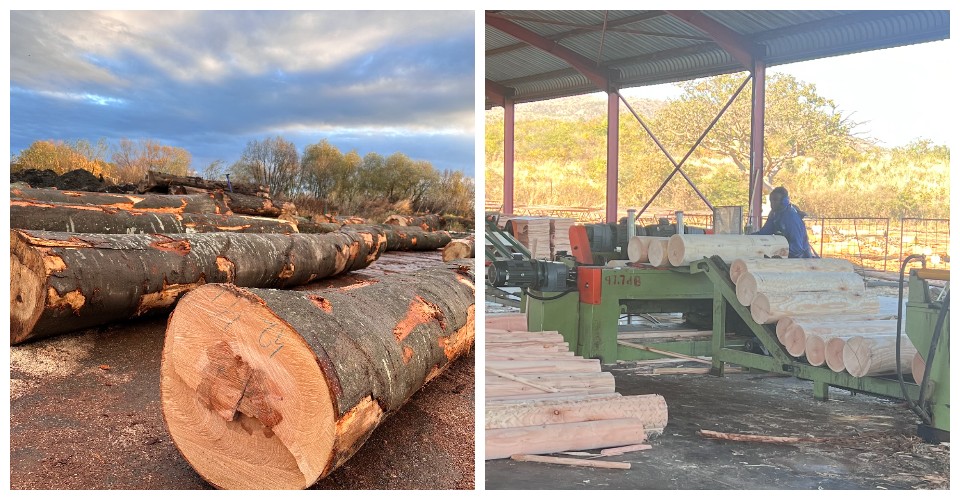
The process begins with selecting high-quality raw logs—typically pine, poplar, or eucalyptus—suitable for plywood production. Logs are first cut into manageable lengths using log saws, then processed through debarking and rounding machines to remove bark, knots, and branches, resulting in smooth, cylindrical billets. For specialized applications, some logs undergo steaming prior to processing to enhance wood properties (e.g., reducing density or improving machinability).
2. Veneer Production: Peeling or Slicing
Veneers, the thin wood sheets that form plywood layers, are produced via two primary methods:
Veneer Peeling: Using log peelers (with or without cardan shafts) or toothed presses, logs are rotated against sharp blades to peel off continuous, thin veneers (thickness: 0.2–8mm). This method is ideal for high-volume production.
Veneer Slicing: For premium plywood (e.g., decorative panels), slicing machines cut logs into thinner, more visually consistent veneers, preserving natural wood grain patterns.
3. Veneer Drying: The Critical Quality Step
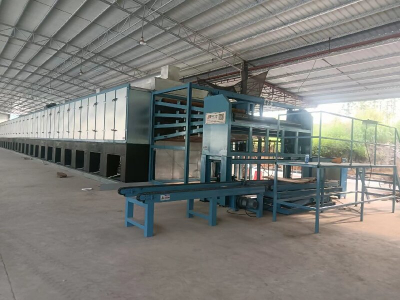
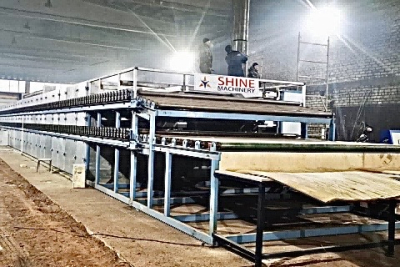
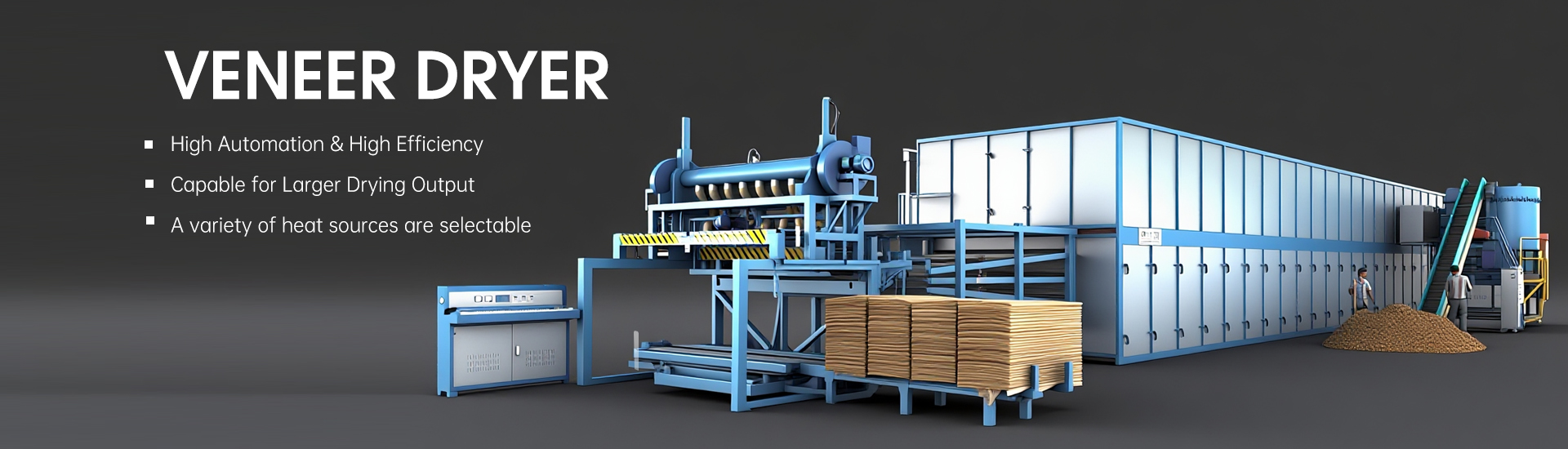
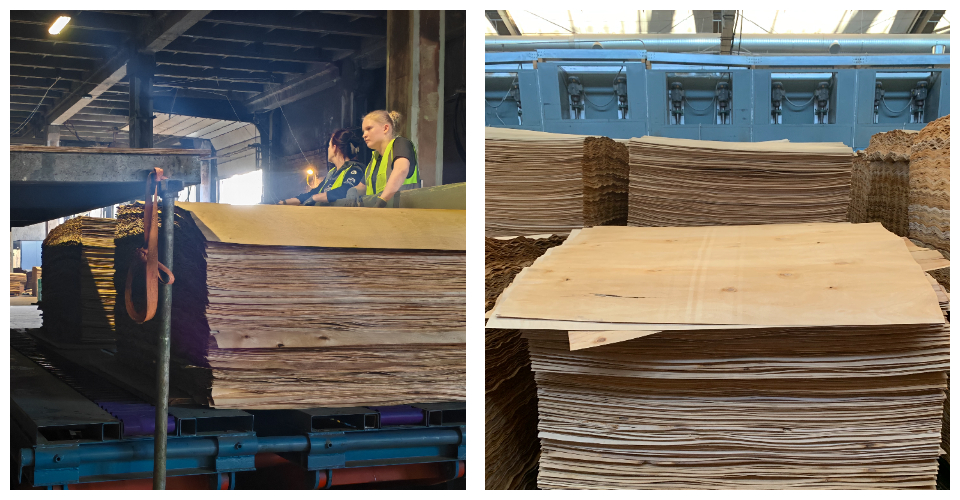
Freshly peeled veneers have high moisture content (40%–60%+), which must be reduced to 0%–12% (species-dependent) to prevent post-production warping, cracking, or dimensional instability. Industrial drying systems—such as roller veneer dryers, vertical veneer dryers, and mesh belt veneer dryers—are employed to control temperature (60–80°C) and airflow, ensuring uniform moisture reduction.
Notably, Shine Machinery’s roller veneer dryers have emerged as a top choice for Grade-A veneer production. Since its founding in 2012, Shine has established a robust global footprint, with its dryers serving clients across 23 Chinese provinces and 20 countries (including Laos, Indonesia, Brazil, Congo-Brazzaville, Zimbabwe, Romania, South Africa, Russia, Côte d’Ivoire, Malaysia, Vietnam, Myanmar, the Philippines, Cambodia, Latvia, and Thailand).
4. Veneer Trimming & Surface Treatment
Dried veneers undergo trimming to remove defects (e.g., cracks, knots) and trim edges to standard dimensions. Damaged sections are often repurposed as core veneers. Surface sanding follows to eliminate burrs and irregularities, ensuring smoothness—critical for premium-grade veneers (e.g., face veneers for furniture or decorative panels).
5. Gluing & Assembly
Veneers are coated with adhesive (commonly urea-formaldehyde or phenolic resin) using automated glue spreaders, with application thickness adjusted based on veneer thickness. They are then assembled following the “perpendicular grain direction” principle: high-quality veneers (face/back) are placed on the outer layers, while standard veneers form the core. This symmetric structure enhances stability and load-bearing capacity.
6. Cold & Hot Pressing
Assembled veneer stacks are first pre-pressed in cold presses to shape the panel and ensure initial glue adhesion. They are then transferred to hot presses, where high temperatures (100–150°C) and pressures (8–15MPa) cure the adhesive, bonding layers into a single, rigid sheet. Pressing time varies by panel thickness (typically 5–30 minutes) to ensure full glue curing and dimensional accuracy.
7. Post-Processing
Hot-pressed panels undergo trimming to remove rough edges and achieve standard dimensions. Additional sanding may be applied for a smoother finish. Some products receive decorative treatments (e.g., laminating, painting) to enhance aesthetics.
8. Quality Inspection & Grading
Final inspection checks for thickness consistency, flatness, glue bond strength, and moisture content. Panels are graded (e.g., premium, first-grade, standard) based on these metrics, ensuring compliance with industry standards and customer requirements.
This systematic process—combining precision machinery, scientific control, and quality-focused practices—produces plywood with exceptional strength, stability, and adaptability. From furniture and construction to packaging, plywood remains a cornerstone of modern manufacturing, driven by innovations like Shine Machinery’s drying solutions that elevate both efficiency and product quality.