Shine’s Green Veneer Drying Solution
In the competitive landscape of wood processing, veneer drying stands as a critical step—transforming raw logs into high-quality thin sheets for furniture, flooring, and construction. Yet, traditional drying methods often grapple with a dual challenge: balancing production efficiency with environmental compliance, especially when using biomass burners, a cost-effective fuel source. Shine Machinery, a leader in industrial drying technology, has redefined this balance with its innovative water film dust removal system, seamlessly integrated into its flagship roller veneer dryers. This system not only tames the emissions from biomass combustion but also ensures uninterrupted production, setting a new benchmark for sustainable wood processing.
The Science Behind Shine’s Water Film Dust Removal System
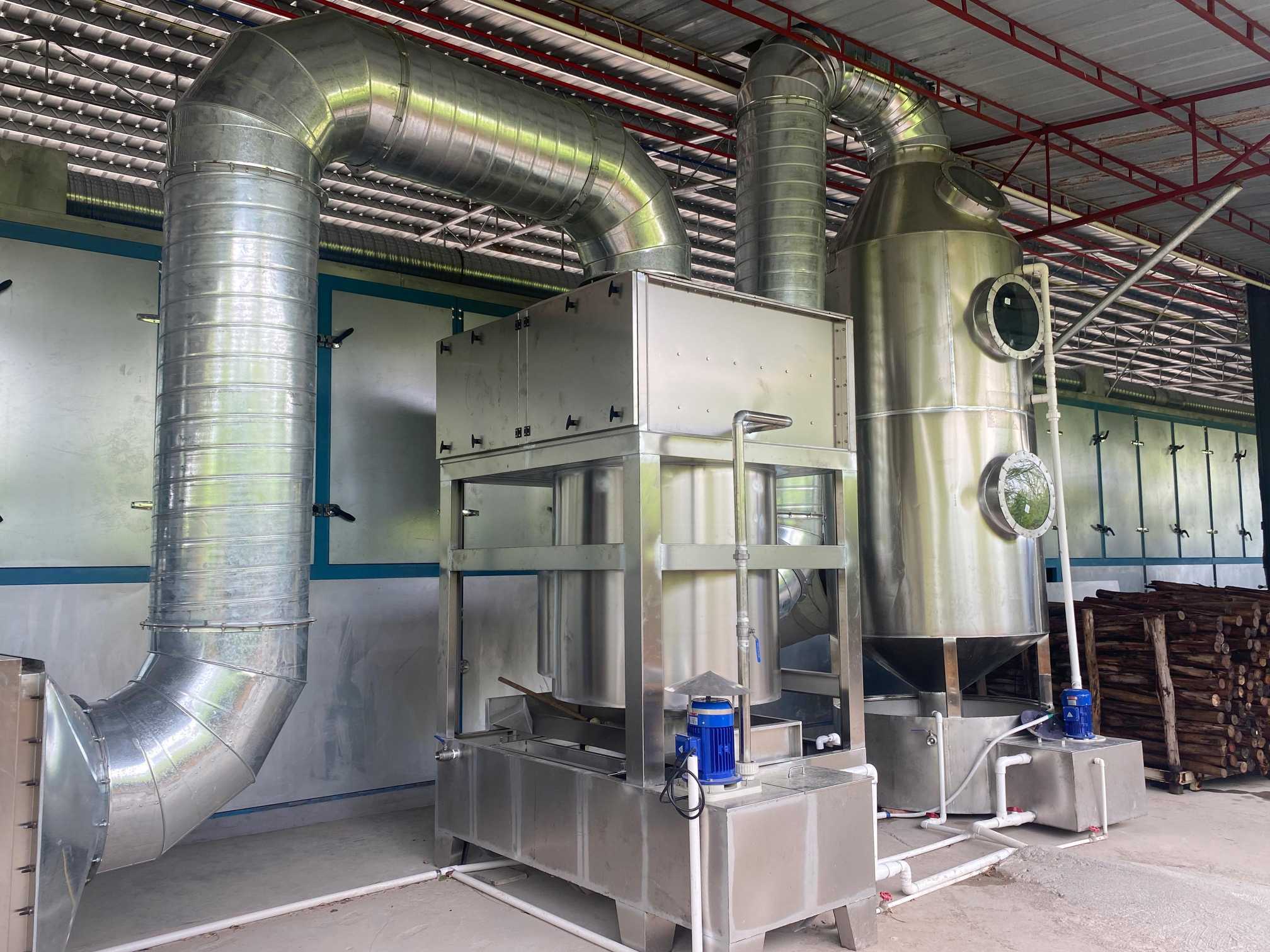
At the heart of Shine’s eco-friendly solution lies its advanced water film dust removal system, a meticulously engineered apparatus designed to capture and neutralize airborne pollutants from biomass burner exhaust. Unlike conventional dry filtration methods, which can clog or require frequent replacement, Shine’s system leverages the natural adhesive properties of water to trap particulate matter (PM), acidic gases, and volatile organic compounds (VOCs) with remarkable efficiency.
The process begins as hot flue gas (200–300°C) from the biomass burner enters the dust removal tower. To prevent thermal damage to the system, a pre-cooling unit first reduces the gas temperature to 80–100°C. Next, the gas is directed upward through a series of spray nozzles, which release a fine mist of alkaline water (pH 8–9, often enriched with lime milk to enhance acid neutralization). As the gas rises, it collides with the descending water film—a continuous, smooth layer formed by the nozzles—and the suspended mist.
Here, the magic unfolds: PM (such as ash, soot, and unburned biomass particles) adheres to the water droplets via inertial impaction and interception. Acidic gases like sulfur dioxide (SO₂) and nitrogen oxides (NOₓ) react chemically with the alkaline water, forming harmless salts (e.g., calcium sulfate). Larger particles coalesce into heavier aggregates, which settle at the bottom of the tower and are discharged as sludge for safe disposal. Cleaned gas then passes through a demister pad to remove residual water droplets before being released into the atmosphere.
Shine’s system boasts a PM removal efficiency of over 99%, reducing emissions to below 10 mg/m³—far stricter than most national standards (e.g., China’s GB 13271-2014 limits PM to 30 mg/m³). For SO₂, the removal rate exceeds 90%, ensuring compliance even in regions with stringent air quality regulations.
Managing Biomass Emissions: From Fuel to Clean Air
Biomass burners, while economical and renewable, pose unique challenges: their exhaust contains not just PM but also tar, dioxins, and varying concentrations of pollutants depending on the fuel type (e.g., eucalyptus, rice husks, or wood chips). Shine’s integrated approach addresses these complexities through three key strategies:
Fuel Optimization: Shine works with clients to select biomass fuels with low ash and sulfur content, minimizing initial pollutant loads. For example, in its Thailand project, eucalyptus waste—abundant in local plantations—was chosen for its consistent calorific value and low emission profile.
Real-Time Monitoring: The system is equipped with sensors that track gas temperature, humidity, PM concentration, and pH levels. An automated control panel adjusts spray intensity, water flow, and cooling rates dynamically, ensuring optimal performance even during load fluctuations (e.g., when switching between wet and dry logs).
Sludge Recycling: The collected sludge, rich in organic matter and minerals, is repurposed as fertilizer for agricultural use, closing the loop and reducing waste.
Balancing Ecology and Production Continuity
A common concern with pollution control systems is their potential to disrupt production—whether through high energy consumption, frequent maintenance, or reduced throughput. Shine’s design eliminates these trade-offs:
Low Resistance Design: The water film system features streamlined airflow paths and minimal pressure drop (under 500 Pa), reducing the load on exhaust fans and cutting energy use by 15–20% compared to dry filters.
Modular Maintenance: Key components (nozzles, demisters, pumps) are easily accessible and replaceable, allowing for quick servicing during planned downtime. In the Thailand case, the system operated continuously for 6,000 hours with only minor adjustments.
Seamless Integration: The dust removal unit is built into the dryer’s framework, requiring no extra floor space—critical for facilities with limited room (as noted in a client’s email: “We have 15m of space, and Shine’s compact design fits perfectly”).
Real-World Impact: A Case Study from Thailand
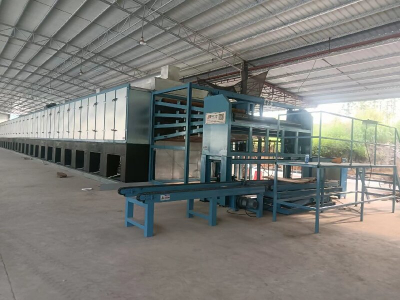
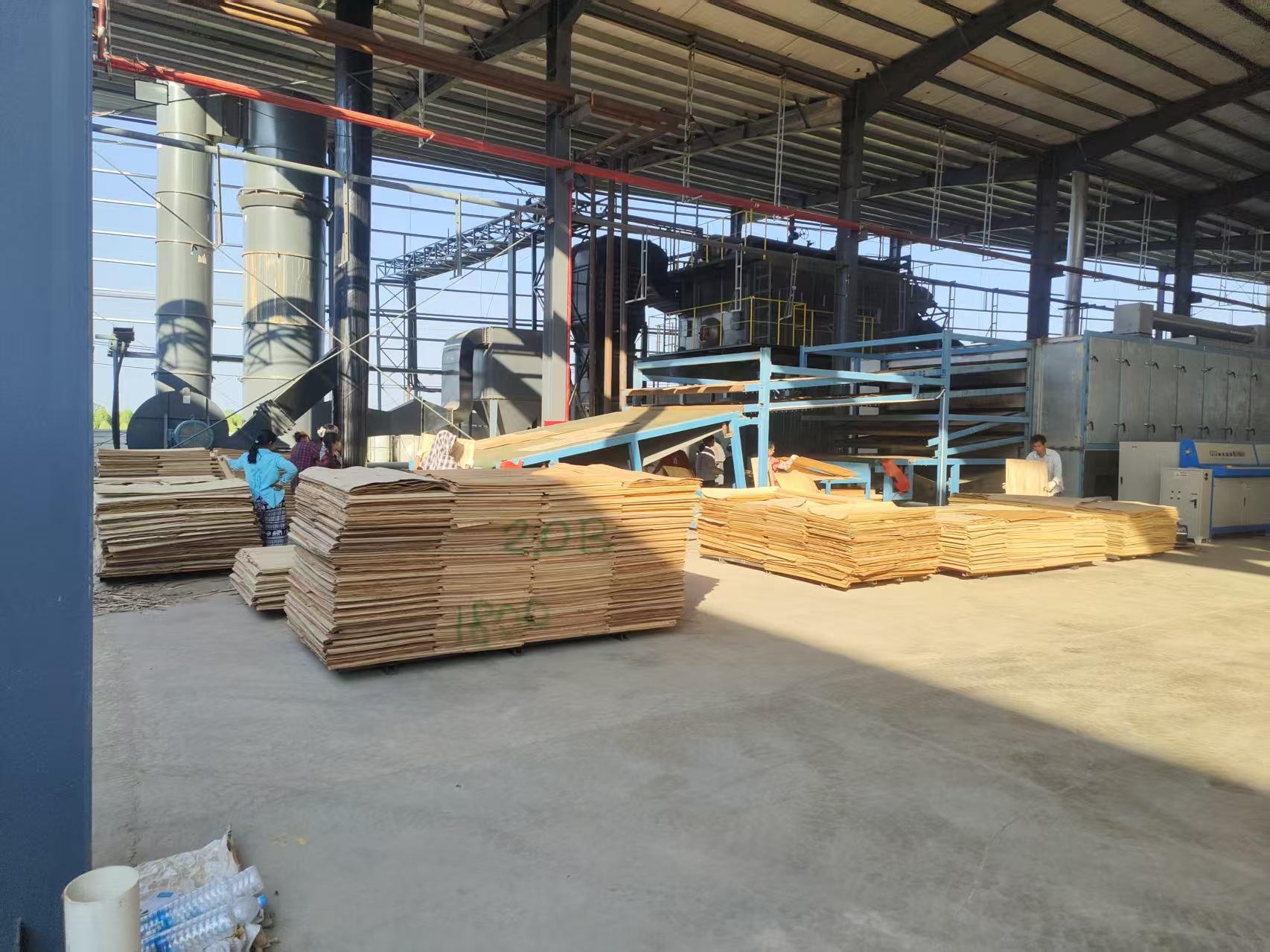
Shine’s system recently proved its mettle in a 4-layer, 50m roller veneer dryer installed in Thailand. The client, a leading eucalyptus processor, needed to replace an aging diesel-powered dryer with a cost-effective, eco-friendly alternative. Shine’s solution—featuring a biomass burner paired with the water film dust removal system—delivered:
A 30% reduction in fuel costs (biomass vs. diesel).
Emission levels 40% below Thailand’s strict NEPA standards.
Uninterrupted production, with the dryer handling 5 m³/hour of eucalyptus blocks.
“Shine’s system let us go green without slowing down,” said the client. “The water film technology is quiet, efficient, and the data shows we’re meeting all environmental targets.”
Pioneering Sustainable Wood Processing
As global demand for sustainable manufacturing grows, Shine Machinery’s water film dust removal system represents a paradigm shift. By turning biomass emissions from a liability into a manageable byproduct, the company enables wood processors to meet regulatory demands, reduce operational costs, and enhance their brand reputation.
For Shine, this is more than a product—it’s a commitment to “drying with responsibility.” With installations across Europe, South America, and Asia, the company continues to refine its technology, exploring synergies with solar preheating and AI-driven predictive maintenance. In an industry where “green” often means compromise, Shine proves that efficiency and ecology can thrive together—one clean breath of air at a time.