What is Plywood Made of?
Introduction
When people ask, What Is Plywood Made Of, the answer seems simple. However, the manufacturing process tells a much more interesting story. Behind every strong plywood panel lies a series of carefully controlled production steps, advanced equipment, and skilled craftsmanship.
At Shandong Shine Machinery, we have worked with plywood manufacturers for years. We understand that excellent plywood begins long before hot pressing. It starts with selecting quality logs, producing premium wood veneer, and controlling every stage of the veneer drying process.
Today, we will explain how plywood is made, why veneer drying matters so much, and how modern equipment helps produce consistent, high-quality plywood.
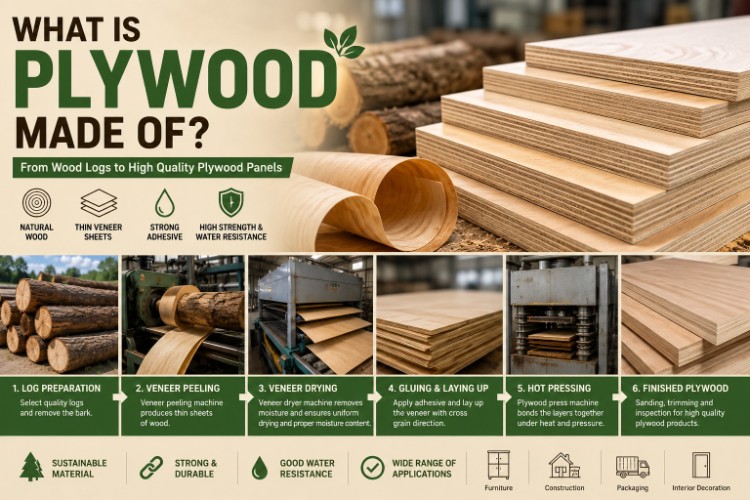
What Is Plywood Made Of?
Plywood consists of multiple thin sheets of wood, also called veneer sheets. Manufacturers glue these thin layers together while rotating the grain direction of each layer. This cross-grain structure gives plywood excellent strength and stability.
Common raw materials include:
Poplar
Birch
Pine
Eucalyptus
Hardwood species
Softwood species
Many manufacturers also produce hardwood plywood for furniture and decorative applications.
The adhesive plays an equally important role. Different glues provide different performance levels.
Common adhesives include:
Urea Formaldehyde (UF)
Melamine Urea Formaldehyde (MUF)
Phenolic Resin (PF)
Each adhesive improves durability, bonding strength, or water resistance depending on the application.
Without quality materials, even the best machines cannot create premium plywood products.
How Plywood Is Made
The plywood manufacturing process follows several important stages. Every step influences the final product.
Log Preparation
Production begins with fresh logs.
Workers remove the bark before cutting logs into suitable lengths. Clean logs protect downstream equipment and improve production efficiency.
Next, many factories soak or steam the logs. This treatment softens the wood fibers and makes peeling easier.
Veneer Peeling
A veneer peeling machine rotates the log while a sharp knife slices continuous sheets of veneer.
This process creates a uniform wood veneer with precise thickness.
Good peeling delivers several advantages:
Smooth veneer surfaces
Fewer cracks
Better glue penetration
Higher recovery rates
High-quality veneer creates a stronger plywood panel from the beginning.
Veneer Drying
Fresh veneer peeled from logs contains significant moisture. Excess water weakens glue bonding and causes defects during pressing.
Therefore, manufacturers perform veneer drying immediately after peeling.
This stage reduces moisture content to suitable levels before gluing.
Proper veneer moisture content normally falls between 8% and 12%, depending on the plywood grade and adhesive system.
Think about baking bread. Nobody enjoys soggy dough. Veneer behaves much the same way. Dry it correctly, and everything works better.
Why Veneer Drying Is So Important
Many people focus on pressing equipment. In reality, drying often determines final product quality.
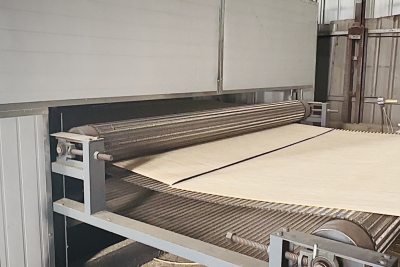
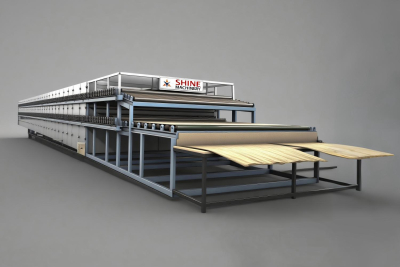
A modern wood veneer drying machine provides stable airflow and accurate temperature control. As a result, factories achieve uniform drying across every veneer sheet.
When moisture stays consistent, manufacturers gain several benefits:
Better glue bonding
Improved dimensional stability
Fewer warped panels
Lower rejection rates
Better surface appearance
Longer product life
Poor drying creates expensive problems.
Excess moisture causes bubbles, delamination, and poor bonding. Over-dried veneer becomes brittle and cracks easily.
Neither situation helps production efficiency.
That explains why many successful plywood factories invest heavily in reliable drying technology.
Choosing the Right Veneer Drying Equipment
Different factories require different solutions.
Production capacity, wood species, veneer thickness, and local climate all affect equipment selection.
Several drying systems remain popular today.
Roller Dryer
The roller dryer remains one of the most common choices for continuous production.
Rollers transport veneer smoothly through multiple heating zones.
Advantages include:
High production capacity
Stable transportation
Excellent uniformity
Reduced labor
Continuous operation
This system works especially well for large plywood production line projects.
Mesh Belt Dryer
Some manufacturers prefer mesh belt systems.
These dryers handle thinner or softer veneer without damaging delicate surfaces.
They also provide flexible drying conditions for specialty veneer products.
Multi-Layer Dryers
Factories with limited floor space often select multi-layer dryers.
Although production speed may be lower, these machines maximize available workshop space.
Every factory has different priorities. Selecting the proper solution depends on production goals rather than trends.
Equipment That Supports Modern Plywood Production
Efficient production requires more than one machine.
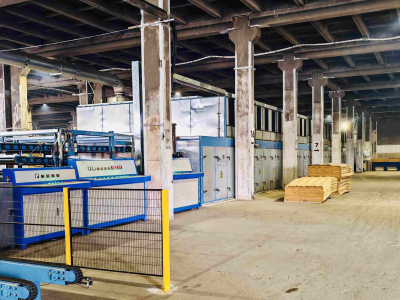
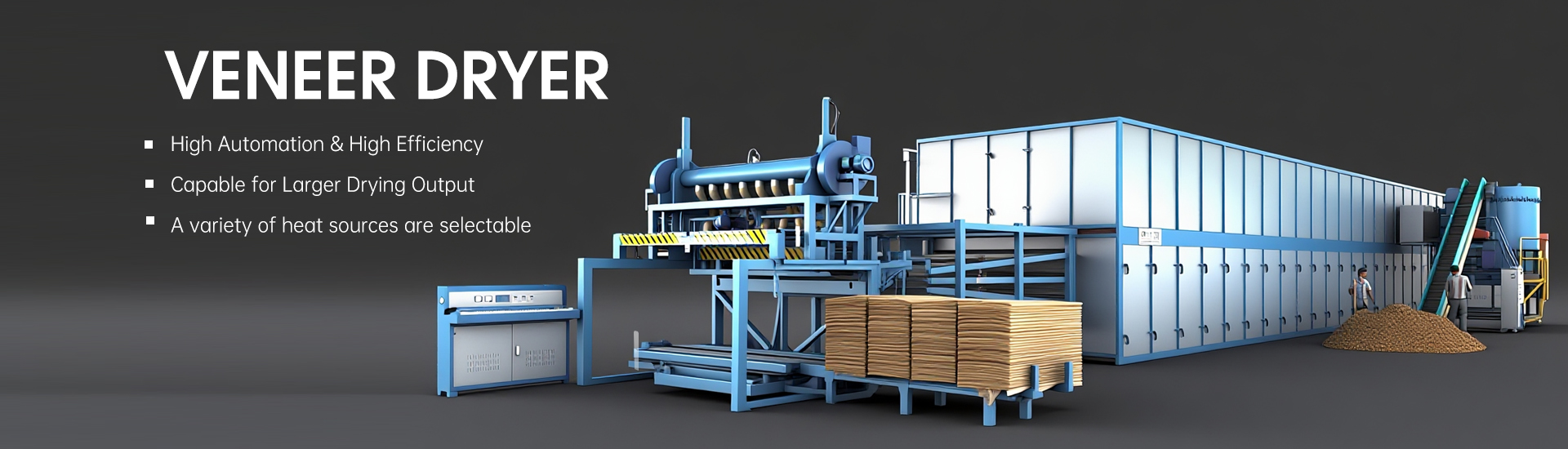
A complete plywood production system usually includes several pieces of plywood manufacturing equipment working together.
Typical equipment includes:
Log debarker
Log charger
Veneer peeling machine
Veneer clipper
Veneer stacker
Glue spreader
Lay-up station
Plywood press machine
Sanding machine
Each machine supports the next step.
When one process slows down, the entire factory loses efficiency.
For this reason, many customers choose integrated production solutions instead of purchasing equipment separately.
How High-Quality Veneer Creates Better Plywood
Excellent plywood begins with excellent veneer.
We always encourage customers to monitor veneer quality throughout production.
Several factors influence veneer performance:
Thickness tolerance
Surface smoothness
Moisture consistency
Fiber integrity
Color uniformity
Stable drying protects these characteristics.
Maintaining proper moisture content also improves glue penetration and pressing performance.
Factories that ignore drying often discover expensive problems after pressing.
Unfortunately, repairing poor veneer costs much more than drying it correctly the first time.
Good production follows a simple principle.
Quality enters before it exits.
Why Partner with an Experienced Veneer Dryer Manufacturer
Every plywood factory faces different challenges.
Climate changes, wood species vary, and production targets continue growing.
As an experienced veneer dryer manufacturer, we help customers design drying solutions based on actual production requirements instead of standard templates.
Our engineers evaluate:
Veneer thickness
Daily production capacity
Wood species
Factory layout
Energy consumption
Local environmental conditions
This customized approach helps customers improve efficiency while lowering operating costs.
Many customers also ask about the veneer dryer price.
The answer depends on production capacity, heating source, automation level, and drying width.
Although lower prices attract attention, long-term operating costs usually matter much more than initial investment.
Reliable equipment saves energy, reduces maintenance, and increases productivity year after year.
Conclusion
So, What Is Plywood Made Of?
The answer includes much more than wood and glue. Premium plywood depends on quality logs, precision wood veneer, controlled veneer drying, accurate moisture management, and reliable manufacturing equipment.
Every stage of the plywood manufacturing process influences the final product. Small improvements during drying often create major gains in quality, efficiency, and profitability.
At Shandong Shine Machinery, we believe great plywood begins with great veneer. By combining advanced drying technology with practical manufacturing experience, we help customers build efficient production lines that deliver consistent, high-quality plywood products for global markets.
Whether you are building a new factory or upgrading an existing line, investing in the right drying solution will strengthen every plywood panel you produce.