Why Do Dried Wood Veneers Reabsorb Moisture?
For plywood and LVL manufacturers, few things are as frustrating as spending energy and time running a high-capacity veneer drying machine, only to find that the wood veneers have regained moisture before they even reach the hot press. You’ve done the hard work: you selected the right heat exchanger, optimized your airflow, and calibrated your temperatures. Yet, when you check the moisture content (MC) at the stacker, the numbers have crept back up. This phenomenon, known as "moisture reabsorption" or "rebound," is a silent profit killer. Understanding why it happens requires a look at the physics of wood and the environment of your factory floor.
The Physics of Wood: An Hygroscopic Material
Unlike steel or plastic, wood is hygroscopic. This means it naturally exchanges moisture with the surrounding air. Wood doesn't just stay at the moisture level you dried it to; it constantly strives to reach a state of equilibrium with the environment. This target level is called the Equilibrium Moisture Content (EMC).
The EMC is determined almost entirely by two factors: Relative Humidity (RH) and Temperature.
If the air is humid (high RH), the wood will absorb moisture to match it.
If the air is dry (low RH), the wood will release moisture.

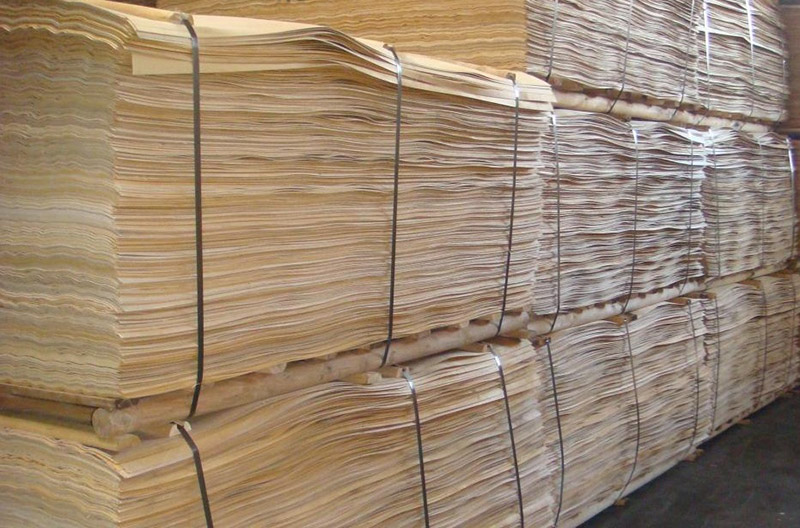
Even if your veneer drying machine successfully reduces the MC of your wood veneers to a perfect 8%, those sheets are immediately exposed to the factory environment. If your factory floor has an RH of 80% (common in tropical climates or during rainy seasons), the wood will aggressively try to climb back to an EMC of 15% or higher. This isn't a defect in your drying process; it is the fundamental nature of wood.
The Culprit: Incomplete Drying vs. Environmental Exposure
In our previous discussions about the importance of the heat exchanger and finned tubes, we emphasized the need for uniform drying. However, two main scenarios typically lead to severe post-drying moisture rebound:
1. The "Case Hardening" Effect
If the drying process is too aggressive—perhaps the temperature was too high or the airflow too intense—the surface of the veneer can dry and shrink too quickly. This creates a dense, sealed "skin" on the outside while trapping higher moisture levels inside the core. This is often referred to as "case hardening."
Once the veneer leaves the veneer drying machine, the trapped internal moisture migrates outward. Because the surface is already dry, the moisture condenses just beneath the skin or forces its way out, causing the veneer to warp, buckle, or feel damp to the touch days later. This is why we always emphasize that a high-quality heat exchanger must provide gentle, uniform heat to drive moisture out from the core without scorching the surface.
2. Improper Storage Conditions
Even if the veneers are dried perfectly to 8% MC, they are vulnerable the moment they leave the dryer. Many mills make the mistake of thinking the job is done once the veneers hit the stacker. In reality, the battle against moisture has just entered a new phase.
Common storage mistakes include:
Direct Floor Contact: Stacking dried wood veneers directly on concrete floors. Concrete acts like a sponge, wicking ground moisture directly into the bottom layers of the stack.
Uncovered Stacks: Leaving veneers exposed to the open air in a non-climate-controlled warehouse. Fluctuations in daily temperature and humidity will cause the veneers to breathe in moisture overnight.
Poor Air Circulation: Stacking veneers too tightly without stickers (spacers) prevents air from circulating around each sheet, creating microclimates of high humidity within the pile.

Bridging the Gap: From Dryer Exit to Hot Press
To prevent moisture rebound, you must manage the transition period between the veneer drying machine and the hot press. Based on our experience helping mills optimize their production lines, here are the critical steps:
1. Cool-Down Zones
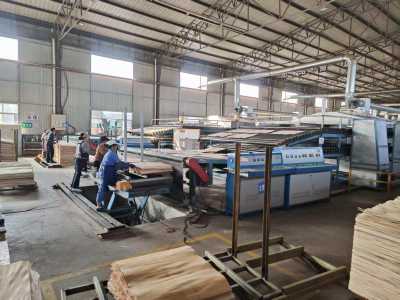
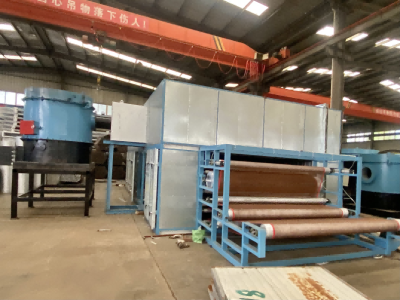
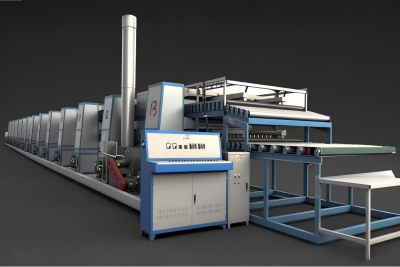
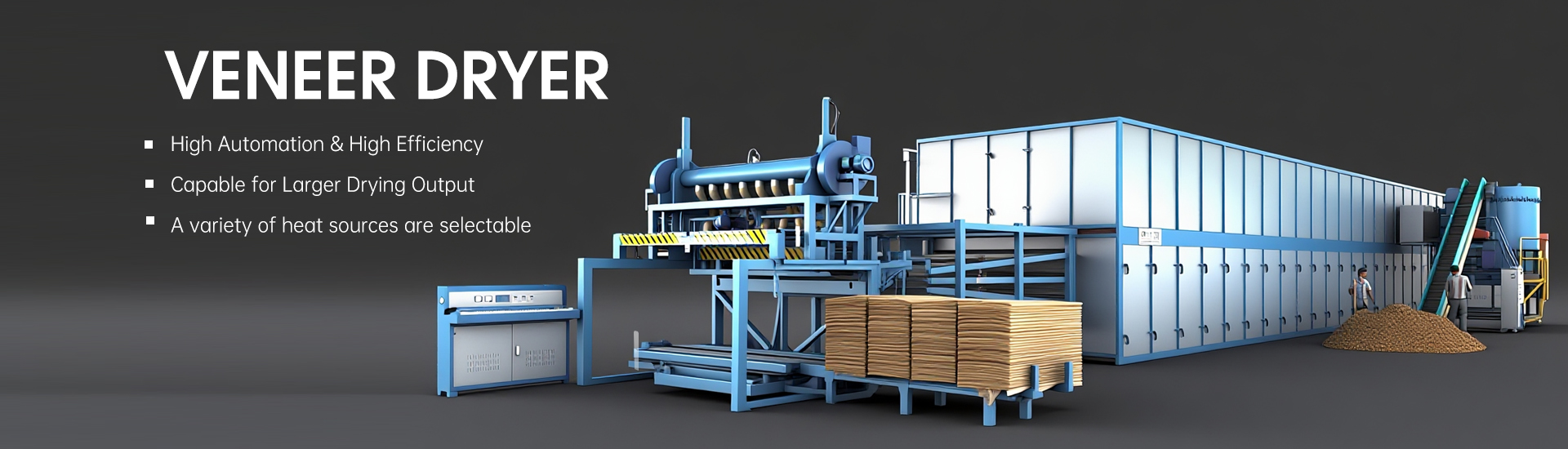
High-end veneer drying machines, like those manufactured by Shine, often include a cooling section at the end of the tunnel. This is not just for worker safety; it is a critical stabilization step. Rapidly cooling hot, dry veneers in a humid environment causes "cold shock," where condensation forms instantly on the wood surface. A controlled cool-down allows the veneers to acclimate to the ambient factory temperature gradually, reducing the risk of immediate moisture pickup.
2. The "Buffer" Room Strategy
Establish a "conditioning room" or a buffer zone between the dryer exit and the lay-up area. This room should be climate-controlled to maintain a temperature of 20-25°C and an RH of 50-60%.
The Rule of Thumb: Your storage environment should be slightly drier than your target veneer MC. If you need 8% MC in the veneer, your storage room EMC should be around 6-7%. This creates a negative pressure gradient, ensuring the wood continues to lose moisture (or at least stays stable) rather than gaining it.
3. Proper Stacking Techniques
Never underestimate the power of a good stack.
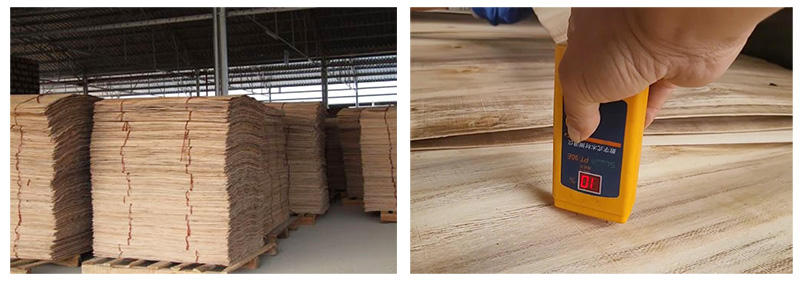
Use Stickers: Place thin strips of dry wood ("stickers") between layers of veneers. This creates air channels that allow any residual heat or moisture to escape and prevents the buildup of humid air pockets.
Elevate Stacks: Always store veneers on pallets or racks that keep them at least 6 inches off the concrete floor.
Cover Immediately: As soon as a stack is built, cover it with a vapor barrier or a thick tarp. Ensure the sides are sealed to the floor to lock out ambient humidity.
4. Monitor Relentlessly
Install hygrometers (humidity sensors) in your storage areas, not just in your veneer drying machine. Track the temperature and RH daily. If you see the RH creeping above 65%, it’s time to turn on dehumidifiers or adjust your HVAC systems. Remember, the enemy is invisible until it’s too late.
Conclusion: Consistency is King
In the wood processing industry, consistency equals quality. A wood veneer that dries to 8% MC in the morning but rebounds to 12% MC by the afternoon will cause catastrophic glue failures in the final product. By respecting the hygroscopic nature of wood and implementing strict environmental controls, you protect your investment in high-efficiency drying technology.
Your heat exchanger works tirelessly to remove water; your storage practices must work just as hard to keep it out. By bridging the gap between the exit of the veneer drying machine and the entrance to the hot press with proper cooling, buffering, and stacking, you ensure that every sheet of veneer retains its structural integrity and dimensional stability. This attention to detail is what separates a mediocre mill from a world-class operation capable of producing premium plywood and LVL products.