Why Heat Exchanger Defines Veneer Dryer’s Performance?
The Heart of Efficiency: Why the Heat Exchanger Defines Your Veneer Dryer’s Performance
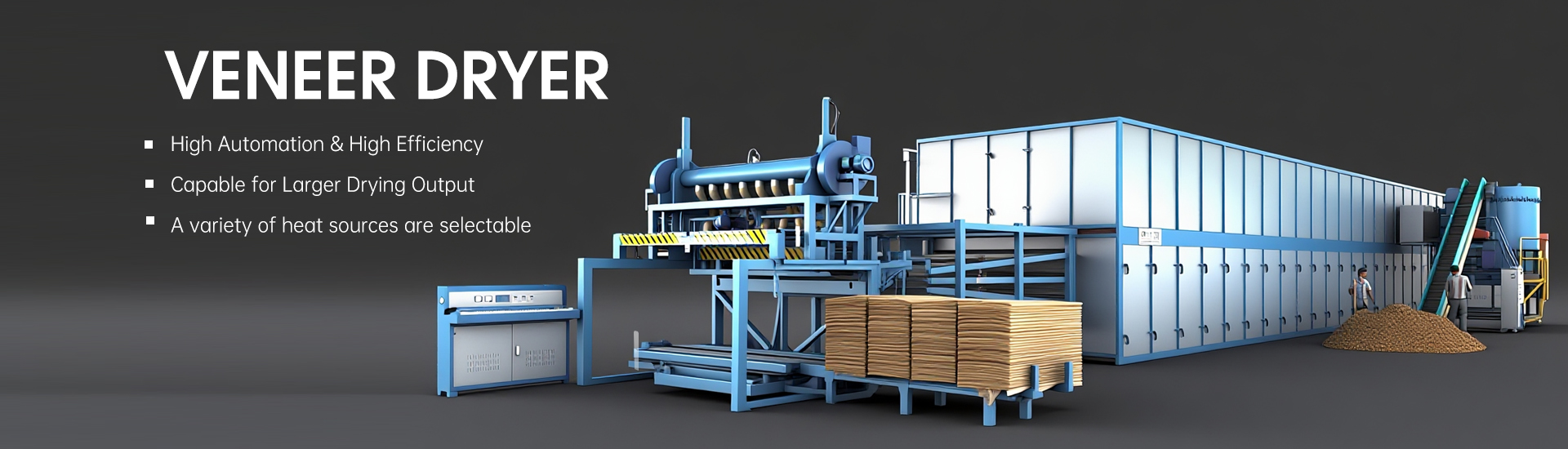
In the high-stakes world of wood veneer production, the race against moisture is relentless. After the peeling lathe slices a log into delicate sheets of wood veneer, these green sheets are saturated with water—often holding 60% to 120% moisture content by weight. Transforming these fragile, waterlogged sheets into stable, market-ready wood veneers requires a precise and powerful drying process. At the center of this transformation lies the veneer dryer, a complex system of conveyors, fans, and controls. But if you ask any veteran mill operator where the real magic happens, they will point to a single component: the heat exchanger.
Often referred to as the "heart" of the drying system, the heat exchanger is the undisputed core of thermal transfer. It is the component responsible for converting energy—whether from steam, thermal oil, or biomass—into the hot air that drives evaporation. Without an efficient heat exchanger, even the most advanced veneer dryer is merely an expensive conveyor belt. Understanding the function, technology, and impact of this critical component is essential for any operation looking to optimize output, reduce costs, and ensure the highest quality of finished wood veneers.
The Physics of Drying: A Three-Pronged Approach
To appreciate the role of the heat exchanger, one must first understand the drying process itself. In a modern veneer drying machine, moisture removal is achieved through a sophisticated combination of three physical mechanisms: conduction, convection, and evaporation.
Conduction: Heat transfers from the hot surface of the dryer components directly into the veneer.
Convection: This is where the heat exchanger shines. It heats the air, which is then blown across the surface of the wood veneers. This moving hot air carries away the evaporated moisture.
Evaporation: As the temperature of the water inside the veneer rises, it turns into vapor and escapes into the airstream.
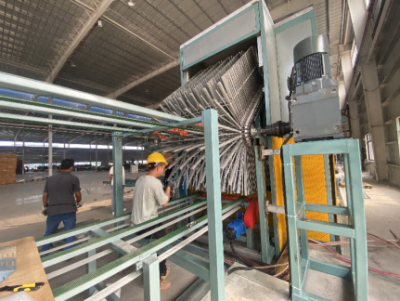
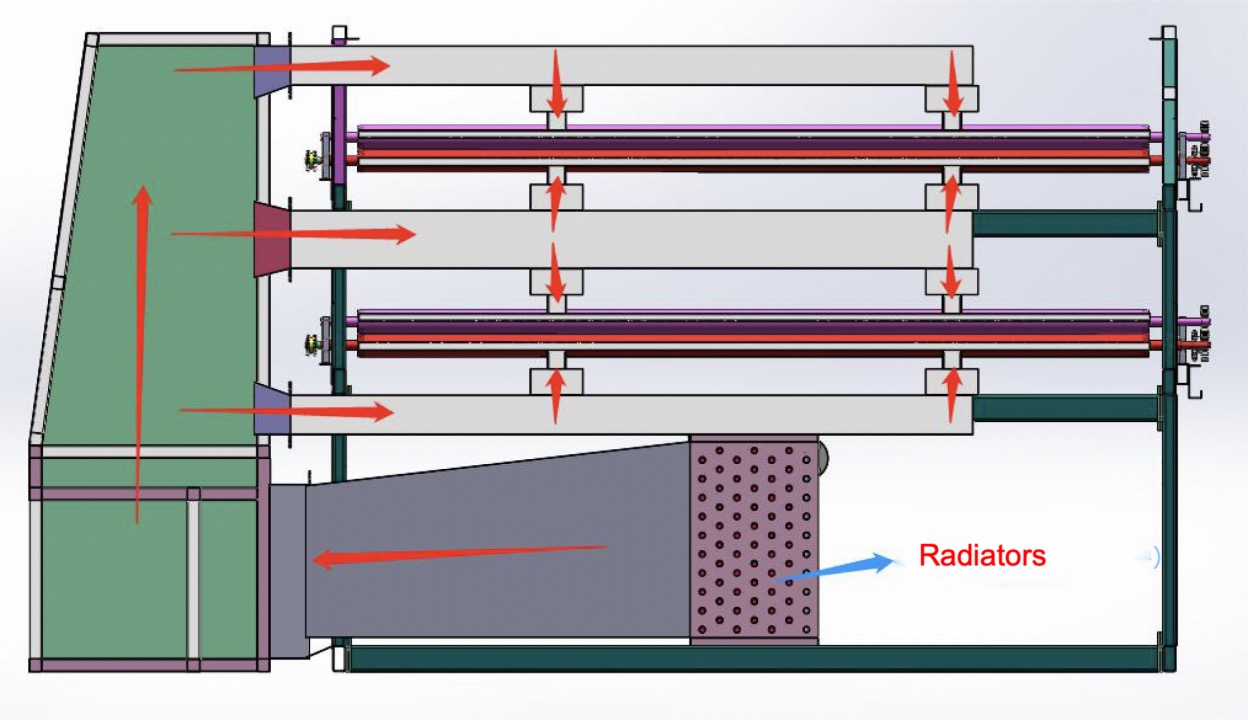
The heat exchanger is the engine of the convection process. In a Shine veneer dryer, for instance, the system utilizes a high-efficiency finned tube heat exchanger to warm the air. The process is a masterclass in thermal dynamics: thermal fluid or steam enters the tubes of the exchanger, while ambient air is forced over the external fins. The metal fins act as radiators, shedding heat into the passing air. This newly heated air is then propelled by powerful axial fans directly onto the veneers. As the hot air touches the cooler wood surface, it transfers its thermal energy, raising the temperature of the water within the cellulose fibers until it evaporates.
Maximizing Surface Area: The Power of the Finned Tube
The brilliance of modern heat exchanger design lies in the principle of maximizing surface area. A simple smooth tube has limited contact with the air. However, by adding a series of external metal plates—known as fins—the surface area available for heat transfer increases exponentially.
Shine Machinery’s dryers employ finned tube heat exchangers specifically for this reason. These fins disrupt the boundary layer of air clinging to the metal surface, forcing more air molecules to come into contact with the heated metal. This design achieves several critical objectives:
Enhanced Heat Transfer: More surface area means more heat enters the airstream per square meter of the exchanger.
Uniform Temperature Distribution: The fins ensure that the heat is spread evenly across the width of the air jet. This prevents "hot spots" that can scorch wood veneers and "cold spots" where moisture remains trapped.
Reduced Energy Consumption: By transferring heat more efficiently, the system requires less fuel or electricity to reach the target drying temperature. In an era of rising energy costs, this efficiency directly impacts the bottom line.
Precision Control: The Brain Behind the Brawn
An efficient heat exchanger is only as good as the control system managing it. In a high-end veneer drying machine, the heat exchanger does not operate in isolation. It is part of a closed-loop system governed by precision valves and sensors.
Operators can regulate the flow of the heating medium (steam or thermal oil) using automated valves. These valves respond to real-time data from temperature and humidity sensors placed strategically throughout the drying chambers. If the sensors detect that the exiting wood veneers are too wet, the system automatically increases the flow to the heat exchanger, raising the air temperature. Conversely, if the veneers are drying too quickly and risk cracking, the flow is reduced.
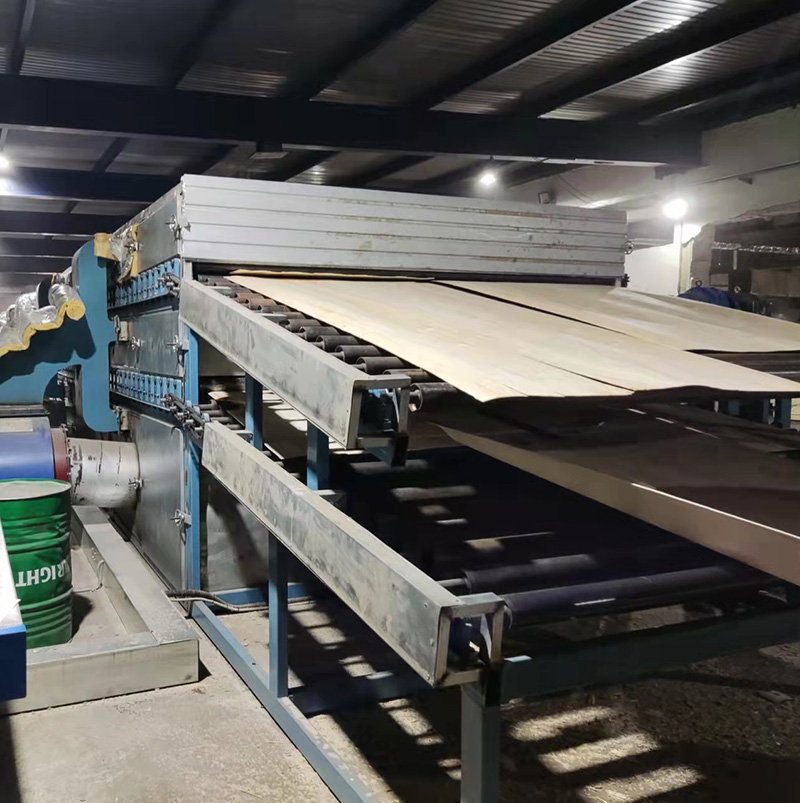
This level of precision is impossible with older, manually controlled systems. It ensures that the wood veneers leave the dryer with a consistent moisture content, typically between 8% and 12%. This consistency is vital for the subsequent gluing and pressing stages of plywood manufacturing, as uneven moisture leads to warping, delamination, and rejected panels.
Impact on Quality and Profitability
The performance of the heat exchanger has a direct correlation with the quality of the final product and the profitability of the mill.
Product Quality: Uniform heating prevents case-hardening (where the surface dries too fast) and internal stresses. It ensures the wood veneers remain flat and free of checks and splits.
Production Speed: A high-capacity heat exchanger can deliver more BTUs (British Thermal Units) into the drying chamber. This allows the veneer conveyor to run at higher speeds without sacrificing dryness, effectively increasing the hourly output of the plant.
Cost Reduction: Efficient heat exchange lowers the "energy cost per cubic meter" of dried veneer. By capturing and utilizing heat effectively, mills can significantly reduce their monthly fuel bills.
Maintenance: Protecting Your Investment
Given its critical role, the heat exchanger requires regular maintenance. Over time, dust, resin, and wood particles can accumulate on the fins. This buildup acts as an insulator, drastically reducing the efficiency of heat transfer. A clogged heat exchanger might still get hot, but it won't transfer that heat to the air effectively.
Regular cleaning schedules—using compressed air or specialized vacuums—are essential. Additionally, operators should monitor for leaks in the tubing. A leak in a steam or thermal oil heat exchanger not only reduces heating efficiency but can also pose safety hazards and contaminate the wood veneers.
In conclusion, while the veneer dryer is a symphony of moving parts, the heat exchanger is undoubtedly the conductor. It dictates the tempo of production, the harmony of temperature, and the quality of the final note—the dried wood veneer. For any mill looking to upgrade its operations or troubleshoot inefficiencies, the first place to look is always the heart of the system: the heat exchanger. Investing in a high-quality finned tube design and maintaining it diligently is the surest path to achieving drying excellence and securing a competitive edge in the global timber market.