How to Operate a Veneer Dryer Correctly?
By Wood-Based Panel Industry Editorial | June 2026
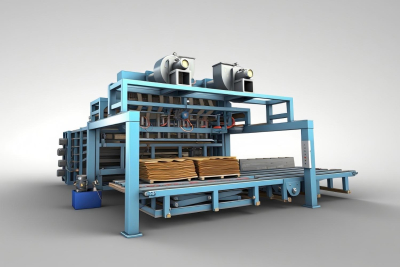
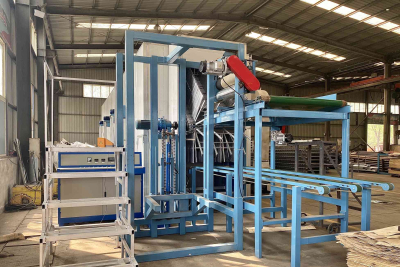
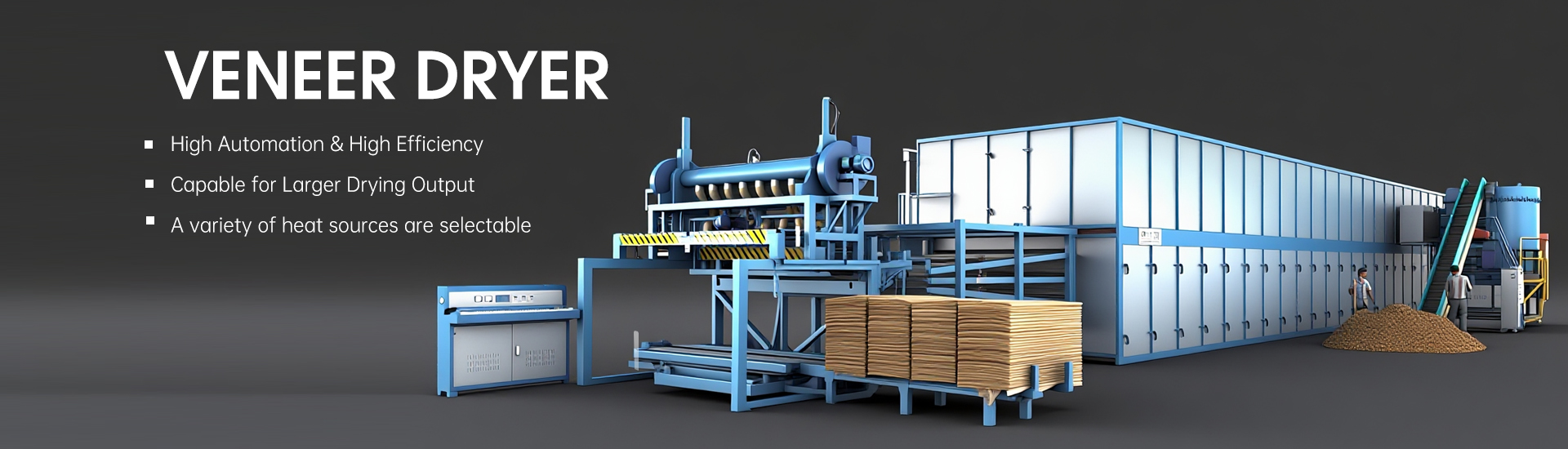
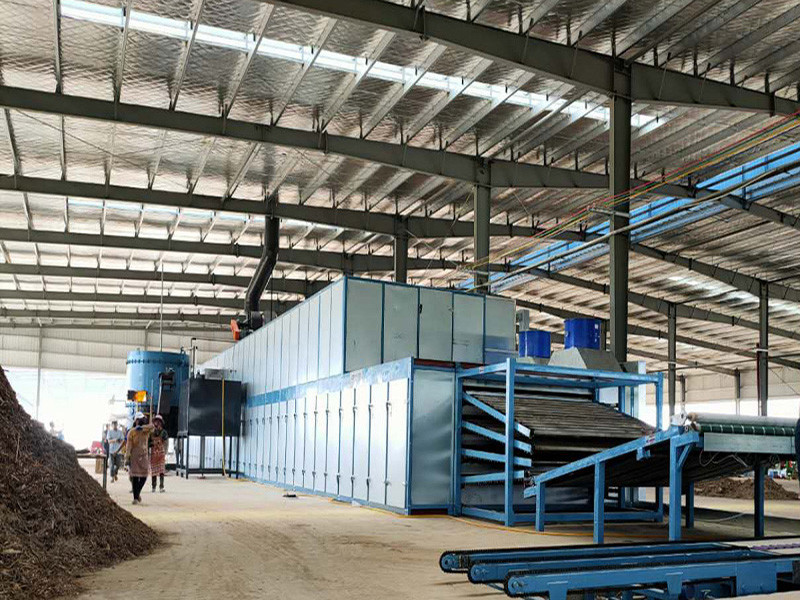
In the plywood manufacturing process, the veneer dryer (veneer drying machine) is one of the most critical pieces of equipment on the production line. Freshly peeled veneer typically leaves the lathe with a moisture content between 50% and 80%. Before it can be used in glue spreading and hot pressing, this moisture must be reduced to an optimal range of 8%–12% to ensure strong adhesion, dimensional stability, and high-quality finished plywood. The veneer dryer is purpose-built for this task. A standard modern veneer dryer is divided into four functional sections—veneer loading zone, drying zone, cooling zone, and veneer unloading zone—and is most commonly heated by a thermal oil boiler or a steam boiler. Understanding how to operate this equipment correctly is essential for achieving uniform drying, minimizing veneer defects, and maximizing energy efficiency.
Pre-Operation Inspection and Heat Source Preparation
Proper operation begins long before the first sheet of veneer enters the machine. Before startup, the operator must verify that the heat source system—whether thermal oil or steam—is functioning correctly. For thermal oil systems, the heater must be fired and the oil circulated until the designated temperature (typically 160 °C–200 °C at the heat exchanger) is reached and stabilized. For steam-heated dryers, the steam trap system should be open, and steam pressure must be brought to the required setpoint without noticeable fluctuation. The dryer's electrical cabinet should be checked to confirm all emergency stops are released, all selector switches are in the "off" position prior to energizing, and the main power supply is engaged. The conveyor drive chains, upper and lower roller bearings, and reduction gears should be inspected for proper lubrication. Any debris left from previous shifts must be removed from the loading table and roller gaps to prevent jamming.
Once the pre-checks are complete, the circulating fans and exhaust fans are activated. In a thermal oil or steam-heated dryer, the heat is transferred from the boiler to the dryer through heat exchangers (radiators/coils) located in the drying chamber. The hot air is then forced by high-efficiency axial or centrifugal fans through nozzles directed at both faces of the passing veneer. The temperature setpoint in the drying zone is adjusted according to veneer species, thickness, and initial moisture content—typically 110 °C–130 °C for thin veneers (<0.6 mm) and 140 °C–170 °C for thicker stock (0.8–2.5 mm).
Step 1 – Veneer Loading Zone (Veneer Loading)
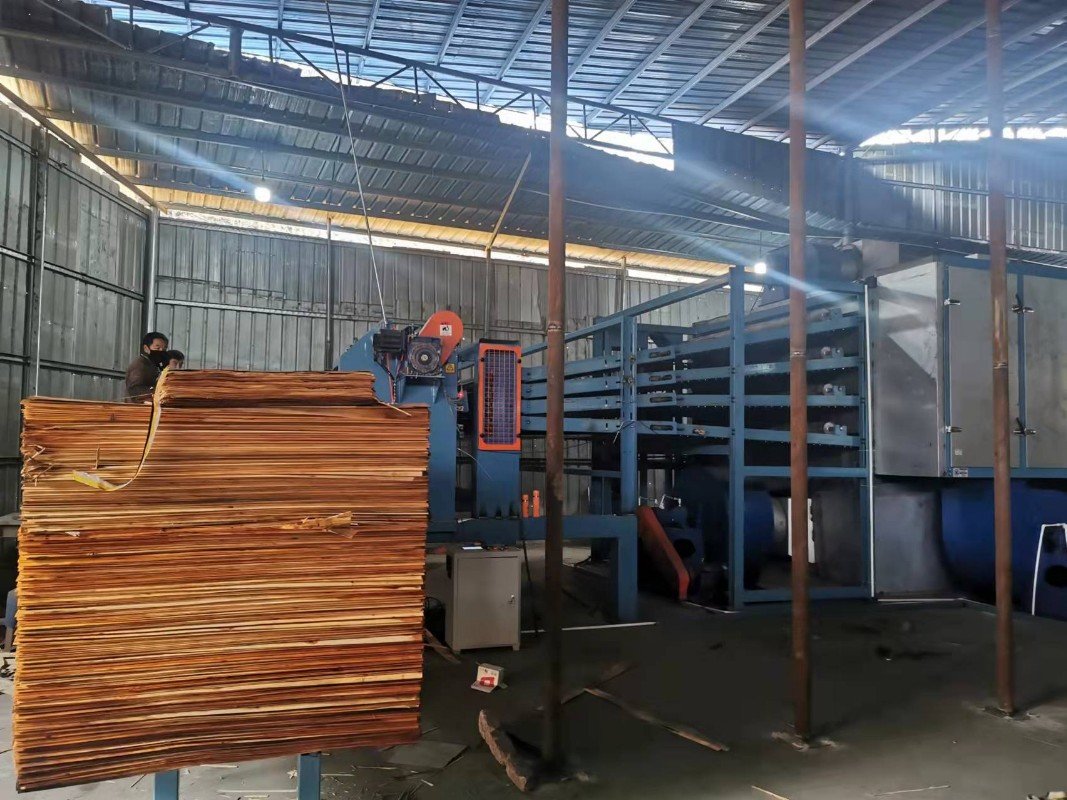
The first operational stage is the loading zone, where wet veneer sheets are manually or automatically fed onto the infeed conveyor or roller table. Best practice requires that veneers be neatly aligned—preferably squared and trimmed—so they enter the dryer longitudinally and perpendicular (90°) to the direction of the rollers. Misaligned veneer can skew, overlap, or wedge between rollers, causing jams or uneven tension that leads to tearing. Operators should avoid overloading the infeed; a steady, evenly spaced feed rate allows the drying zone to maintain consistent residence time. If the dryer is equipped with an auto-feeder or vacuum loader, sensors must be confirmed to detect veneer presence and regulate the nip pressure of the upper rollers, which are typically spring-loaded or hydraulically weighted to accommodate varying thicknesses.
Step 2 – The Drying Zone (Heated by Thermal Oil or Steam)
After passing through the infeed, the veneer travels into the drying zone, the core section of the machine. Here, hot air generated by the boiler–heat exchanger system is blown uniformly across both surfaces of the moving veneer. In thermal oil heated dryers, high-temperature thermal fluid circulates through finned-tube radiators; in steam heated dryers, steam condenses inside similar coils, releasing latent heat. Both systems raise the air temperature within the drying chamber to drive evaporation.
The veneer is supported and conveyed by upper and lower rollers that rotate in sync via chain or gear drives. The upper rollers press lightly on the veneer to ensure good contact and flat conveyance while allowing moisture-laden air to escape upward and downward into the exhaust plenums. The residence time—and therefore the final moisture content—is controlled by adjusting the conveyor speed via an inverter (VFD). Thicker or wetter veneers require slower speeds; thinner, drier veneers can be run faster. Most modern dryers are zoned: the first zone may be set slightly cooler to avoid case-hardening, while middle zones reach peak temperature for aggressive evaporation, and the final zone may taper down to prepare the sheet for the cooling section.
Throughout the drying process, the exhaust damper must be partially open to evacuate moist air. If too little moisture is removed from the chamber, humidity builds up and slows drying; if the damper is too wide open, excessive heat is lost, reducing energy efficiency. An experienced operator monitors both the chamber temperature and the visual condition of sample veneers, periodically checking with a handheld moisture meter to verify that output moisture falls within specification (commonly 8% ± 2%).
Step 3 – The Cooling Zone
Immediately following the drying zone is the cooling zone, typically 3 to 6 meters in length depending on machine size. No additional heat is applied here. Ambient or slightly tempered air is drawn through the section by cooling fans to bring the veneer temperature down to near room temperature. Cooling is essential because hot veneer, if immediately stacked, can continue to lose or redistribute moisture unevenly, potentially causing buckling or "wavy" sheets. Gradual cooling also protects downstream handling equipment and makes the veneer safer and more comfortable for workers to handle at the unloading station.
Step 4 – Veneer Unloading Zone (Veneer Unloading)
The final section is the unloading zone, where dried and cooled veneer exits the dryer onto a discharge conveyor, tilt tray, or manual sorting table. Operators at this point inspect the veneer for visual defects such as over-drying (brittle edges, dark discoloration), under-drying (felt-wet spots), curl, splits, or roller marks. Sheets that meet quality standards are stacked in uniform bundles, often on pallets, and transported to the clipping/grading or glue-spreading area. Defective sheets are segregated for rework or discard. After the production run, the dryer is typically shut down in reverse order: first the veneer feed is stopped, the conveyor continues until all sheets have cleared the drying and cooling zones, then the heating system is throttled back, the circulating fans are turned off after temperature drops below a safe threshold, and finally the main power is disconnected. Daily cleaning of dust and loose veneer chips from the roller gaps, heat exchanger fins, and exhaust ducts is strongly recommended to maintain thermal efficiency and reduce fire risk.
Safety, Maintenance, and Operational Excellence
Operating a veneer dryer safely requires adherence to lock-out/tag-out procedures during maintenance, use of personal protective equipment when handling hot sections, and never bypassing emergency stop buttons. Regular greasing of roller bearings with high-temperature grease, periodic tension checks on drive chains, and cleaning of the heat exchanger surfaces all contribute to stable drying performance and longer equipment life. More importantly, well-trained operators who understand the relationship between boiler temperature, conveyor speed, exhaust damper position, and veneer moisture content are the key to producing flat, evenly dried veneer that yields strong, warp-free plywood.
In summary, correct operation of a veneer dryer—from pre-start inspection and careful loading, through thermally controlled drying powered by thermal oil or steam, effective cooling, and systematic unloading—directly determines the quality of the veneer and, by extension, the strength and appearance of the final plywood product. As plywood mills modernize, integrating variable-frequency drives, digital temperature controllers, and moisture-sensing feedback loops further refines this process, but the fundamental operational principles remain rooted in disciplined, knowledgeable day-to-day practice.