LVL vs Plywood: Which One Wins?
The engineered wood industry continues to grow across construction, furniture, packaging, and infrastructure projects. Among the most popular materials, laminated veneer lumber (LVL) and plywood stand out for their strength, versatility, and cost-effectiveness. Although both products use wood veneers as their primary raw material, they serve different purposes and require different production methods.
As a manufacturer of wood processing equipment, we often receive questions from customers about the differences between LVL and plywood. Many factory owners also ask how the veneer drying process affects product quality and production costs. The answer is simple: proper drying determines whether your final product succeeds or fails.
In this LVL vs Plywood Comparison guide, we explore manufacturing methods, applications, performance differences, and the critical role of modern drying systems in production efficiency.
What Is LVL?
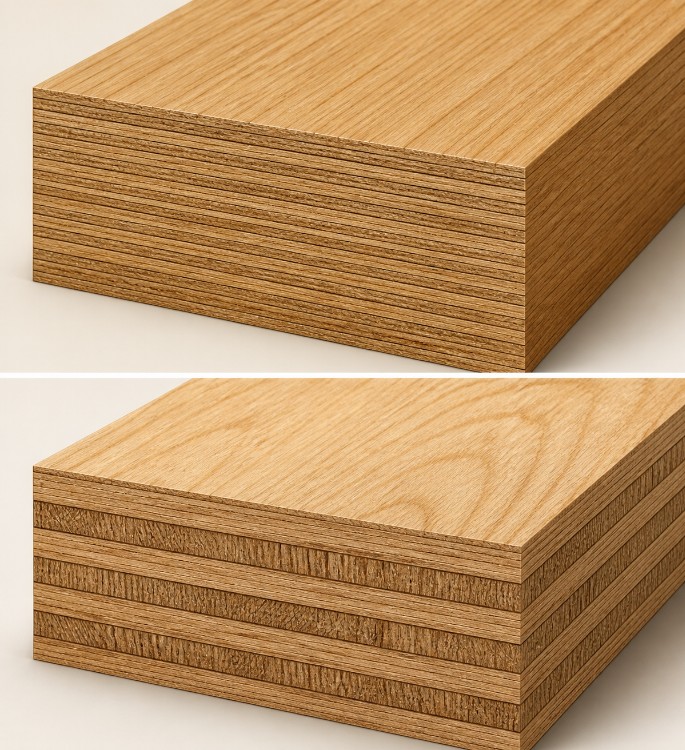
Laminated veneer lumber, often called LVL, is an engineered wood product made by bonding multiple wood veneers together under heat and pressure. Manufacturers align all veneers in the same direction to maximize strength.
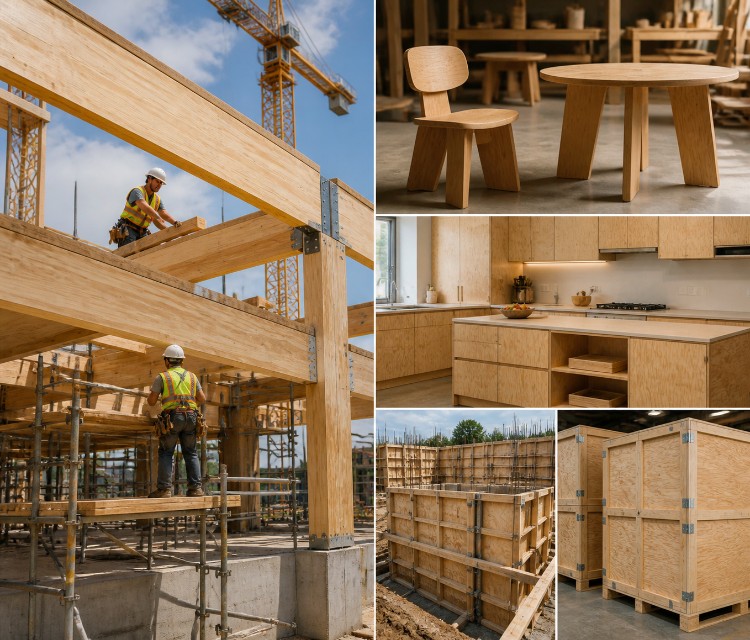
The LVL manufacturing process creates products with excellent load-bearing performance. Builders commonly use LVL for beams, headers, scaffolding boards, and structural framing. Because the grain runs in one direction, LVL delivers predictable mechanical properties.
A typical LVL production line includes:
Log debarking
Veneer peeling
Veneer clipping
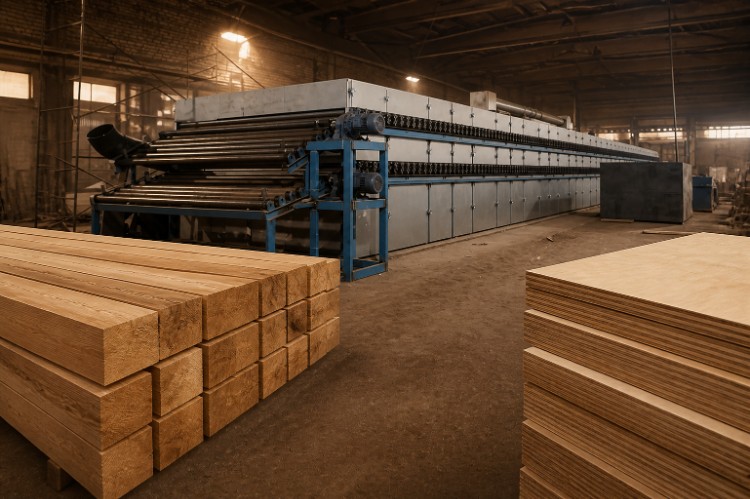
Veneer drying
Glue spreading
Veneer assembly
Hot pressing
Cutting and finishing
Why LVL Is Popular
Several factors drive the growth of LVL production worldwide.
High strength-to-weight ratio
Excellent dimensional stability
Consistent structural performance
Efficient use of timber resources
Reduced material waste
Many manufacturers choose LVL veneer because it maximizes the value of fast-growing wood species such as poplar and eucalyptus.
What Is Plywood?
Plywood consists of multiple veneer layers glued together with alternating grain directions. This cross-laminated structure improves dimensional stability and reduces expansion or shrinkage.
The plywood manufacturing process has become one of the most efficient methods of producing wood panels. Modern plywood factories supply materials for furniture, construction, transportation, and interior decoration.
A standard plywood production line typically includes:
Log preparation
Veneer peeling
Veneer grading
Plywood veneer drying
Glue application
Layup assembly
Hot pressing
Sanding and trimming
Common Uses of Plywood
Plywood remains popular because of its versatility.
Applications include:
Furniture manufacturing
Cabinet production
Flooring systems
Wall panels
Concrete formwork
Packaging materials
Many buyers appreciate plywood because it combines strength, flexibility, and affordability.
LVL vs Plywood Comparison
At first glance, LVL and plywood look similar. Both products use veneers and adhesives. However, important differences exist.
Structural Performance
LVL focuses on strength. All veneers run in the same direction, allowing the material to handle heavy loads.
Plywood focuses on stability. The cross-grain structure minimizes movement and warping.
As a result:
LVL performs better for beams and structural members.
Plywood performs better for panels and surface applications.
Manufacturing Differences
The LVL production process requires precise veneer alignment. Every layer contributes to load-bearing performance.
The plywood manufacturing process alternates grain direction. This arrangement creates balanced panels with improved dimensional stability.
Cost Considerations
Material costs vary by region and wood species. However, drying costs influence both products significantly.
Factories that improve veneer drying efficiency often achieve:
Lower fuel consumption
Higher production output
Reduced labor costs
Better product consistency
That is why drying technology deserves special attention.
The Critical Role of Veneer Drying
Many factory owners focus on presses and peeling machines. Yet drying often determines overall profitability.
Fresh veneer usually contains moisture levels between 40% and 120%. Manufacturers must reduce veneer moisture content before gluing and pressing.
If moisture remains too high, several problems appear:
Weak bonding strength
Delamination
Surface defects
Increased pressing time
Product deformation
On the other hand, excessive drying also creates problems. Nobody wants a veneer sheet that curls like a potato chip.
Maintaining stable moisture levels helps improve bonding quality and product consistency.
Veneer Drying Technology in Modern Factories
Technology has changed dramatically during the last decade. Older systems consumed large amounts of energy and produced inconsistent results.
Modern veneer drying technology focuses on:
Energy savings
Automation
Uniform drying
Lower emissions
Higher throughput
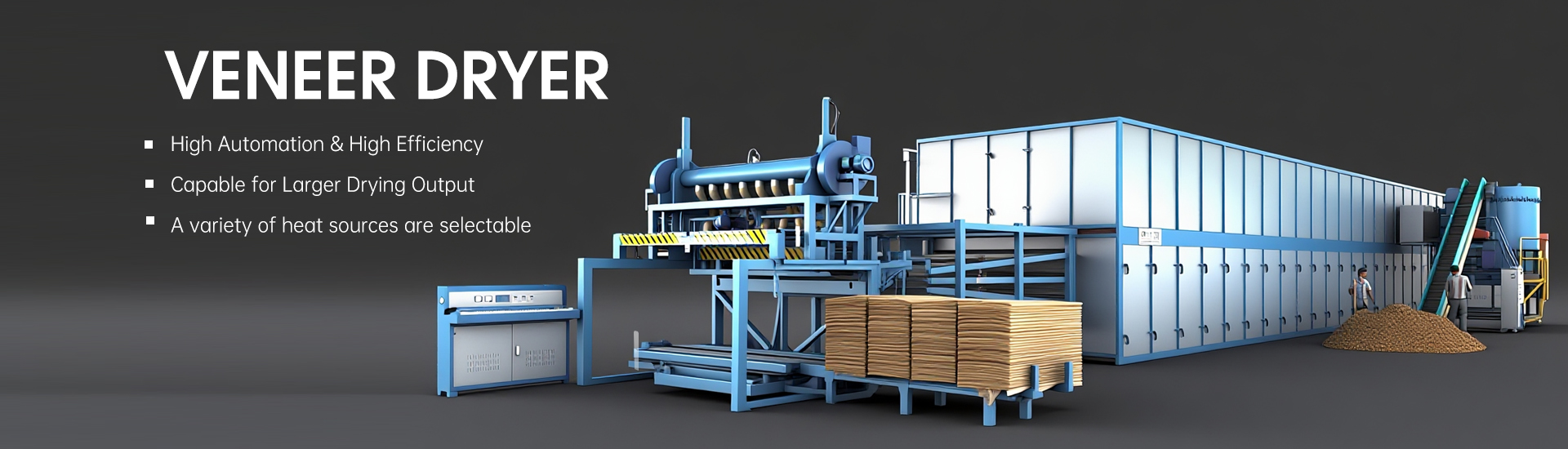
Today's wood veneer drying machine systems use intelligent controls to monitor moisture levels and adjust operating conditions automatically.
Understanding Veneer Drying Temperature
Temperature control directly affects product quality.
A typical veneer drying temperature ranges between:
120°C–160°C for poplar veneer
160°C–180°C for hardwood veneer
The exact setting depends on:
Wood species
Veneer thickness
Initial moisture content
Production speed
Higher temperatures increase output but may create cracks or discoloration. Lower temperatures improve quality but reduce productivity.
Finding the right balance becomes essential.
Common Veneer Drying Defects
Even experienced operators encounter challenges.
The most common veneer drying defects include:
Surface checking
End cracking
Warping
Uneven drying
Over-drying
Color variation
Fortunately, proper equipment selection reduces these issues significantly.
Choosing a Veneer Dryer for LVL and Plywood
Whether you produce LVL or plywood, drying equipment directly impacts production performance.
When selecting a veneer dryer for plywood or LVL applications, manufacturers should evaluate several factors.
Production Capacity
Start by calculating daily veneer output.
Consider:
Veneer thickness
Working hours
Moisture reduction requirements
Future expansion plans
Many factories underestimate future growth and outgrow their equipment within a few years.
Energy Consumption
Fuel costs continue to rise globally.
Modern systems improve efficiency through:
Heat recovery systems
Optimized airflow
Intelligent temperature control
Biomass heating integration
Reducing energy consumption often delivers the fastest return on investment.
Drying Uniformity
Uniform drying improves glue penetration and bonding performance.
A high-quality veneer drying machine should provide:
Consistent airflow
Stable temperature distribution
Accurate moisture control
These features help manufacturers reduce rejection rates and improve product quality.
Improving Production Efficiency
Factories that optimize drying operations gain a competitive advantage.
Several strategies consistently improve performance.
Focus on Moisture Management
Monitor veneer moisture content continuously rather than relying on occasional inspections.
Real-time data helps operators make faster adjustments.
Optimize Drying Parameters
Every wood species behaves differently.
Factories should adjust:
Temperature
Airflow
Conveyor speed
Humidity levels
Small improvements often create significant savings.
Integrate Automation
Automation reduces human error and improves consistency.
Modern systems collect data automatically and support predictive maintenance programs.
As a result, downtime decreases and productivity increases.
Final Thoughts
The debate between LVL and plywood does not have a universal winner. Each product serves different markets and applications.
LVL offers exceptional structural strength and predictable performance. Plywood provides outstanding versatility and dimensional stability. Both products depend heavily on proper drying conditions.
From our experience serving wood processing companies worldwide, successful manufacturers focus on three critical factors:
Stable veneer moisture content
Efficient drying technology
Consistent production management
No matter whether you operate an LVL production line or a plywood factory, investing in reliable drying solutions helps reduce costs, improve quality, and increase profitability.
In today's competitive market, smart drying is not just a production step. It is a business strategy.